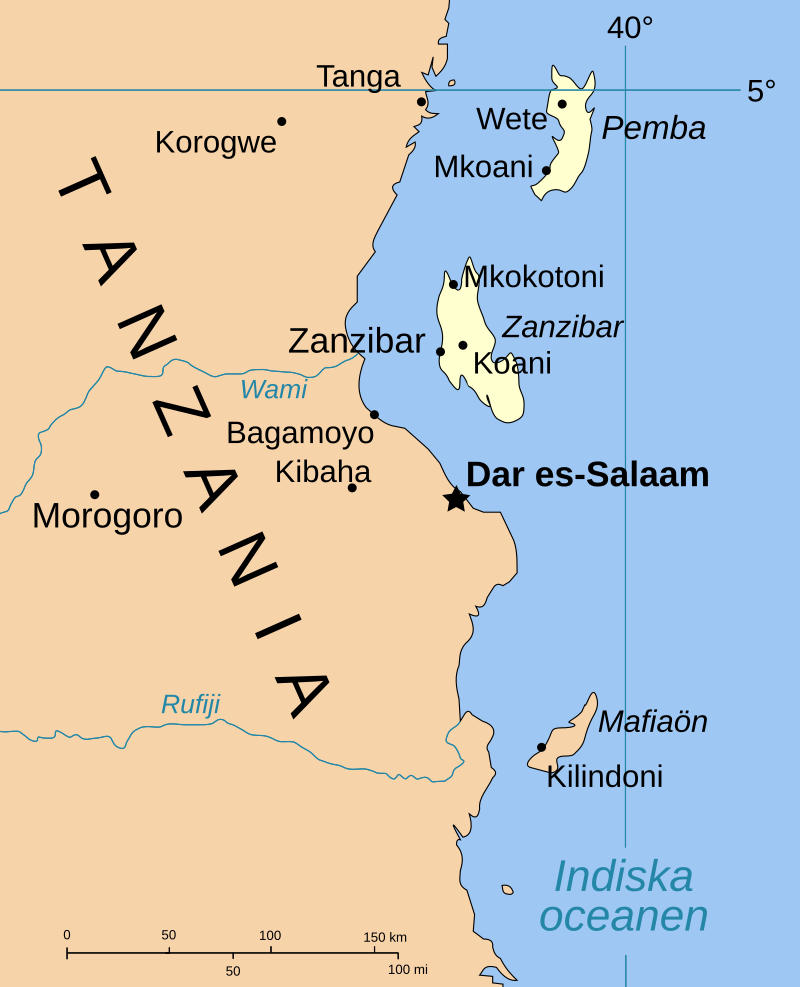
Formation of United Republic of Tanzania through union of Tanganyika and Zanzibar.
Tanzania
Political
Economic Growth
6 min read
Updated By: History Editorial Network (HEN)
Published:
The unification of Tanganyika and Zanzibar marked a crucial phase in the history of East Africa. Tanganyika, located on the mainland of the African continent, and Zanzibar, an island archipelago off the coast, had previously been separate entities with distinct colonial histories. Tanganyika gained independence from British rule, and Zanzibar followed suit, ending an era of British influence.
This union aimed to strengthen the political and economic stability of the region. Julius Nyerere from Tanganyika and Abeid Karume from Zanzibar led the initiative. The merger was driven by shared aspirations for unity, economic cooperation, and regional stability. The formation of the United Republic of Tanzania was formally declared after extensive negotiations and diplomatic efforts.
The new republic adopted a single-party political system under the leadership of the Tanganyika African National Union (TANU) and the Afro-Shirazi Party (ASP). The government aimed to foster national identity, ease ethnic tensions and promote development. Merging the diverse cultures, political systems, and economies of Tanganyika and Zanzibar presented challenges, but the leadership remained committed to building a cohesive state.
Economically, the union sought to create a more robust and self-reliant nation. The integration involved harmonizing trade policies and resource management. Zanzibar's economy, mainly based on cloves and tourism, complemented Tanganyika's agricultural and mineral resources. The unified state worked towards creating a diversified economy to improve the standards of living for its citizens.
The population of the new republic was roughly 13 million people at the time of the union, with significant linguistic, cultural, and religious diversity. Steps were taken to develop Swahili as the national language to promote unity and communication across different ethnic groups. Education programs were expanded to include both mainland and island regions, aiming to reduce illiteracy and improve skill levels.
The union of Tanganyika and Zanzibar into the United Republic of Tanzania represented a dynamic shift in regional geopolitics. It laid the foundation for future cooperation within the East African Community. The political integration symbolized a significant achievement in the broader context of African post-colonial state formation and economic development.
#TanzaniaUnite #MoofLife #AfricanLeadership #PoliticalUnion #RegionalStability #EconomicGrowth #Swahili #EastAfrica #Nyerere #Karume
Explore the Life Moments of
 AI Twin