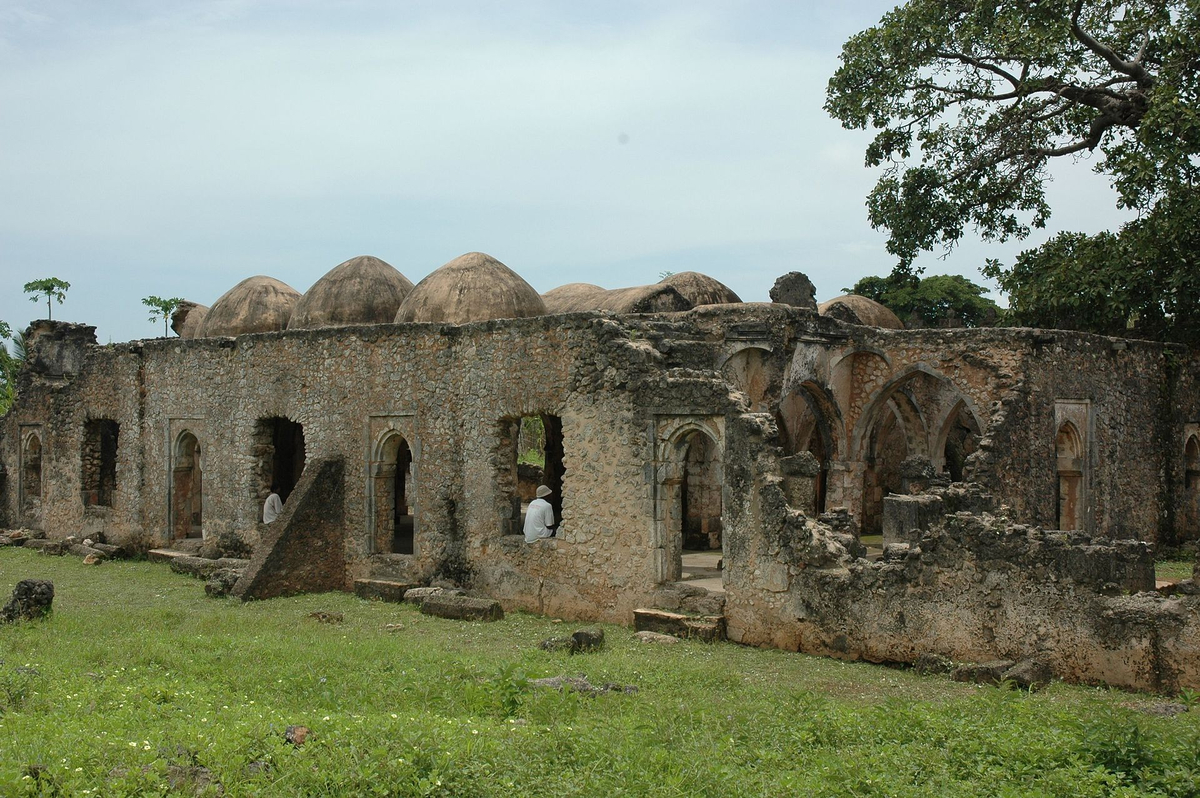
Great Mosque of Kilwa: UNESCO Heritage Site Construction.
Tanzania
Cultural Heritage
Trade Routes
5 min read
Updated By: History Editorial Network (HEN)
Published:
In East Africa, along the Swahili coast, the construction of the Great Mosque of Kilwa occurred as part of a broader period of urban development and cultural fusion. Kilwa Kisiwani, an island off the coast of present-day Tanzania, had grown into a significant trading hub, connecting Africa, the Middle East, India, and beyond. The city-state's prosperity stemmed from its strategic location on the trade routes of the Indian Ocean, enabling it to thrive as a center for commerce.
The Great Mosque of Kilwa represents one of the earliest Mosques built from coral stone, a testament to the ingenuity of Swahili architecture. It also marked the spread of Islam along the East African coast, emphasizing the cultural and religious exchanges resulting from extensive maritime trade. The mosque was constructed under the rule of the Kilwa Sultanate, a potentate regime known for fostering economic growth and architectural advancements.
Its architectural design integrated diverse influences reflecting Kilwa's interactions with other regions. The central mihrab, the domed roof, and the minaret illustrate techniques and stylistic elements drawn from Persian, Arabian, and Indian sources. The establishment of the mosque not only signified religious commitment but also reinforced Kilwa's socioeconomic status and influence in the region.
The construction had a lasting impact on the community, offering a place for congregational prayers and acting as a social and educational center. Additionally, the mosque served to unite the predominantly Muslim inhabitants under shared beliefs, thus consolidating social cohesion. Over time, Kilwa Kisiwani, with its grand mosque and other architectural marvels, attracted scholars, traders, and travelers, contributing to a vibrant exchange of ideas and goods along the Swahili coast.
Today, the Great Mosque of Kilwa stands as part of a UNESCO World Heritage site, recognized for its historical significance and contribution to human cultural heritage. Its presence underscores the historical narratives of trade, cultural fusion, and architectural evolution in East Africa.
#CulturalHeritage #IslamicArchitecture #TradeRoutes #SwahiliHistory #TanzaniaHeritage #UNESCO #MoofLife

Explore the Life Moments of
 AI Twin