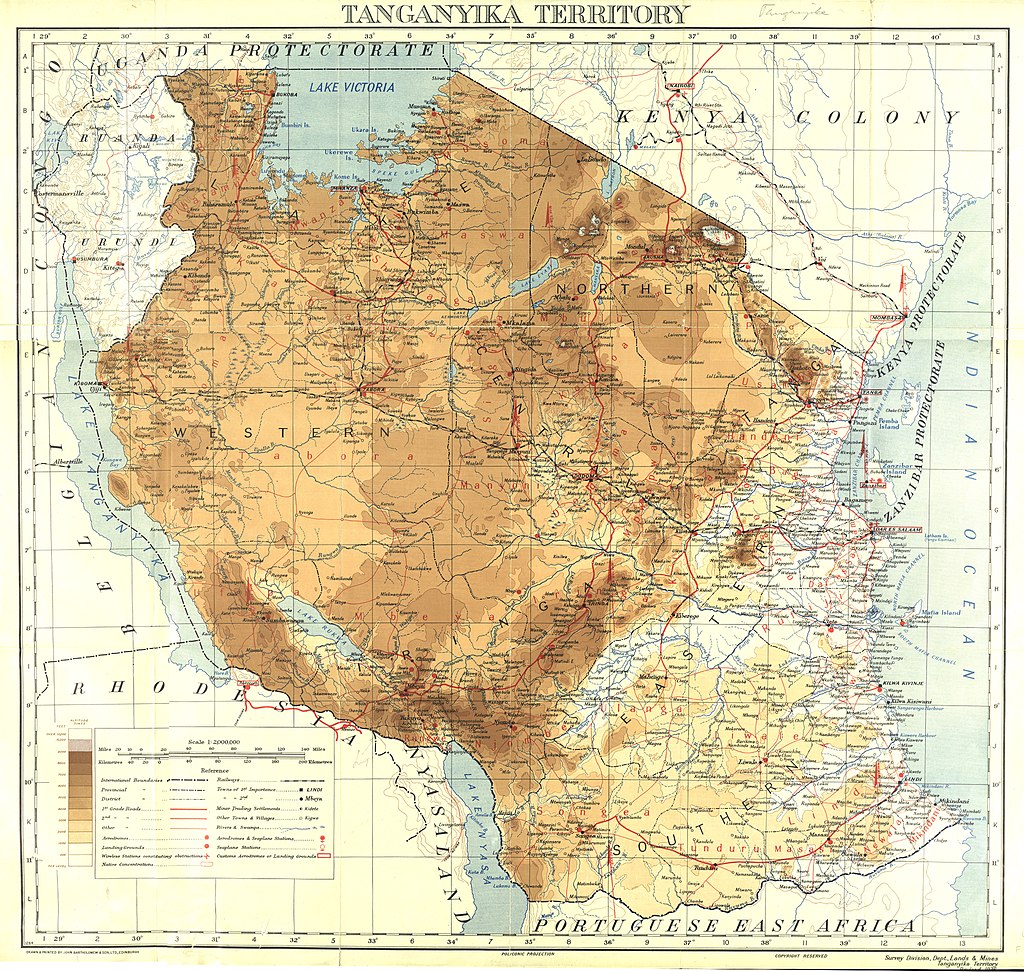
British Administration of Tanganyika under League of Nations Mandate
Tanzania

Colonial Political
5 min read
Updated By: History Editorial Network (HEN)
Published:
In the aftermath of World War I, territories held by the defeated Axis powers underwent significant changes in governance. Among these was Tanganyika, a former German colony in East Africa. Following Germany's defeat, the League of Nations, an intergovernmental organization established to maintain peace and cooperation, mandated Tanganyika to be administered by Britain. This decision was part of broader efforts to reassign control of former German territories and stabilize regions affected by the war.
As a mandate under British administration, Tanganyika was governed with the intent of preparing it for eventual self-governance. The British authorities focused on infrastructure development, including the construction of railways and roads to facilitate economic activities and improve connectivity within the region. Significant efforts were also made in the sectors of education and healthcare, aiming to enhance the welfare of the local population. British colonial policies in Tanganyika were influenced by broader imperial strategies but were tailored to fit the specific needs and conditions of the territory.
The economic landscape of Tanganyika was primarily agrarian, with the production of sisal, coffee, and cotton playing vital roles. Under British administration, agricultural production was geared towards meeting global market demands. This period also witnessed the introduction of cash crops that eventually became important export commodities.
The establishment of Tanganyika as a mandate brought notable social and political implications. The local populace experienced changes in administrative structures and governance models, which were imported from British colonial practices. While British rule was seen as a stabilizing factor, it also sparked the early seeds of nationalism as Tanganyikans sought greater autonomy and representation in governance.
Furthermore, the mandate's administrative framework laid the groundwork for future political developments in Tanganyika and contributed to the shaping of its national identity. The legacy of this administrative period influenced the territory’s trajectory towards eventual independence, creating a foundation for what would later become Tanzania.
#MoofLife #LeagueofNations #Tanganyika #BritishAdministration #PostWWI #ColonialHistory #TanzaniaHistory #MandateSystem
Explore the Life Moments of
 AI Twin