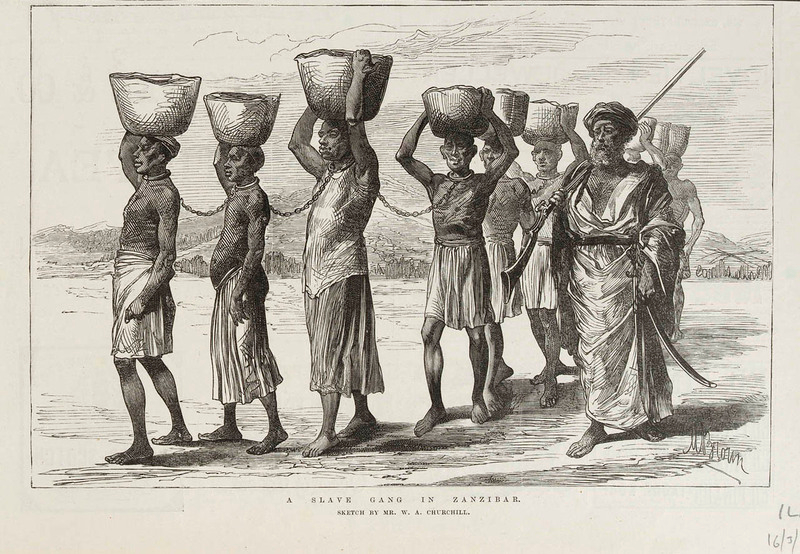
End of Arab slave trade in Zanzibar
Tanzania

Political
Economic Shift
5 min read
Updated By: History Editorial Network (HEN)
Published:
Updated:
The abolishment of the Arab slave trade in the Sultanate of Zanzibar occurred after sustained pressure from the British government and humanitarian campaigns. Zanzibar, part of present-day Tanzania, had been a central hub in the East African slave trade for centuries. Enslaved Africans were transported across the Indian Ocean to the Middle East and beyond, facilitating a thriving economy based on human labor.
The British Empire, having abolished slavery within its own territories, sought to extend this policy globally. During the 19th century, Zanzibar’s Sultanate played a crucial role in the regional slave trade. The British intensified diplomatic efforts, leveraging their naval power and economic influence to pressure the Sultanate to abolish the trade. Given that Zanzibar was economically dependent on British trade and its protection, the Sultan eventually conceded.
The immediate impact of abolishing the slave trade in Zanzibar had multiple facets. Economically, there was an initial disruption as the region adjusted from a slave-dependent economy to alternative labor practices. This shift included the growth of clove plantations using wage labor. Socially, the change led to the gradual liberation of enslaved Africans in the region, though complete eradication of slavery took time due to entrenched socio-economic systems.
Statistically, the region saw a decline in the number of enslaved individuals traded through its ports. Prior to abolition, estimates suggested that tens of thousands of Africans were enslaved and traded annually through Zanzibar. Post-abolition, the British Navy’s increased patrolling efforts in the Indian Ocean played a crucial role in suppressing the slave trade, contributing to a significant reduction in the number of enslaved people being transported.
This transition marked the beginning of a broader shift towards economic and social reforms in East Africa, influencing labor systems and regional politics. The abolition of the Arab slave trade in Zanzibar became a landmark in the fight against slavery in the region, setting a precedent for future emancipatory policies and actions in Africa and beyond.
#ZanzibarAbolition #EndOfSlaveTrade #HumanRights #EastAfricanHistory #Tanzania #BritishInfluence #EconomicShift #MaritimeHistory #MoofLife

Explore the Life Moments of
 AI Twin