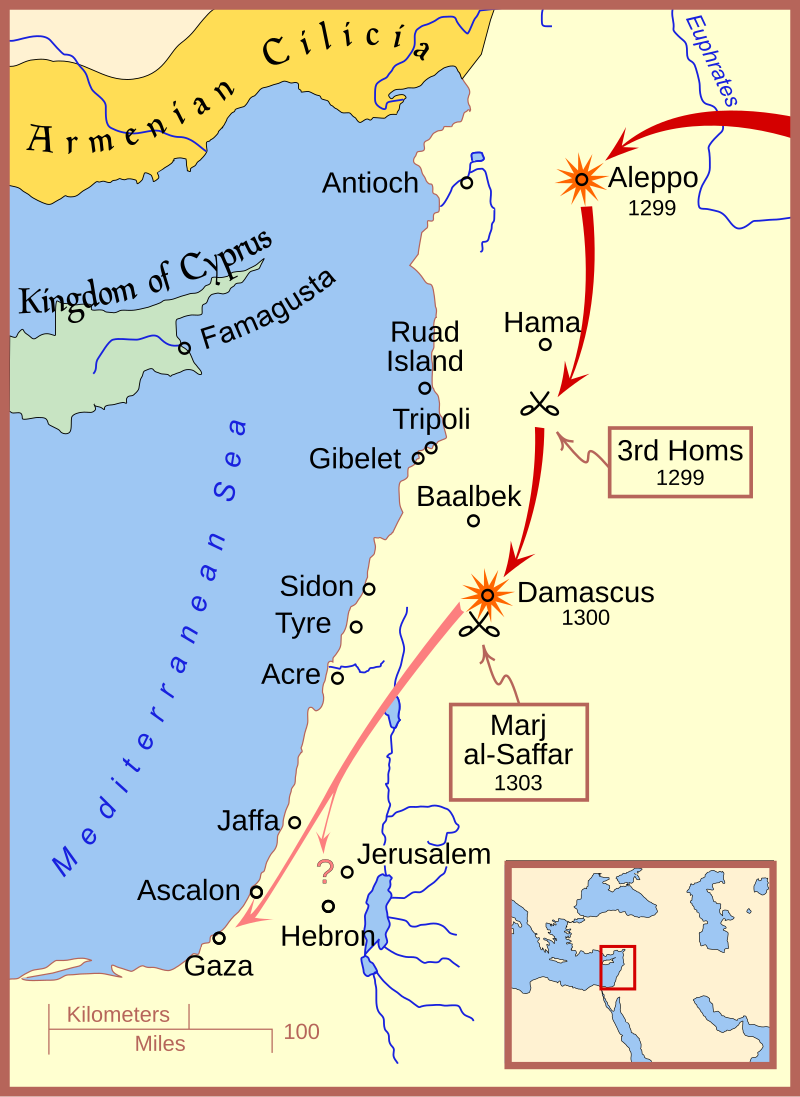
Mamluks triumph over Mongols at Marj al-Saffar
Syria

Military Strategies
5 min read
Updated By: History Editorial Network (HEN)
Published:
Updated:
The Battle of Marj al-Saffar marked a crucial clash between the forces of the Mamluk Sultanate and the Mongol Ilkhanate. The conflict occurred near Damascus, in the region of Syria, a strategic location contested by many empires over time.
Prior to the battle, the Mamluk Sultanate, established in Cairo, had consolidated power over Egypt and the Levant. Conversely, the Mongol Ilkhanate, based in Persia, sought to expand its dominion westward into these regions. The encounter was part of the protracted struggle for territorial supremacy between the two powers. The Mamluk forces were commanded by Sultan An-Nasir Muhammad. Faced with an advancing Mongol army, the Mamluks mobilized a disciplined and well-prepared military force.
The Mongol Ilkhanate, known for its fierce cavalry and tactical prowess, posed a significant threat to Mamluk stability in the Levant. However, the Mamluks exploited their familiarity with the local terrain and a network of fortified positions around Damascus. Their defensive strategy hinged on utilizing heavy cavalry and archers adept in mobile warfare.
The battle involved intensive fighting and significant maneuvering. The Mamluks managed to force the Mongols into disadvantageous positions repeatedly, utilizing a combination of feigned retreats and sudden counterattacks. These tactics caused disruption within the Mongol ranks, leading to heavy casualties and eventual withdrawal. Estimates of Mongol losses indicate substantial numbers, undermining their regional military capabilities.
The outcome of Marj al-Saffar was pivotal for several reasons. It secured Mamluk authority in Syria and reinforced their standing against external threats, subsequently stabilizing their rule in the Levant for years to come. The Mongol Ilkhanate's defeat marked a significant setback, curbing their westward expansion and altering the balance of power between the two empires.
This victory had wider implications on the politics of the region, bolstering the Mamluk’s control over key trade routes and fortifying their reputation as protectors of Islamic territories against non-Muslim invasions. The Battle of Marj al-Saffar exemplified the effectiveness of Mamluk military strategies and their ability to repel formidable adversaries.
#MoofLife #HistoricalClash #MamlukSultanate #MongolIlkhanate #SyrianBattle #MedievalWars #MilitaryStrategies #TerritorialSupremacy #HistoricalVictories
Primary Reference
Battle of Marj al-Saffar (1303) - Wikipedia

Explore the Life Moments of
 AI Twin