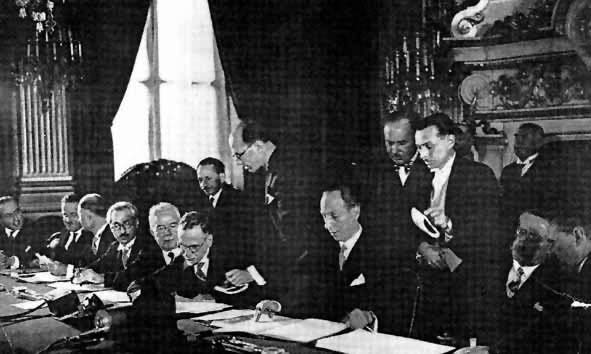
Recognition of Syrian independence by France.
Syria

Global Diplomacy
Decolonization
5 min read
Updated By: History Editorial Network (HEN)
Published:
Syria's independence from France was a pivotal juncture in the 20th century, marking the end of French mandate rule and the beginning of Syrian sovereignty. The journey to this point was complex and characterized by both diplomatic negotiations and local resistance. The League of Nations had placed Syria under French mandate after World War I, a decision formalized at the San Remo Conference. Yet, aspirations for independence simmered among Syrians, who sought self-determination.
The struggle for Syrian sovereignty intensified during World War II, as geopolitical shifts weakened French control. The Free French forces, under General Charles de Gaulle, initially promised independence to gain local support against Axis powers. However, post-war realities saw France reluctant to relinquish control. Protests, national strikes, and political mobilization by Syrian leaders consistently applied pressure. These internal efforts were mirrored by international diplomatic maneuvers, prioritizing Syrian autonomy in global forums.
Key figures in the Syrian independence movement included Shukri al-Quwatli, who would later become the President of Syria, and various nationalist factions advocating for a free and independent Syria. The culmination of these efforts led to diplomatic negotiations where France agreed to withdraw its military forces and relinquish its administrative control over Syria.
The departure of the last French troops sealed Syria's status as an independent state. This transition had significant repercussions for both the region and the broader Middle Eastern geopolitical landscape. It represented not just the end of colonial rule but also the emergence of Syria as an actor on the international stage. The event stimulated nationalist movements across the Middle East and was a precursor to subsequent decolonization efforts worldwide.
The recognition of Syrian independence impacted national identity, governance, and regional politics. The establishment of a sovereign state allowed Syria to forge its path in international relations, trade, and cultural development. Governance structures were re-evaluated to replace colonial administrative frameworks, leading to the formation of Syrian political institutions that shaped the nation's future trajectory.
#SyrianIndependence #EndOfColonialRule #MiddleEasternHistory #Decolonization #NationalSovereignty #GlobalDiplomacy #MoofLife
Primary Reference
11. French Syria (1919-1946)

Explore the Life Moments of
 AI Twin