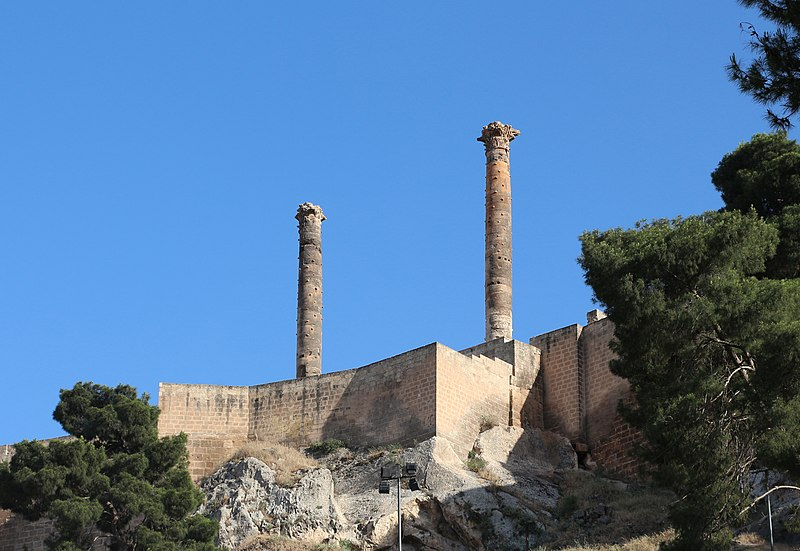
Edessa: Early Christianity Center and Bishopric
Syria

Religion
6 min read
Updated By: History Editorial Network (HEN)
Published:
Updated:
The city of Edessa in Syria has a rich historical narrative centered on its emergence as a significant hub of early Christianity and a key bishopric. Located on the banks of the Euphrates, Edessa's geographical position contributed to its role as a cultural crossroads between the Greek, Roman, and Persian worlds. From its roots, Edessa distinguished itself with strong Christian leanings, largely attributed to the influence of missionaries such as Thaddeus of Edessa.
As Christianity began to take root, the city became renowned for its scholarly contributions and ecclesiastical leadership. One of the notable early bishops of Edessa was Saint Palut, who played a pivotal role in organizing the Christian community and establishing doctrinal foundations. Edessa was also known for its association with the creation of some of the earliest Christian texts, with the famous Syriac version of the Bible, the Peshitta, purportedly having connections to this region.
Edessa's influence extended across the theological and intellectual landscapes of early Christianity. The School of Edessa emerged as a significant center for Christian thought and education, attracting scholars from various regions. This institution was instrumental in the development and dissemination of Christian teachings, particularly through its literary and theological contributions, which included translations of Greek patristic texts into Syriac.
In terms of impact, Edessa's transformation into a leading ecclesiastical center had broader implications for the proliferation of Christianity in the Near Eastern territories. As a prominent bishopric, it served as a model for church governance and ecclesiastical organization. The structure and hierarchy established in Edessa would influence other emerging Christian communities in surrounding regions.
The city also played a critical role in the formation of Christian doctrine through its participation in early church councils and theological debates. This involvement helped shape the broader trajectory of Christianity, balancing orthodoxy with regional variations in practice and belief.
Edessa's strategic location further aided in its role as a conduit for Christian missionary activities, facilitating the spread of the faith into Persia and other parts of the eastern Roman Empire. It became a linchpin in the network of early Christian communities, with its bishops holding significant sway in ecclesiastical matters beyond its immediate geographical boundaries.
#Edessa #Christianity #EarlyChurch #SyriacTradition #Bishopric #MoofLife
Primary Reference
Edessa - Wikipedia

Explore the Life Moments of
 AI Twin