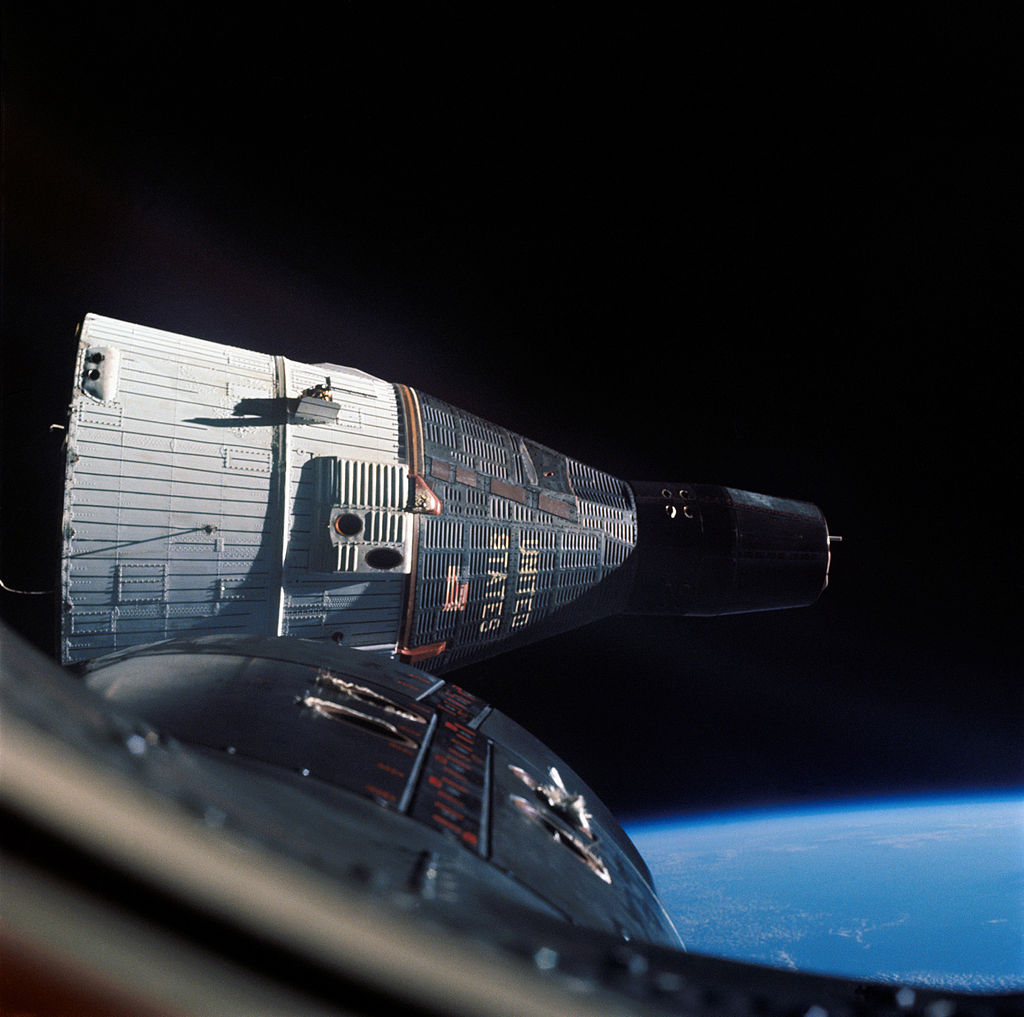
First Orbital Rendezvous Achieved by NASA
United States of America
Space
NASA
Gemini Program
3 min read
Updated By: History Editorial Network (HEN)
Published:
Updated:
NASA's Gemini 6A and Gemini 7 missions marked a pivotal achievement in space exploration by accomplishing the first orbital rendezvous. This event involved two spacecraft flying in close proximity to each other in orbit, demonstrating the feasibility of spacecraft coordination in space. The missions showcased the ability to perform parallel flight, which is a critical capability for future space missions, particularly those involving crewed missions to other celestial bodies. The successful rendezvous was a significant step towards developing techniques necessary for docking operations, which would be essential for future missions, including those aimed at lunar exploration and beyond. The Gemini program, which included a series of manned missions, was instrumental in testing various aspects of space travel, including long-duration flights, spacewalks, and rendezvous techniques. The success of Gemini 6A and 7 laid the groundwork for subsequent missions, including the Apollo program, which ultimately aimed to land humans on the Moon. The ability to rendezvous in orbit was not only a technical achievement but also a demonstration of the collaborative efforts of NASA's engineers and astronauts, showcasing the potential for human presence in space.
#mooflife
#MomentOfLife
#Nasa
#GeminiProgram
#OrbitalRendezvous
#SpaceExploration
#AstronautMissions
Primary Reference
https://en.wikipedia.org/wiki/Gemini_6A

Explore the Life Moments of
 AI Twin