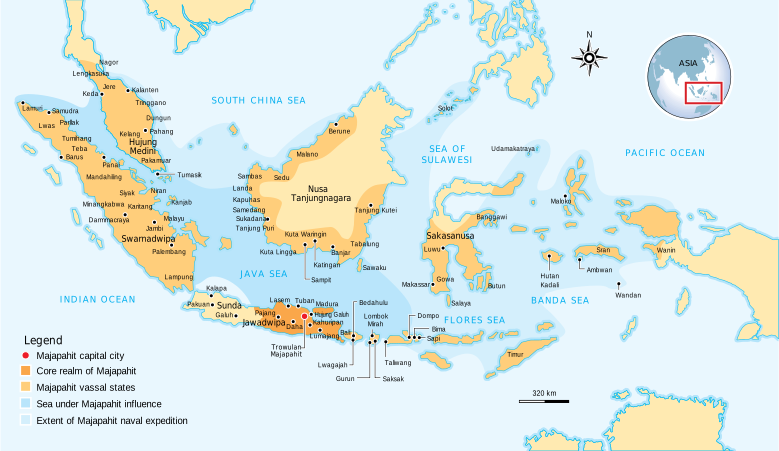
Singapore's Integration into the Majapahit Empire
Singapore

Cultural Integration
4 min read
Updated By: History Editorial Network (HEN)
Published:
In the 14th century, Singapore found itself under the rule of the powerful Majapahit Empire, which was a dominant maritime and commercial empire in Southeast Asia at the time. This event marked a significant shift in Singapore's political landscape as it became integrated into the vast Majapahit realm. The empire's reach extended far across the region, exerting influence through trade networks and strategic alliances.
The inclusion of Singapore into the Majapahit Empire had a profound impact on the city-state's economy, culture, and administration. The empire's expansive trading network provided Singapore with access to a wider market, facilitating the exchange of goods and ideas. This period saw an influx of diverse cultural influences, shaping the local society in new ways. Additionally, the empire's administrative structure brought about changes in governance and infrastructure in Singapore, contributing to its growth and development.
Under Majapahit rule, Singapore experienced a period of stability and prosperity. The empire's military prowess and diplomatic relations helped safeguard the region, ensuring security for trade routes and settlements. As a key outpost in the Majapahit Empire, Singapore played a crucial role in the empire's maritime activities, serving as a hub for trade and communication.
The integration of Singapore into the Majapahit Empire reflected the interconnectedness of Southeast Asian societies during this period. It exemplified the fluidity of political boundaries and the complexity of power dynamics in the region. The legacy of this event can still be seen in Singapore's rich cultural heritage and its position as a global hub for trade and commerce.
#MajapahitEmpire #SingaporeHistory #CulturalIntegration #MaritimeTrade #SoutheastAsia

Explore the Life Moments of
 AI Twin