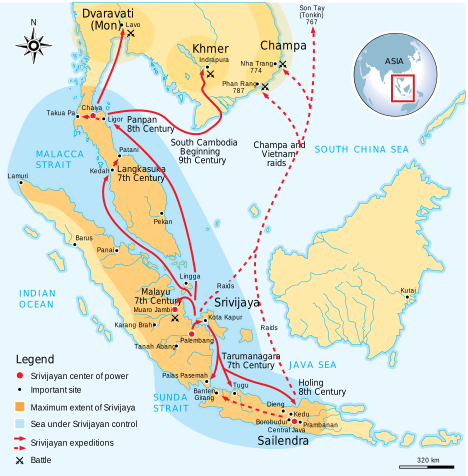
Founding of Srivijayan settlement at Singapore River by Prince Sang Nila Utama
Singapore

Global Trade
3 min read
Updated By: History Editorial Network (HEN)
Published:
In the 13th century, Srivijayan prince Sang Nila Utama sought a new settlement for his kingdom. As he sailed along the coast of a small island at the tip of the Malay Peninsula, he spotted a majestic creature he had never seen before - a lion. Taking it as a good omen, he decided to establish a settlement at the mouth of the Singapore River.
The strategic location of the settlement allowed for thriving trade and interactions with neighboring regions. Over time, this small village grew into a bustling trading hub, attracting merchants from China, India, and the Middle East. The settlement flourished under the rule of Sang Nila Utama's descendants, who developed strong diplomatic ties with other kingdoms in the region.
The establishment of the settlement at the mouth of the Singapore River marked the beginning of Singapore's history as a vibrant cosmopolitan city. The melting pot of cultures and traditions that emerged from the interactions of different ethnic groups laid the foundation for Singapore's multicultural identity.
Today, the legacy of Sang Nila Utama's decision can be seen in Singapore's rich tapestry of heritage, where diverse communities coexist harmoniously. The settlement's strategic location continues to play a crucial role in Singapore's status as a global financial and trading hub.
#SrivijayanPrince #SingaporeRiverSettlement #MulticulturalHeritage

Explore the Life Moments of
 AI Twin