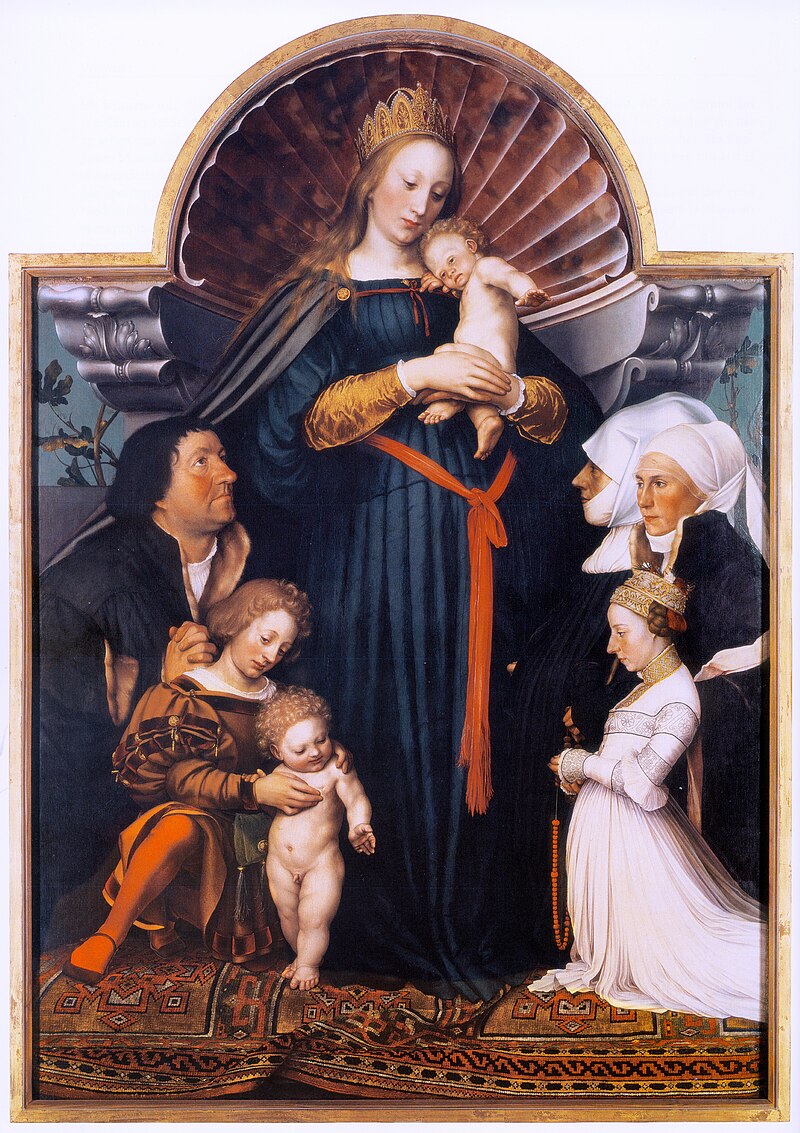
Completion of Darmstadt Madonna
Italy
Art
3 min read
Updated By: History Editorial Network (HEN)
Published:
Updated:
ChatGPT said:
The Darmstadt Madonna, also known as the Madonna of Jakob Meyer zum Hasen, is a masterful Renaissance painting by Hans Holbein the Younger, completed around 1526. This altarpiece features the Virgin Mary holding the Christ child, standing protectively over Jakob Meyer, the then-mayor of Basel, and his family. What sets this painting apart is its deeply personal and devotional nature—Holbein seamlessly merges sacred imagery with realistic portraiture, capturing not just the likenesses but the emotional essence of the people depicted. The figures are presented with reverence under Mary’s cloak, evoking the medieval motif of the “Schutzmantelmadonna” or Virgin of Mercy, which symbolizes divine protection and maternal care.
Beyond its spiritual message, the Darmstadt Madonna stands as a milestone in Northern Renaissance art. Holbein’s command of detail, composition, and symbolism is on full display, creating a scene that is both intimate and monumental. The artwork reflects the humanist ideals of the era, where religion and individual identity coexist within a single canvas. Over the centuries, the painting has traveled through various collections, eventually taking on the name “Darmstadt Madonna” due to its residence in the German city of Darmstadt. Today, it remains a powerful visual testimony to faith, family, and the artistic genius of Holbein.
#mooflife
#MomentOfLife
#EnglishRenaissance
#ArtHistory
#Proto-renaissance
#CulturalImpact
#ClassicalAntiquity

Explore the Life Moments of
 AI Twin