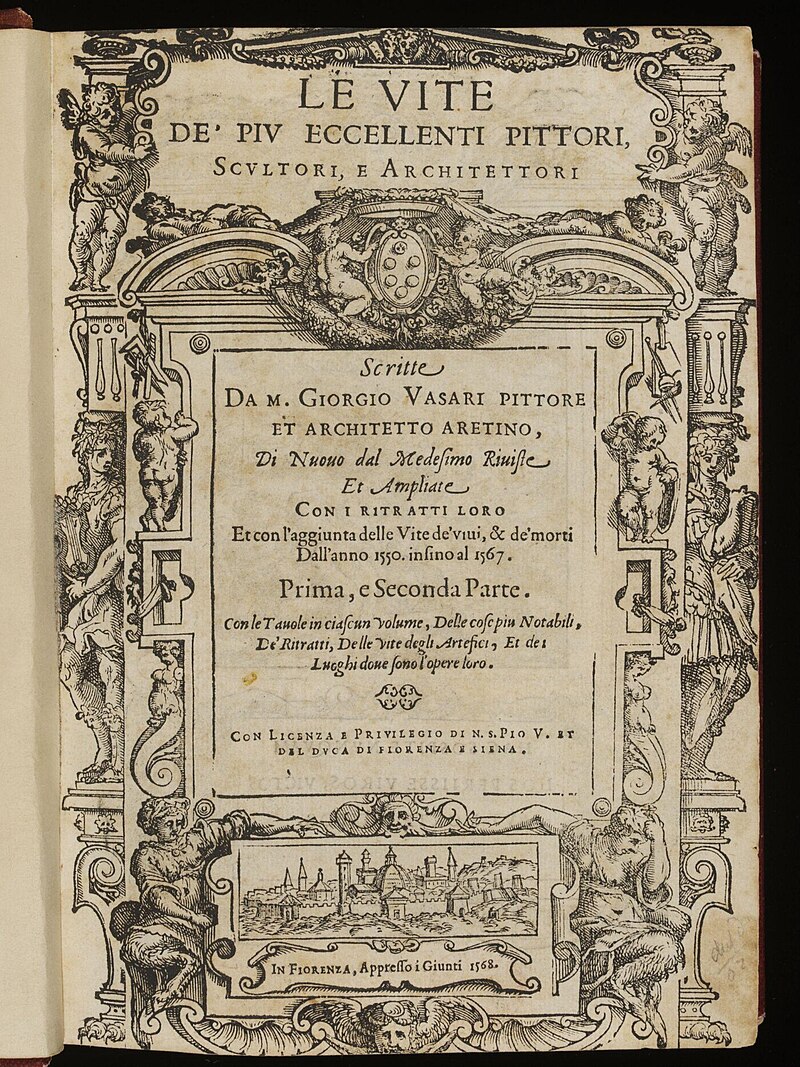
Vasari's Book 'The Lives of the Artists' Published
Italy
Art History
Renaissance Art
Italian Artists
4 min read
Updated By: History Editorial Network (HEN)
Published:
Updated:
Giorgio Vasari, an Italian artist and critic, authored 'The Lives of the Artists', a pivotal work that marked a significant shift in the understanding of art history. In this book, Vasari introduced the term 'rinascita', which translates to 'rebirth', to describe the revival of classical art forms following the perceived decline during the Gothic period. He argued that the arts had deteriorated after the fall of the Roman Empire, leading to a period characterized by what he termed the 'barbarities' of Gothic art. Vasari's perspective was that the true renaissance of art began with the Tuscan artists, particularly Cimabue and Giotto, who he credited with initiating a return to the principles of ancient art. This assertion laid the groundwork for the appreciation of Renaissance art as a continuation and revival of classical ideals, emphasizing the importance of historical context in the evolution of artistic styles.
The impact of Vasari's work extended beyond mere documentation; it shaped the narrative of art history and influenced how artists and critics viewed their predecessors. By categorizing artists and their contributions, Vasari established a framework for evaluating artistic merit and innovation. His emphasis on the importance of individual artists and their biographies contributed to the development of art criticism as a discipline. Furthermore, 'The Lives of the Artists' served as a source of inspiration for future generations of artists, who sought to emulate the techniques and philosophies of their predecessors. The book remains a crucial reference for understanding the transition from medieval to Renaissance art, highlighting the cultural and historical factors that contributed to this transformation.
#mooflife
#MomentOfLife
#GiorgioVasari
#RenaissanceArt
#ArtHistory
#TuscanArtists
#TheLivesOfTheArtists

Explore the Life Moments of
 AI Twin