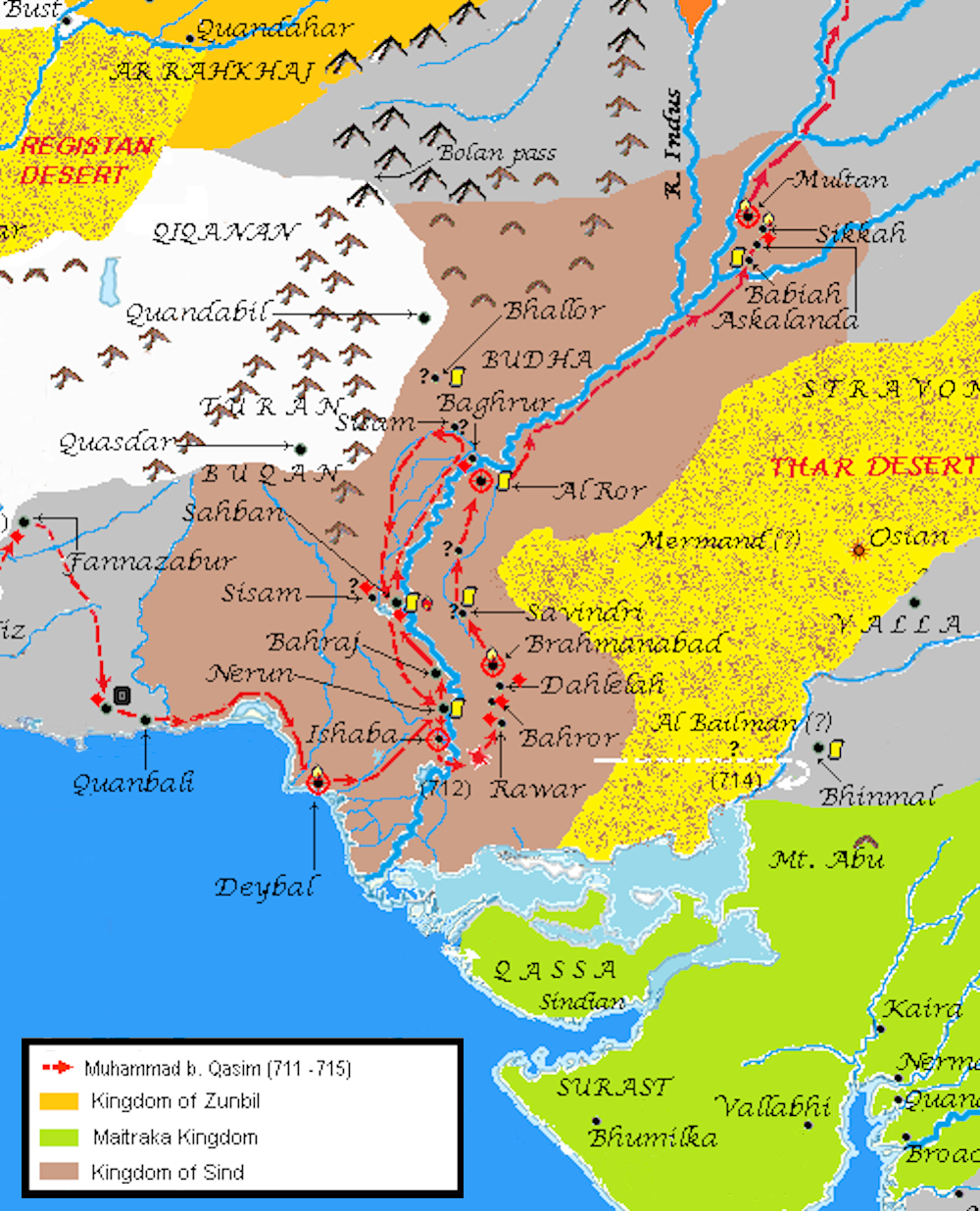
Arab Conquest of Sindh by Muhammad bin Qasim
Pakistan
Cultural
4 min read
Updated By: History Editorial Network (HEN)
Published:
The Arab conquest of Sindh, led by Muhammad bin Qasim, marked a pivotal episode in the history of what is now Pakistan. At the time, Sindh was under the rule of the Hindu King Raja Dahir. Bin Qasim's conquest was motivated by the desire to spread Islam in the region and to establish Arab control over the lucrative trade routes that passed through Sindh.
Bin Qasim's forces, numbering around six to twelve thousand soldiers, swept through the region, defeating Raja Dahir's army. The conquest was swift and decisive, with many towns and cities surrendering without much resistance. Bin Qasim's rule brought significant changes to the social, cultural, and religious fabric of Sindh. While Islam became the dominant religion, Hinduism and Buddhism continued to be practiced by the local population.
The Arab conquest of Sindh had far-reaching implications for the region. It marked the beginning of Arab rule in the Indian subcontinent and laid the foundation for the establishment of Muslim dynasties that would rule over parts of modern-day Pakistan for centuries to come. The conquest also facilitated the spread of Islamic culture and trade connections with the wider Islamic world.
Despite the political and religious changes brought about by the conquest, the cultural diversity of Sindh remained intact. The region continued to be a melting pot of different faiths and traditions, with Arabs, Persians, Turks, and indigenous peoples coexisting and influencing each other's cultures.
The Arab conquest of Sindh led by Muhammad bin Qasim was a significant event in the history of Pakistan, shaping the region's identity and laying the groundwork for its future development. It remains a reminder of the complex interplay of religion, politics, and culture that characterized the early medieval period in South Asia. #ArabConquest #MuhammadBinQasim #SindhHistory
Primary Reference
Hindus - Wikipedia

Explore the Life Moments of
 AI Twin