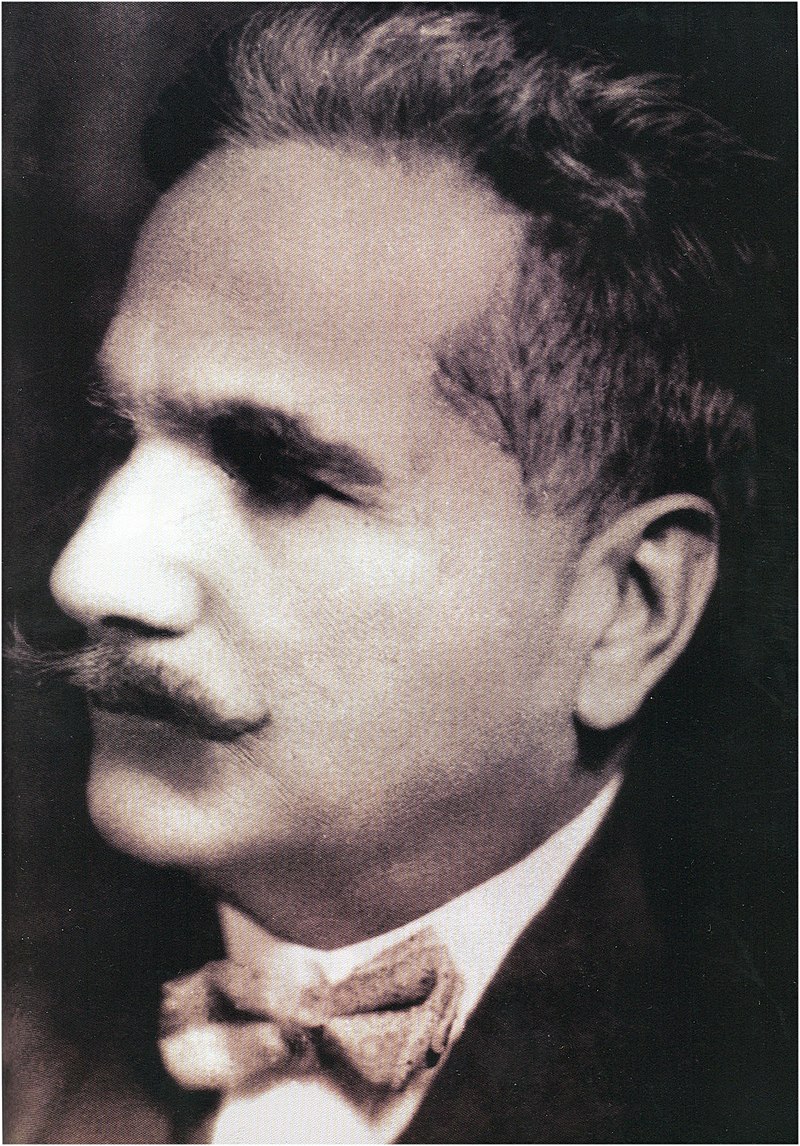
Birth of Allama Iqbal, the national poet of Pakistan
Pakistan
8 min read
Updated By: History Editorial Network (HEN)
Published:
On November 9, 1877, Allama Muhammad Iqbal, who would later become the national poet of Pakistan, was born in Sialkot, which was then part of British India. Iqbal's birth marked the beginning of the life of a man who would play a crucial role in the intellectual and political landscape of the Indian subcontinent, particularly in the movement for the creation of Pakistan.
Early Life and Education
Muhammad Iqbal was born into a Kashmiri Brahmin family that had converted to Islam. His father, Sheikh Noor Muhammad, was a tailor, and his mother, Imam Bibi, was a devout woman who greatly influenced Iqbal's early life. Iqbal showed an early aptitude for learning and poetry, which led him to pursue higher education.
Iqbal received his initial education in Sialkot, attending the Scotch Mission College, where he was mentored by Sir Thomas Arnold, a scholar who profoundly impacted Iqbal's intellectual development. Encouraged by Arnold, Iqbal traveled to Europe, where he earned a degree in philosophy from the University of Cambridge, a law degree from Lincoln's Inn, and a doctorate from the University of Munich. His thesis, "The Development of Metaphysics in Persia," showcased his deep engagement with Islamic thought and philosophy.
Literary Contributions
Iqbal's poetry, written primarily in Persian and Urdu, is celebrated for its profound philosophical themes and its call to action for the Muslim community. His works such as "Asrar-e-Khudi" (Secrets of the Self), "Rumuz-i-Bekhudi" (Hints of Selflessness), and "Bang-e-Dra" (The Call of the Marching Bell) are masterpieces that explore the concepts of selfhood, spirituality, and the collective destiny of Muslims.
In his Persian works, Iqbal sought to rejuvenate the Islamic world by drawing from the spiritual and philosophical traditions of classical Persian literature. His Urdu poetry, on the other hand, is marked by its direct appeal to the Indian Muslim identity, urging them to awaken from their slumber and strive for a better future.
Political Vision and the Idea of Pakistan
Iqbal's political ideas were as influential as his poetry. He is often credited with conceptualizing the idea of a separate Muslim state in the Indian subcontinent, a vision that would eventually lead to the creation of Pakistan. In his famous Allahabad Address in 1930, Iqbal articulated the need for an independent Muslim state, arguing that Muslims in India needed a separate homeland to live according to their own cultural and religious values.
Iqbal's vision was not limited to political boundaries but encompassed a broader spiritual and intellectual revival of the Muslim community. He believed that true independence and progress could only be achieved through a return to the spiritual and ethical principles of Islam.
Legacy
Allama Iqbal's legacy is profound and multi-faceted. In Pakistan, he is revered as Mufakkir-e-Pakistan (The Thinker of Pakistan), Shair-e-Mashriq (The Poet of the East), and Hakeem-ul-Ummat (The Sage of the Ummah). His birthday, November 9, is celebrated as Iqbal Day, a public holiday in Pakistan, commemorating his contributions to literature, philosophy, and the movement for Pakistan's creation.
Iqbal's work continues to inspire scholars, poets, and political leaders across the Muslim world. His vision of a society based on spiritual and moral values remains a guiding light for many who seek to balance the demands of modernity with the principles of their faith.
#MomentsOfLife #MoofLife_Moment #MoofLife #AllamaIqbal #IqbalDay #Pakistan #UrduPoetry #Philosophy #IndianSubcontinentHistory #MuslimRevival

Explore the Life Moments of
 AI Twin