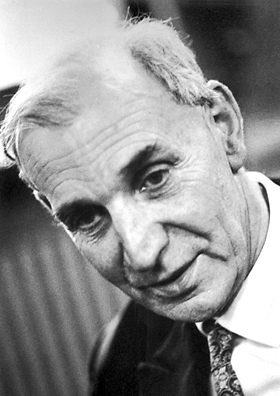
Alfred Kastler: Pioneering Optical Methods in Atomic Research
Sweden
Science
Technology
3 min read
Updated By: History Editorial Network (HEN)
Published:
Alfred Kastler was recognized for his pioneering work in the discovery and development of optical methods to study Hertzian resonances in atoms. This work had a profound impact on the field of physics, particularly in advancing the understanding of atomic systems. Kastler, a French physicist, contributed significantly to the study of hyperfine structures and the behaviors of atoms through the interaction of light.
His method involved using light to induce and measure resonance in atoms, which facilitated precise observations that were previously difficult to achieve. These techniques allowed scientists to study atomic transitions with greater accuracy, paving the way for advancements in quantum mechanics and spectroscopy. Kastler's research provided new tools and methods essential for measuring atomic properties, influencing various applications in physics and other scientific disciplines.
The recognition of Kastler’s work highlighted the importance of optical methods in studying atomic phenomena and expanded the methods available to physicists for probing the fundamental properties of matter. This advancement not only deepened the understanding of atomic structures but also contributed to innovations in laser technology and quantum optics.
#Physics #NobelPrize #OpticalMethods #AtomicResearch #ScientificDiscovery #MoofLife
Primary Reference
Alfred Kastler - Wikipedia
Explore the Life Moments of
 AI Twin