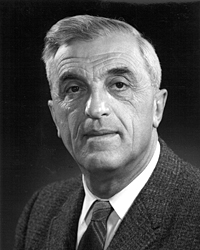
Nobel Prize-winning research on NMR revolutionizes science and medicine.
Sweden
Science
4 min read
Updated By: History Editorial Network (HEN)
Published:
Updated:
Felix Bloch and E. M. Purcell were awarded the Nobel Prize in Physics for their pioneering methods of nuclear magnetic precision measurements. Bloch, a Swiss physicist, and Purcell, an American physicist, made significant advancements in the study of atomic nuclei. Bloch developed the concept of nuclear magnetic resonance (NMR) and proved its existence. This discovery allowed scientists to study the properties of atomic nuclei using magnetic fields.
Purcell introduced the technique of NMR detection, which involved using electromagnetic radiation to observe nuclear magnetic moments. This method enabled the accurate measurement of nuclear magnetic properties, providing detailed insights into molecular and atomic structures. Their combined efforts resulted in the development of a powerful tool for scientific research and medical diagnostics.
Nuclear magnetic resonance has had a profound impact on various fields, including chemistry, physics, and medicine. It paved the way for the development of Magnetic Resonance Imaging (MRI), a non-invasive medical imaging technique that is now widely used for diagnosing and monitoring diseases. NMR also plays a crucial role in the study of chemical compounds and materials, allowing researchers to identify molecular structures and dynamics with great precision.
The recognition of Bloch and Purcell's contributions underscored the importance of fundamental research in advancing scientific knowledge and its practical applications. Their methods of nuclear magnetic precision measurements have continued to evolve, leading to new discoveries and technological advancements in multiple domains.
#MoofLife #NobelPrize #Physics #ScientificResearch #Innovation #MedicalImaging #NMR #MRI #Bloch #Purcell
Primary Reference
Research Profile - Felix Bloch | Lindau Mediatheque
Explore the Life Moments of
 AI Twin