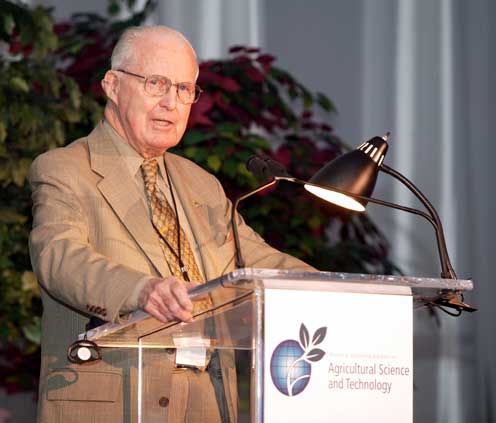
Norman Borlaug's Nobel Prize-winning work revolutionized agriculture, increased production, and prevented famines worldwide.
Sweden
Science
Global Trade
4 min read
Updated By: History Editorial Network (HEN)
Published:
Norman Borlaug was honored with the Nobel Peace Prize for his contribution to the Green Revolution, a series of research, development, and technology transfer initiatives occurring between the 1940s and the late 1960s. These initiatives significantly increased agricultural production worldwide, particularly in developing countries.
Borlaug, an agronomist, developed varieties of high-yield, disease-resistant wheat, which played a pivotal role in this agricultural transformation. His work primarily took place in Mexico, India, and Pakistan, where he implemented innovative farming techniques and trained local farmers. These efforts led to substantial increases in crop production, alleviating hunger and saving millions of lives.
The impact of Borlaug's contributions is vast. Wheat production in Mexico, for example, quadrupled between the mid-1940s and the late 1960s, and the country became self-sufficient in the crop. In India and Pakistan, the adoption of high-yield wheat varieties resulted in record increases in wheat production, effectively reversing the food deficit crises these countries faced.
Statistics from this period show that wheat yields in developing countries grew by over 300%, largely due to Borlaug's innovations. Borlaug's work also inspired improvements in rice production, leading to similar breakthroughs in other staple crops. The Green Revolution is credited with preventing famines, boosting economies, and promoting peace by stabilizing food supplies in vulnerable regions.
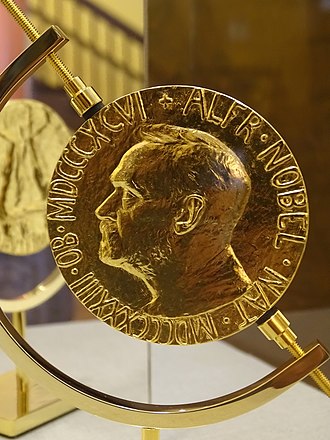
In recognition of his efforts, the Nobel Committee awarded Borlaug the Peace Prize, celebrating his role in reducing hunger and fostering stability. The award highlights the profound link between agricultural innovation and global peace.
#MoofLife #GreenRevolution #NobelPeacePrize #NormanBorlaug #AgriculturalScience
Primary Reference
Norman Borlaug – Speed read - NobelPrize.org
Explore the Life Moments of
 AI Twin