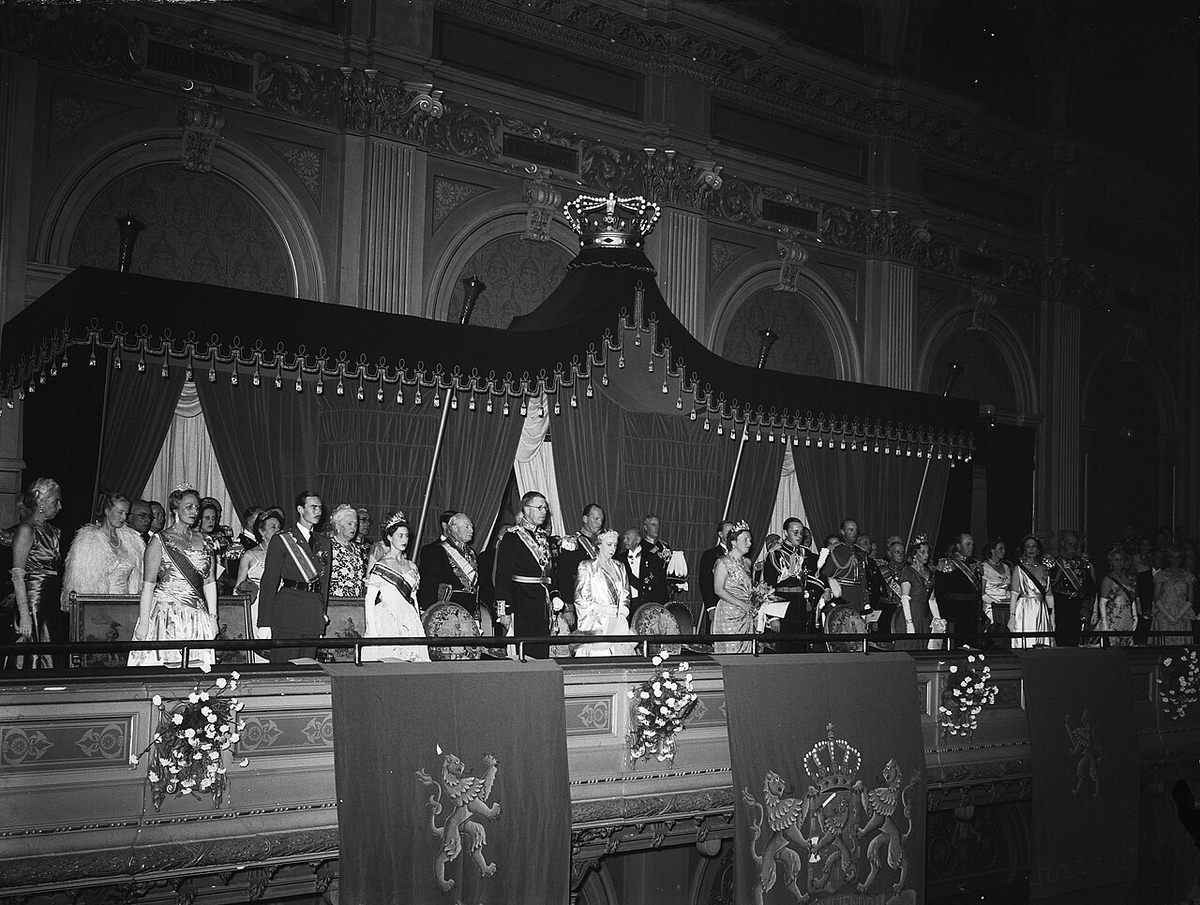
Monarchy Shift: Queen Wilhelmina abdicates for Queen Juliana, changing Dutch monarchy
Netherlands
Political
4 min read
Updated By: History Editorial Network (HEN)
Published:
In 1948, Queen Wilhelmina of the Netherlands abdicated the throne in favor of her daughter, Princess Juliana. Wilhelmina had ruled the country for nearly 50 years, navigating through the tumultuous periods of World War I and World War II. As she grew older, she felt it was time to pass on the responsibilities of the monarchy to the younger generation.
Princess Juliana ascended to the throne as Queen, ushering in a new era for the Dutch monarchy. Her reign was marked by a commitment to modernization and social reform, which endeared her to the Dutch people. Queen Juliana's reign brought about changes in the monarchy's role within Dutch society, as she sought to connect with the people on a more personal level.
The abdication of Queen Wilhelmina and the subsequent reign of Queen Juliana symbolized a transition from the old guard to a new generation of leadership. The event was met with both nostalgia for Wilhelmina's long reign and optimism for the future under Queen Juliana's rule. The Dutch monarchy continued to evolve under Queen Juliana's guidance, adapting to the changing times and growing demands of the Dutch people.
Overall, the abdication of Queen Wilhelmina in favor of Queen Juliana had a profound impact on the Dutch monarchy. It marked a shift in leadership and governance style, bringing fresh perspectives and approaches to the fore. The event underscored the resilience of the Dutch monarchy and its ability to adapt to the demands of a modern society.
#Netherlands #DutchMonarchy #QueenWilhelmina #QueenJuliana
Primary Reference
Wilhelmina of the Netherlands - Wikipedia

Explore the Life Moments of
 AI Twin