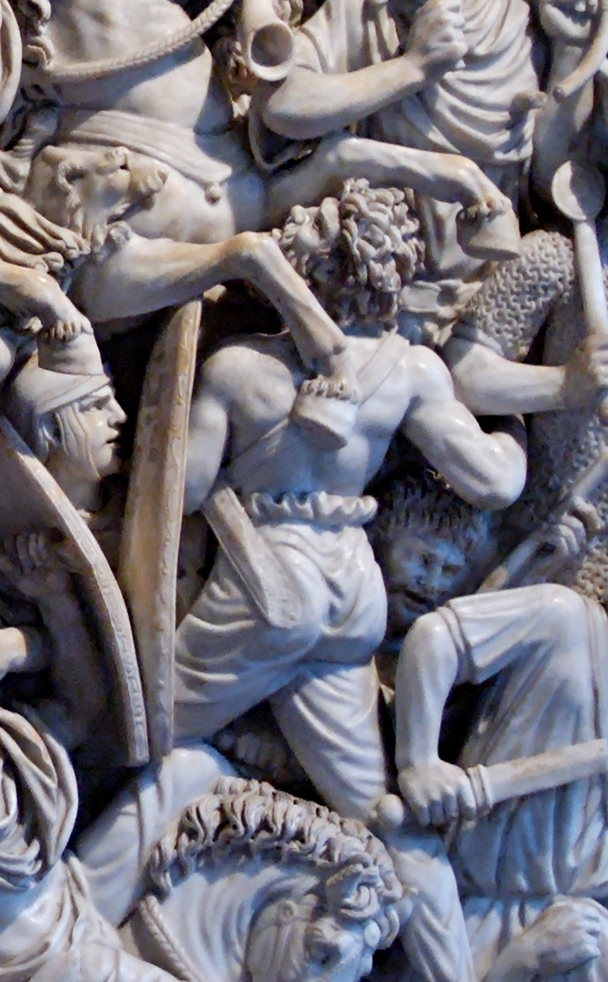
Goths Occupy Island.
Malta
Cultural Exchange
5 min read
Updated By: History Editorial Network (HEN)
Published:
The occupation of Malta by the Goths took place during a period marked by intense geopolitical shifts in the Mediterranean. This event unfolded amidst the decline of the Western Roman Empire, which created a power vacuum in the region. The Goths, a Germanic tribe, had been gradually expanding their influence across Europe, and Malta's strategic location and its established resources made it a significant target.
Before the Goths arrived, Malta was under Roman control, benefitting from integration into the empire's extensive trade network. The island economy flourished, supported by agriculture, particularly the cultivation of olives and grapes, and fishing. Trade links ensured the flow of goods and cultural exchanges between Malta and other parts of the Roman Empire.
With the Goths' arrival, Malta experienced administrative and military changes. The Goths established their own governance structures, which impacted local political dynamics. The immediate effect was disruption in the local economy, as trade routes were altered and existing social hierarchies were challenged. The Goths, known for their prowess in warfare, likely fortified Malta's defenses to consolidate their control and use the island as a staging ground for further expansions.
Resource management under the Goths saw shifts; there was a return to more localized production and subsistence strategies, altering the economic landscape. The Goths may have also introduced new agricultural practices and weapons technology. Despite the turmoil, there was continued interaction between Malta and surrounding territories, facilitating a degree of cultural exchange.
In terms of population, the Gothic occupation had a significant impact on the demographic structure of Malta. This period saw an influx of Germanic warriors and their families, which altered the ethnic and cultural composition of the island.
The occupation also left a mark on Malta's architectural landscape. The Goths utilized existing Roman infrastructure, but additions such as fortifications had long-term implications for Malta's urban development.
This occupation period was a crucial chapter in Malta's history. It underscores the fluidity of power and cultural exchanges in the Mediterranean during late antiquity and sets the stage for Malta's evolving role in subsequent historical epochs.
#MoofLife #History #Malta #Goths #Mediterranean #RomanEmpireDecline #CulturalExchange #GeopoliticalShift
Primary Reference
MAP ROOM FILES OF PRESIDENT ROOSEVELT, 1939–1945

Explore the Life Moments of
 AI Twin