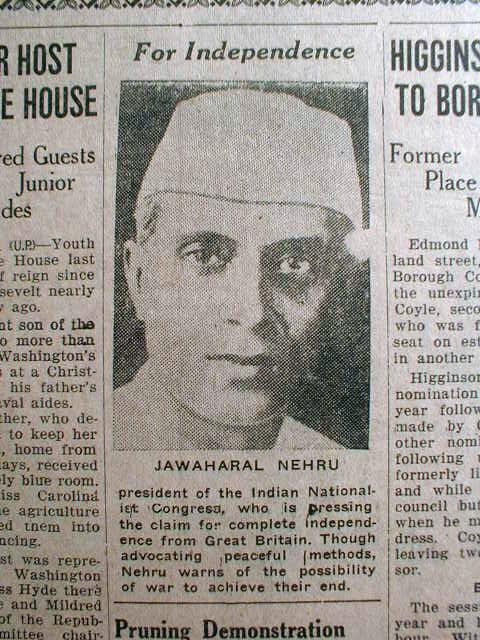
Lahore Congress adopts Purna Swaraj Resolution.
India
Political
Global Trade
5 min read
Updated By: History Editorial Network (HEN)
Published:
The Indian National Congress convened in Lahore, presided over by Jawaharlal Nehru, to address the growing demand for complete independence from British rule. Since its formation, the Congress had predominantly sought dominion status within the British Empire, but frustration had been mounting due to the unfulfilled promises of reforms and self-governance. The Montagu-Chelmsford Reforms and subsequent Acts had failed to satisfy the aspirations of Indian nationalists. Economic hardships faced by common Indians, exacerbated by World War I, and repressive measures like the Rowlatt Act had further fueled discontent.
The Lahore session marked a pivotal shift as growing sentiment among leaders and the masses leaned towards complete sovereignty. The Congress Working Committee, influenced strongly by Mahatma Gandhi’s principles of non-violence and civil disobedience, spearheaded the adoption of the resolution for 'Purna Swaraj,' meaning full independence. This shift resonated with the broader nationalistic fervor as well as the stark socio-economic realities faced by millions.
The resolution asserted that British rule was responsible for India's poverty and overall decline. It implicit the drainage of resources due to colonial exploitation and underscored the need for India to be the master of its destiny. The formalization of this demand galvanized the spirit of resistance and unity across India.
This pronouncement wasn't merely symbolic; it had tangible implications. Leaders encouraged Indians to celebrate January 26 as Independence Day, calling for active participation through boycotts, non-payment of taxes, and mass protests. This movement brought together diverse sections of Indian society under a common goal of total independence.
In terms of impact, the demand for complete independence shifted the focus of Indian politics and rallied more citizens into the fold of the independence movement. British authorities, recognizing the gravity of the resolve, responded with intensified repression, leading to significant episodes of civil disobedience and eventual legislative reforms, albeit delayed and inadequate.
Tags:
#PurnaSwaraj
#IndianIndependenceMovement
#MahatmaGandhi
#NonViolence
#LahoreCongress
#MoofLife
Primary Reference
Gandhi Timeline - Life Chronology of Mahatma Gandhi
Explore the Life Moments of
 AI Twin