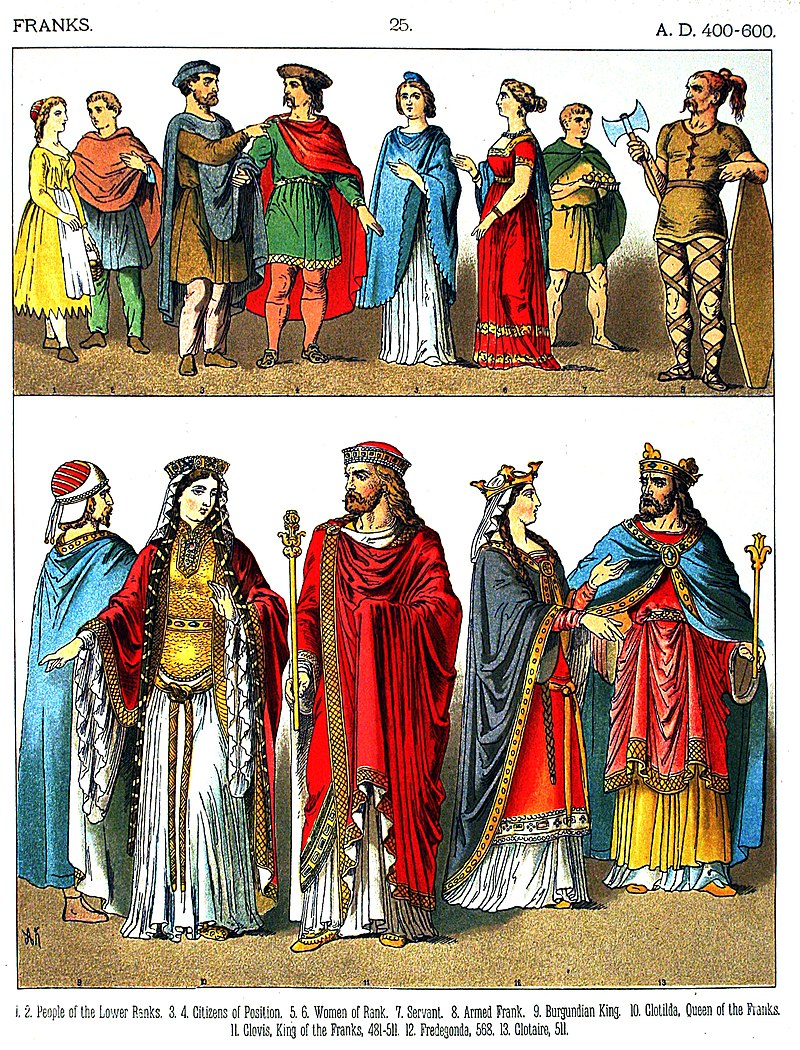
The Franks Conquer and Incorporate Luxembourg into Carolingian Empire
Luxembourg

Cultural Integration
6 min read
Updated By: History Editorial Network (HEN)
Published:
The historical shift when the Franks took control of the area now known as Luxembourg marked a pivotal transition, influencing the region's trajectory culturally, politically, and socially. The Franks, a collection of Germanic tribes, had steadily expanded their territories under the leadership of their chieftains, eventually consolidating power to form what became recognized as the Carolingian Empire.
Before the Frankish conquest, the area was part of the Roman Empire, known for its strategic positions and fortifications. The Roman control provided a network of roads and communication lines that facilitated trade and military movements. The decline of Roman authority in the region created a power vacuum that the emergent Frankish leadership sought to exploit.
The Carolingians, under leaders like Charlemagne, aimed to unify and expand their territories, incorporating diverse regions into their empire. The annexation of the Luxembourg area was part of their broader strategy to consolidate Western Europe under a single rule, promoting stability and fostering economic prosperity through centralized governance.
The immediate impact of this conquest was the integration of Roman and Frankish administrative systems. The Franks employed a feudal system, which served to organize local governance and establish clear lines of authority, effectively managing land and resources. This facilitated agricultural development and improved living conditions for the populace.
Culturally, the integration into the Carolingian Empire contributed to the Christianization of the region, aligning with broader efforts to spread Christianity across the territories under Carolingian control. Monasteries and churches became not only religious centers but also hubs of learning and literacy, playing a significant role in the preservation of knowledge through turbulent times.
This period also saw the establishment of long-lasting socio-political structures, some of which influenced Luxembourg's governance for centuries. The development of local customs and laws within the Carolingian framework created a unique blend of Roman and Germanic traditions, shaping the region's identity.
The conquest and subsequent administration under the Carolingian Empire set the foundation for Luxembourg's future as a distinct entity within Europe. It linked the area into the broader narrative of European history, contributing to its development through stability and cultural integration.
#Franks #LuxembourgHistory #CarolingianExpansion #MoofLife #CulturalIntegration
Primary Reference
Charlemagne: Facts, Empire & Holy Roman Emperor ‑ HISTORY

Explore the Life Moments of
 AI Twin