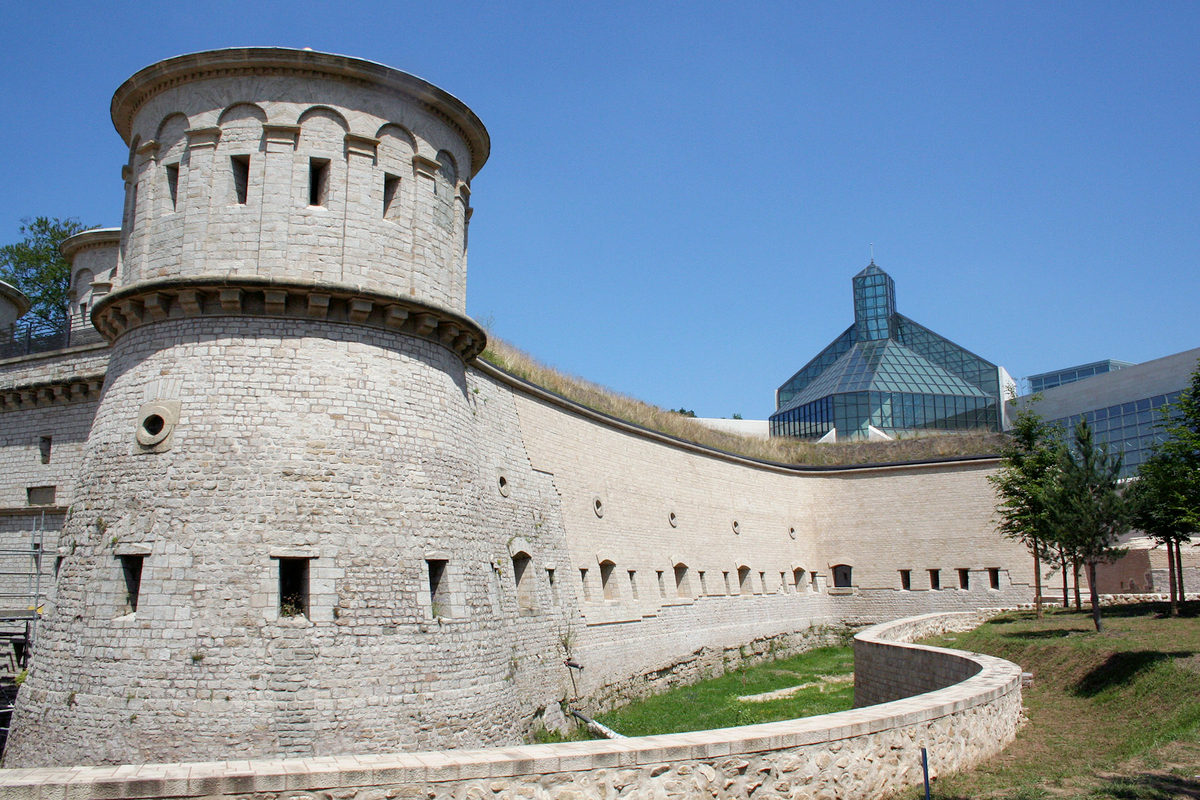
Early city wall construction in Luxembourg City.
Luxembourg

Landmark
Urban Development
5 min read
Updated By: History Editorial Network (HEN)
Published:
Count Siegfried acquired a rocky promontory known as the Bock. Over time, this site began to transform from a strategic lookout into the foundational cornerstone of what would become Luxembourg City. It was during this crucial phase that the first city walls were constructed, demarcating the boundaries of a nascent urban settlement.
The Bock was a commanding elevation offering significant defensive advantages, making it an ideal location for fortifications. As trade routes and political alliances grew in complexity, the need for effective defenses became evident. The construction of the city walls served both as a deterrent against potential invaders and as a tangible assertion of Siegfried’s dominion.
The early city walls were primarily built from locally sourced stone, featuring fortified gates and watchtowers. While rudimentary by modern standards, their construction involved considerable labor and resources. Their strategic importance was underscored by the numerous conflicts and skirmishes throughout the region, necessitating the protection of inhabitants, agricultural lands, and trade goods within the perimeter of the walls.
Constructing these defenses marked the transformation of Luxembourg from a strategic fortification to a recognized settlement. This foundational shift had notable implications for trade, security, and governance in the region. The delineation of city boundaries also facilitated better management and organization of the population, reflecting a move toward a more structured and permanent urban entity.
The walls’ establishment catalyzed growth in domestic activities, prompting an increase of dwellings, markets, and public spaces within their confines. This fortified settlement emerged as both a safe haven and a center for economic activities, influencing the socio-political landscape of the area.
Moreover, the presence of robust defenses enhanced Luxembourg’s standing among neighboring territories, serving as a focal point in regional power dynamics. It contributed to Luxembourg’s reputation and longevity as a strategic and safeguarded hub, laying the groundwork for its future expansion and prosperity.
The construction of the first city walls signaled a pivotal development in the geographic and historic landscape of Luxembourg, setting the stage for its evolution into a significant European city-state.
#MoofLife #HistoricalLandmark #Fortifications #UrbanDevelopment #LuxembourgCity #MedievalHistory
Primary Reference
History | Ville de Luxembourg

Explore the Life Moments of
 AI Twin