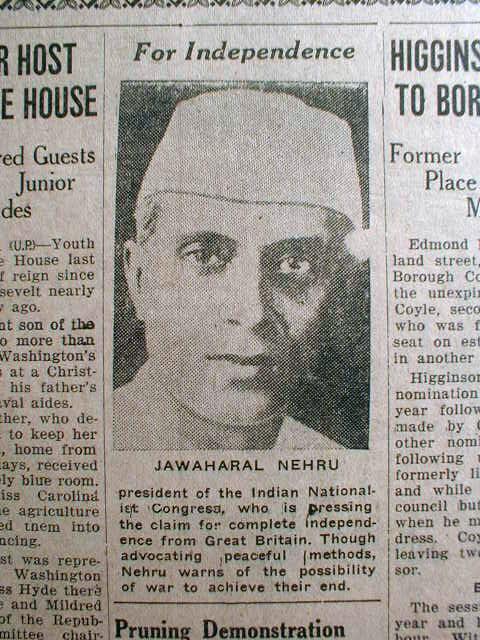
Jawaharlal Nehru's Call for Total Independence from British Rule in India.
India
Political
4 min read
Updated By: History Editorial Network (HEN)
Published:
Updated:
Jawaharlal Nehru, serving as the President of the Indian National Congress, made a call for complete independence from British rule. The backdrop to this decisive action lay in the pervasive dissatisfaction with British colonial governance, including economic exploitation, and political suppression. The stalemate in achieving dominion status within the British Empire prompted Indian leaders to demand complete self-governance.
Nehru's call for total independence marked a significant departure from previous demands for dominion status, representing a radical shift in the Congress's position. This phase was characterized by intense nationalist fervor and widespread public support for an absolute severance from British control. His declaration was made at a plenary session of the Indian National Congress, which resonated across the national landscape, inspiring numerous Indians to intensify their participation in the freedom struggle.
The call for independence also sparked a series of subsequent events that further galvanized the Indian freedom movement. It gave impetus to various campaigns, civil disobedience, and non-cooperation efforts led by leaders like Mahatma Gandhi. Statistics point to an increase in public mobilization, with thousands partaking in protests, marches, and acts of civil disobedience.
This call for independence was a watershed moment that unified diverse social classes and communities across India under a common goal, influencing the course of the nation's liberation struggle. It laid the groundwork for future negotiations and persistent endeavors aiming at attaining sovereign nationhood.
#Nehru #CongressPresident #IndependenceCall #FreedomMovement #MoofLife
Primary Reference
Jawaharlal Nehru - Wikipedia
Explore the Life Moments of
 AI Twin