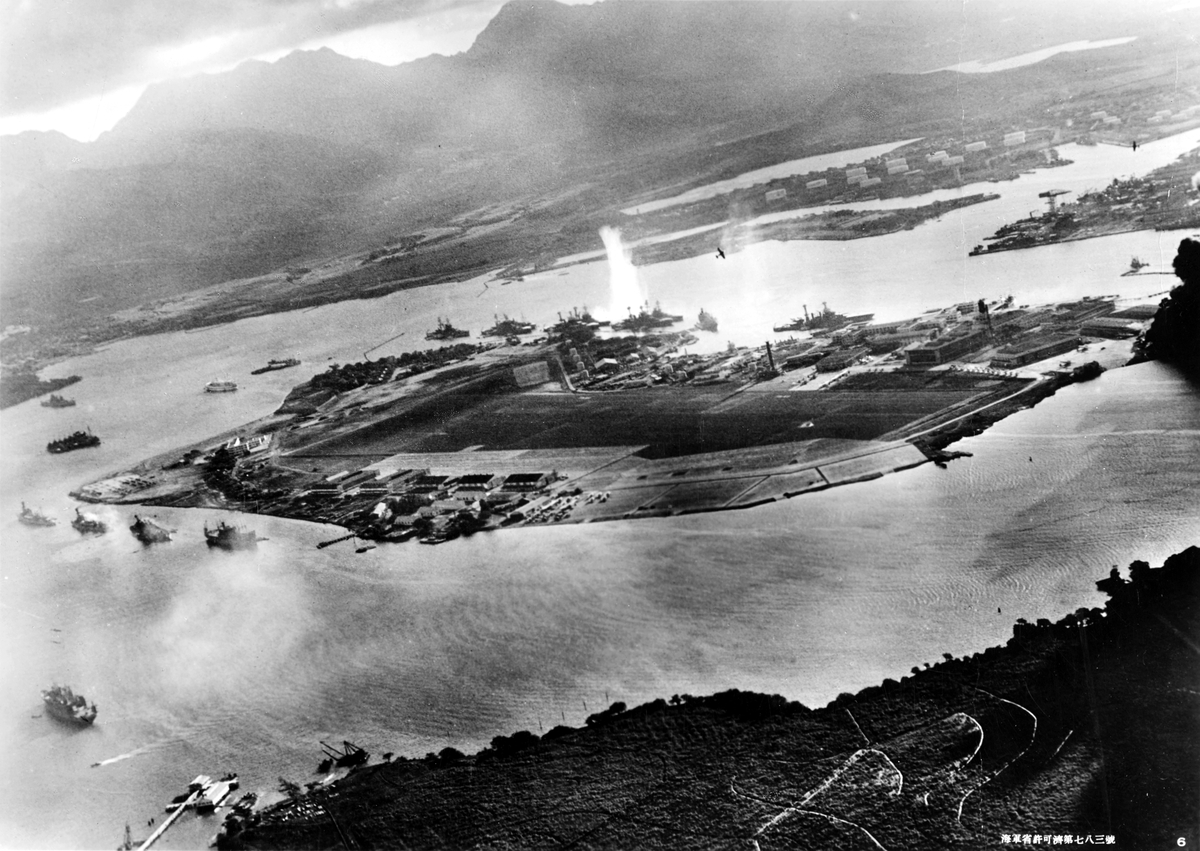
Pearl Harbor Attack Leads to U.S. Entry into WWII
Japan

Military Conflict
4 min read
Updated By: History Editorial Network (HEN)
Published:
In history, the Japanese Imperial Navy launched a surprise military strike on the Pearl Harbor naval base in Hawaii. The attack severely damaged the United States Pacific Fleet and resulted in the loss of numerous lives and the destruction of multiple aircraft and battleships. This event prompted the United States to officially enter World War II.
Tensions between the United States and Japan had been escalating for years due to conflicting interests in the Pacific region. The Japanese aimed to expand their influence and territory, which clashed with American efforts to maintain stability and control in the area. Negotiations between the two countries had reached a stalemate, pushing Japan to resort to a preemptive strike against the U.S. in an effort to cripple their naval capabilities in the Pacific.
The attack on Pearl Harbor had a profound impact, not only in terms of the immediate loss of military power and infrastructure but also in its strategic implications. The United States, previously hesitant to engage directly in the war, was now fully committed to fighting against the Axis powers. The event served as a rallying cry for the American public and fueled a sense of unity and determination to avenge the lives lost and defend their country.
In the aftermath of the attack, the United States declared war on Japan, marking the country's official entry into World War II. This decision would have far-reaching consequences, shaping the course of the conflict and ultimately leading to the defeat of the Axis powers. The events at Pearl Harbor stand as a stark reminder of the devastating impact of war and the importance of remaining vigilant and prepared in the face of aggression.
#PearlHarbor #JapanImperialNavy #WorldWarII #UnitedStates #MilitaryConflict

Explore the Life Moments of
 AI Twin