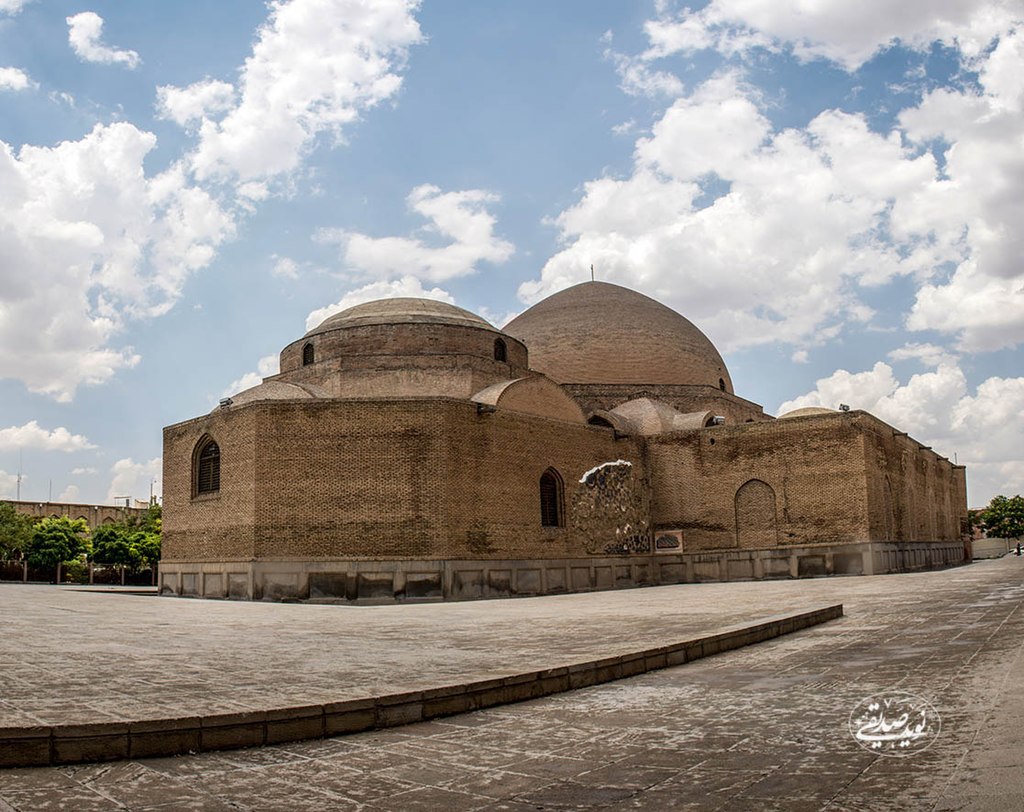
Historical construction of Tabriz Masjid-Madrasa in Tabriz City
Cultural Heritage
Islamic Education
4 min read
Updated By: History Editorial Network (HEN)
Published:
The Tabriz Masjid-Madrasa in Tabriz, Iran was constructed in 1465 during the rule of the Qara Qoyunlu dynasty. This architectural marvel served as a place of worship and learning for the local community in Tabriz. The Masjid-Madrasa's design features intricate tile work, soaring minarets, and a central courtyard, showcasing the exquisite craftsmanship of the artisans of that era.
The construction of the Tabriz Masjid-Madrasa had a profound impact on the cultural and educational landscape of the region. It provided a hub for religious practices, intellectual discourse, and Islamic teachings. Students from far and wide traveled to Tabriz to study various disciplines such as theology, jurisprudence, and Arabic language at the Madrasa. This institution played a crucial role in nurturing scholars and fostering a vibrant academic environment in Tabriz.
Moreover, the Masjid-Madrasa served as a center for community gatherings, Friday prayers, and religious ceremonies, further strengthening the social fabric of Tabriz. Its architectural beauty and spiritual significance attracted pilgrims and visitors from neighboring regions, leaving a lasting impression on all who visited.
The construction of the Tabriz Masjid-Madrasa stands as a testament to the rich cultural heritage and architectural legacy of Iran. It represents a blending of Islamic and Persian architectural styles, showcasing the artistic achievements of the time. The Masjid-Madrasa continues to be a symbol of spiritual enlightenment, architectural brilliance, and academic excellence in Tabriz.
#TabrizMasjidMadrasa #IranianArchitecture #CulturalHeritage #IslamicEducation #ArchitecturalLegacy
Primary Reference
Blue Mosque, Tabriz - Wikipedia

Explore the Life Moments of
 AI Twin