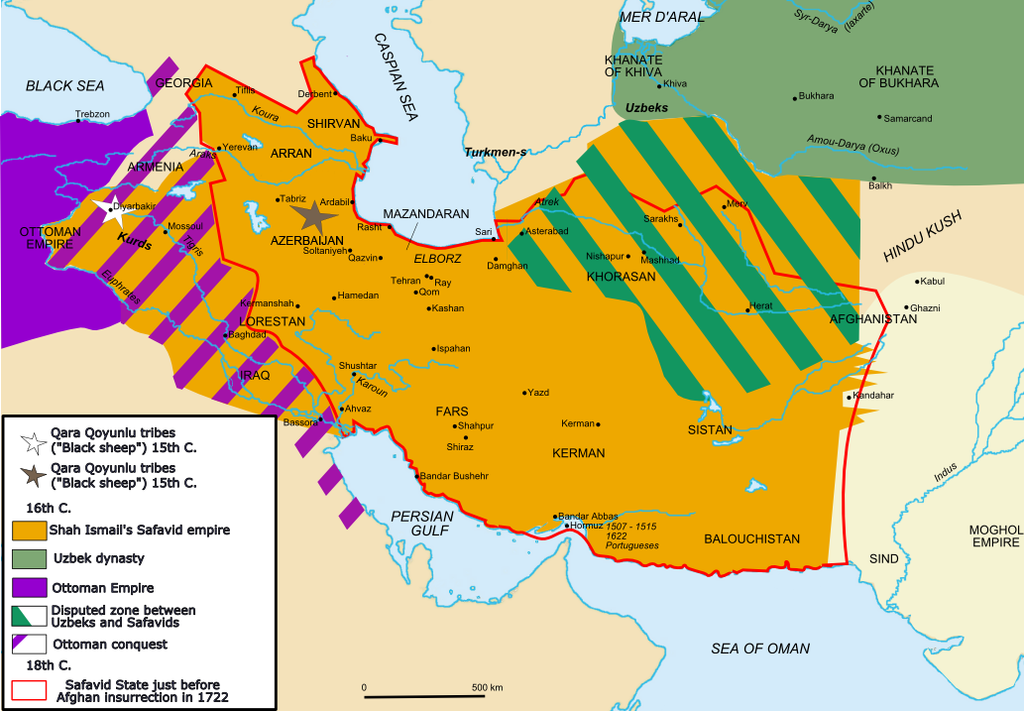
Establishment of Safavid Empire under Shah Ismail I in New Dynasty

Religion
4 min read
Updated By: History Editorial Network (HEN)
Published:
In the early 16th century, Shah Ismail I founded the Safavid Empire in Iran, marking the start of a new dynastic rule. The Safavids emerged as a powerful force, consolidating their control over the region and establishing Shia Islam as the state religion. Ismail I, a charismatic leader and skilled military strategist, united various Persian-speaking territories under his rule and transformed the Safavids into a formidable empire.
The establishment of the Safavid Empire had a profound impact on Iran and the surrounding regions. Under Ismail I's leadership, the empire flourished culturally, economically, and politically. The Safavids promoted Persian art, literature, and architecture, leaving a lasting legacy that continues to influence Iranian culture to this day. Additionally, the empire's strategic location on the Silk Road facilitated trade and cultural exchange between the East and the West, further enhancing its significance on the world stage.
The Safavid Empire's adoption of Shia Islam as the state religion also had far-reaching consequences. This decision not only shaped the empire's identity but also fueled centuries of religious conflict and sectarian tensions in the region. The Safavids' rivalry with the Sunni Ottoman Empire, in particular, led to numerous military conflicts and power struggles that shaped the course of Middle Eastern history.
Overall, the establishment of the Safavid Empire by Shah Ismail I was a pivotal moment that reshaped the political and religious landscape of Iran and the wider Middle East. The empire's cultural achievements, economic prosperity, and religious legacy cement its place as a key player in the history of the region, leaving behind a rich and complex tapestry of art, religion, and politics for future generations to explore. #SafavidEmpire #ShahIsmailI #IranHistory
Primary Reference
Ismail I - Wikipedia

Explore the Life Moments of
 AI Twin