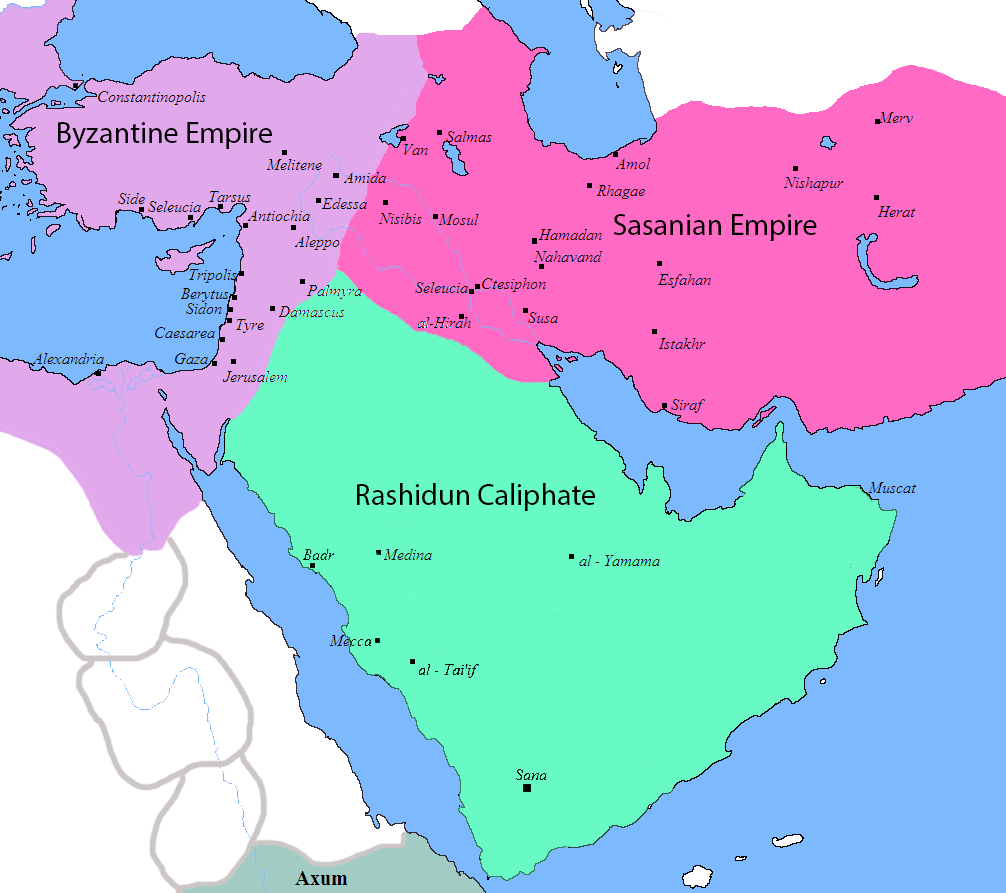
Early Islamic conquest of Persia.

Event
Cultural Transformation
4 min read
Updated By: History Editorial Network (HEN)
Published:
In the early 7th century, the Islamic conquest of Persia commenced, marking a significant turning point in the history of Iran. The Persian Sasanian Empire, weakened by internal strife and previous conflicts, faced the expanding Arab-Muslim forces who sought to spread Islam beyond the Arabian Peninsula. Under the leadership of Caliph Umar ibn al-Khattab, the Arab armies quickly advanced into Persian territories.
The defeat of the Persian forces at the Battle of al-Qadisiyyah in 636 was a decisive moment in the conquest. The city of Ctesiphon, the magnificent capital of the Sasanians, fell to the Arabs, leading to the gradual collapse of the Persian Empire. Despite pockets of resistance, many regions succumbed to the Islamic rule over the following years.
The impact of the Islamic conquest on Persia was profound. The Arab-Muslim forces brought a new religion, language, and culture to the region, contributing to the decline of Zoroastrianism as the dominant faith. The administrative systems and social structures also underwent significant changes as Islam established itself as the dominant political and religious force.
The conquest of Persia by the Arabs not only reshaped the religious and cultural landscape of the region but also had long-lasting geopolitical consequences. The integration of Iran into the expanding Islamic caliphate paved the way for the flourishing of Islamic civilization in the region and beyond.
#IslamicConquest #Persia #ArabMuslimForces #SasanianEmpire #CulturalTransformation #GeopoliticalImpact #HistoricalEvent #IranianHistory
Primary Reference
Persian alphabet - Wikipedia

Explore the Life Moments of
 AI Twin