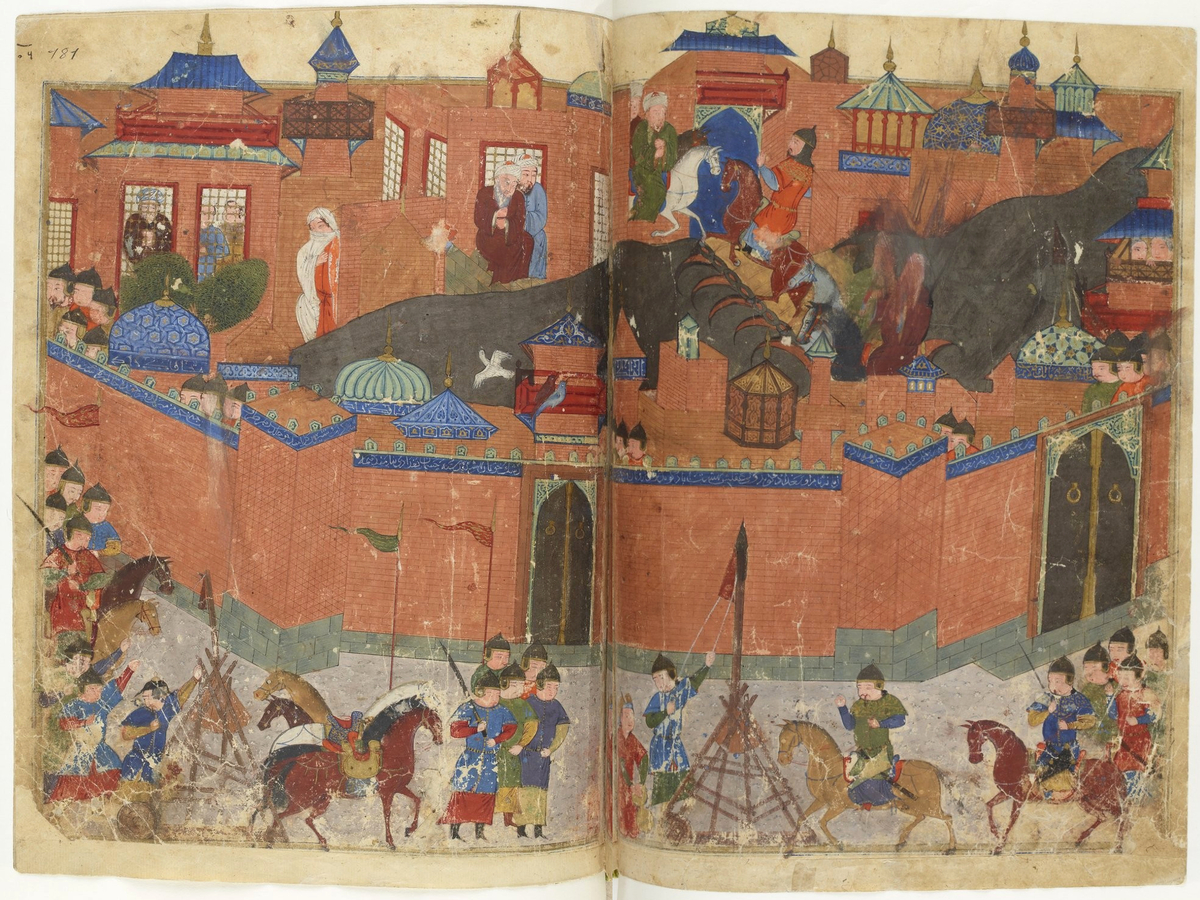
Devastating Siege of Baghdad

Historic Events
Political
4 min read
Updated By: History Editorial Network (HEN)
Published:
In the 13th century, Hulagu Khan, a Mongol ruler and founder of the Ilkhanate dynasty, led a devastating siege on Baghdad, the renowned capital of the Abbasid Caliphate. This military campaign marked a turning point in history as it brought about the end of the Islamic Golden Age.
The siege of Baghdad was a result of tensions between the Mongols and the Abbasid Caliphate, exacerbated by the caliphate's refusal to submit to Mongol rule. Hulagu Khan, determined to assert his dominance, assembled a formidable army that surrounded the city, cutting off crucial supply routes and launching brutal assaults on its defenses.
The impact of the siege was catastrophic. Baghdad, known for its wealth, culture, and intellectual achievements, was plundered and left in ruins. Countless residents were killed, buildings were destroyed, and priceless manuscripts were lost forever. The fall of Baghdad marked the demise of the Abbasid Caliphate, a once-powerful Islamic empire that had ruled for centuries.
The siege of Baghdad had far-reaching consequences, leading to the decline of Islamic influence in the region and paving the way for the rise of Mongol domination. It also highlighted the destructive power of warfare and the vulnerability of even the most fortified cities.
Despite the devastation wrought by the siege, Baghdad eventually began to rebuild and recover from its ruins. However, the event left a lasting scar on the city's history, serving as a stark reminder of the brutal realities of conflict and conquest.
#HulaguKhan #SiegeofBaghdad #MongolInvasions #EndofAbbasidCaliphate #IslamicGoldenAge #HistoricSieges
Primary Reference
Siege of Baghdad - Wikipedia

Explore the Life Moments of
 AI Twin