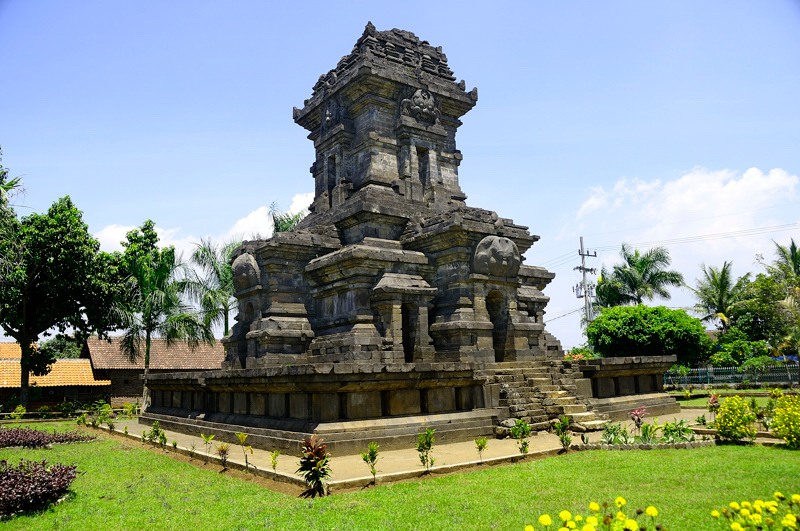
Construction of the Singhasari Temple in East Java under Singhasari Kingdom
Indonesia
Cultural Heritage
6 min read
Updated By: History Editorial Network (HEN)
Published:
During the rule of the Singhasari Kingdom in East Java, the construction of the Singhasari Temple marked a notable development in the region's architectural and cultural landscape. The Singhasari Kingdom, under the leadership of King Kertanegara, sought to establish a powerful legacy and reinforce Hindu-Buddhist beliefs. This period was characterized by notable military conquests and the consolidation of trade routes, which enabled the kingdom to amass the necessary resources for grand constructions.
The Singhasari Temple was envisioned as a tribute to King Kertanegara and was dedicated to the Hindu god Shiva. The temple's location near modern-day Malang was strategically chosen, leveraging the fertile lands and significant trade pathways that facilitated the movement of materials and labor. The temple's architecture incorporated both Hindu and Buddhist elements, reflecting the syncretic religious practices endorsed by the kingdom. Stone and brick were the primary materials used, with intricate carvings depicting deities, mythological scenes, and royal symbols.
The construction mobilized a large workforce, including skilled artisans, laborers, and architects. This workforce not only came from within the kingdom but also included individuals influenced by Indian architectural traditions, highlighting the extensive trade and cultural exchange happening at the time. The temple served as a center for religious worship, royal ceremonies, and community gatherings, thus playing a crucial role in the social and spiritual life of the kingdom's inhabitants.
The impact of the Singhasari Temple was multifaceted. It reinforced the political and cultural hegemony of King Kertanegara's rule, serving as a tangible manifestation of the kingdom's power and religious devotion. Additionally, the temple contributed to the spread of Hindu-Buddhist culture across the Indonesian archipelago, influencing subsequent kingdoms like Majapahit. The synthesis of architectural styles would leave a long-lasting legacy on the region’s subsequent temple constructions.
Explorations and studies of the site have revealed insights into the construction techniques and the socio-political dynamics of the era, enriching our understanding of Indonesian history and heritage. Today, the remnants of the Singhasari Temple stand as a testament to the kingdom's grandeur and the intricate blend of cultural influences that shaped its identity.
#SinghasariKingdom #IndonesianHistory #CulturalHeritage #TempleArchitecture #MoofLife
Primary Reference
Mongol invasion of Java - Wikipedia

Explore the Life Moments of
 AI Twin