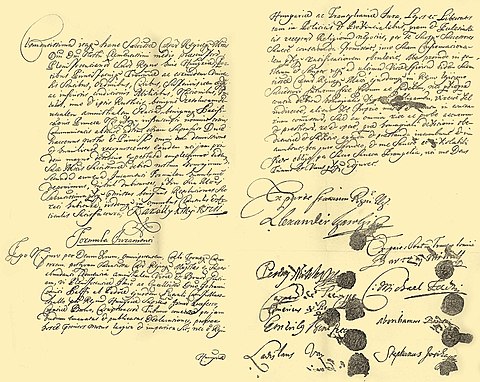
Treaty Ends Rákóczi's War: Szatmár Treaty Signed
Hungary
Political
5 min read
Updated By: History Editorial Network (HEN)
Published:
The Treaty of Szatmár marked the cessation of Rákóczi's War for Independence. This conflict aimed to regain independence with a series of military engagements led by Hungarian nobleman Prince Francis II Rákóczi against the Habsburg Monarchy. Over a prolonged struggle, Rákóczi managed to unite various factions of the Hungarian nobility and garner support from France and Poland. The war was characterized by shifts in alliance, sporadic battles, and an unstable political landscape.
Leading up to the treaty, both sides grappled with internal and external challenges. The Habsburg Monarchy faced multiple fronts and sought to consolidate control, while Rákóczi's forces, though driven by nationalist fervor, were increasingly worn down by the prolonged engagements and resource constraints. As negotiations commenced, exhaustion from continued warfare and the realization of a mutual stalemate spurred both parties to seek a resolution.
The Treaty of Szatmár provided significant concessions to the Hungarians. It allowed amnesty for the insurgents, restored confiscated estates, and granted religious freedom, addressing some concerns that had ignited the rebellion. The agreement also symbolized a compromise where Rákóczi's ambitious pursuit for full autonomy was tempered by pragmatic recognition of Habsburg sovereignty. In exchange, Hungary retained a measure of political and cultural self-determination within the empire.
In terms of immediate impact, the accord helped stabilize the region and laid the groundwork for relative peace and integration within the Habsburg domains. It marked the end of a major episode in Hungarian resistance against foreign domination, influencing subsequent national movements.
This event holds importance for its role in shaping Hungary's socio-political landscape. The treaty demonstrated the potential for negotiated settlements in conflicts deeply rooted in nationalist aspirations and external hegemonies. It also indicated the changing dynamics of European power structures, where localized agreements could bring temporary stability.
#TreatyOfSzatmár #RákóczisWar #HungarianIndependence #HabsburgMonarchy #MoofLife
Primary Reference
A History of Hungary

Explore the Life Moments of
 AI Twin