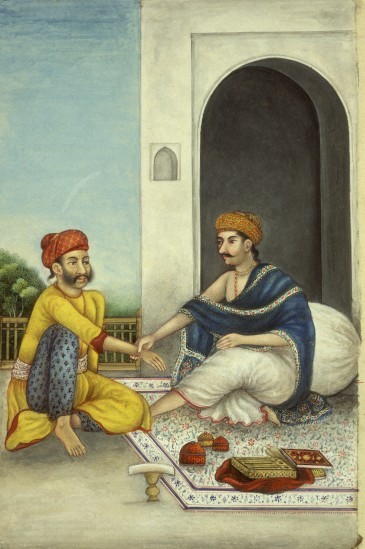
Physician Taking Pulse in Delhi
Egypt
Medicine
Geography
4 min read
Updated By: History Editorial Network (HEN)
Published:
In the early 19th century, the practice of medicine in India was undergoing significant transformation, influenced by both traditional practices and emerging Western medical knowledge. The act of a physician taking a pulse, as depicted in the context of Delhi, highlights the importance of pulse diagnosis in medical assessments. Pulse taking is a critical diagnostic tool in various medical traditions, particularly in Ayurveda and Unani systems, which were prevalent in India at the time. Physicians utilized this method to assess the health and condition of patients, providing insights into their overall well-being and guiding treatment decisions. The image of a physician engaged in this practice reflects the integration of traditional medical practices with the evolving landscape of healthcare in urban centers like Delhi.
The impact of such medical practices extended beyond individual health assessments; they played a crucial role in the broader public health landscape. As cities grew and populations increased, the demand for effective medical care surged. The presence of trained physicians who could accurately diagnose and treat ailments was essential in addressing health challenges faced by the urban populace. Furthermore, the interaction between traditional and Western medicine during this period laid the groundwork for future developments in medical education and practice in India. This blending of knowledge systems contributed to a more comprehensive approach to healthcare, ultimately influencing the evolution of medical practices in the region.
#mooflife
#MomentOfLife
#Physician
#PulseDiagnosis
#Delhi
#19thCenturyMedicine
#TraditionalMedicine

Explore the Life Moments of
 AI Twin