Pasteur Validates Schwann's Fermentation Research
Egypt
Science
Biology
3 min read
Updated By: History Editorial Network (HEN)
Published:
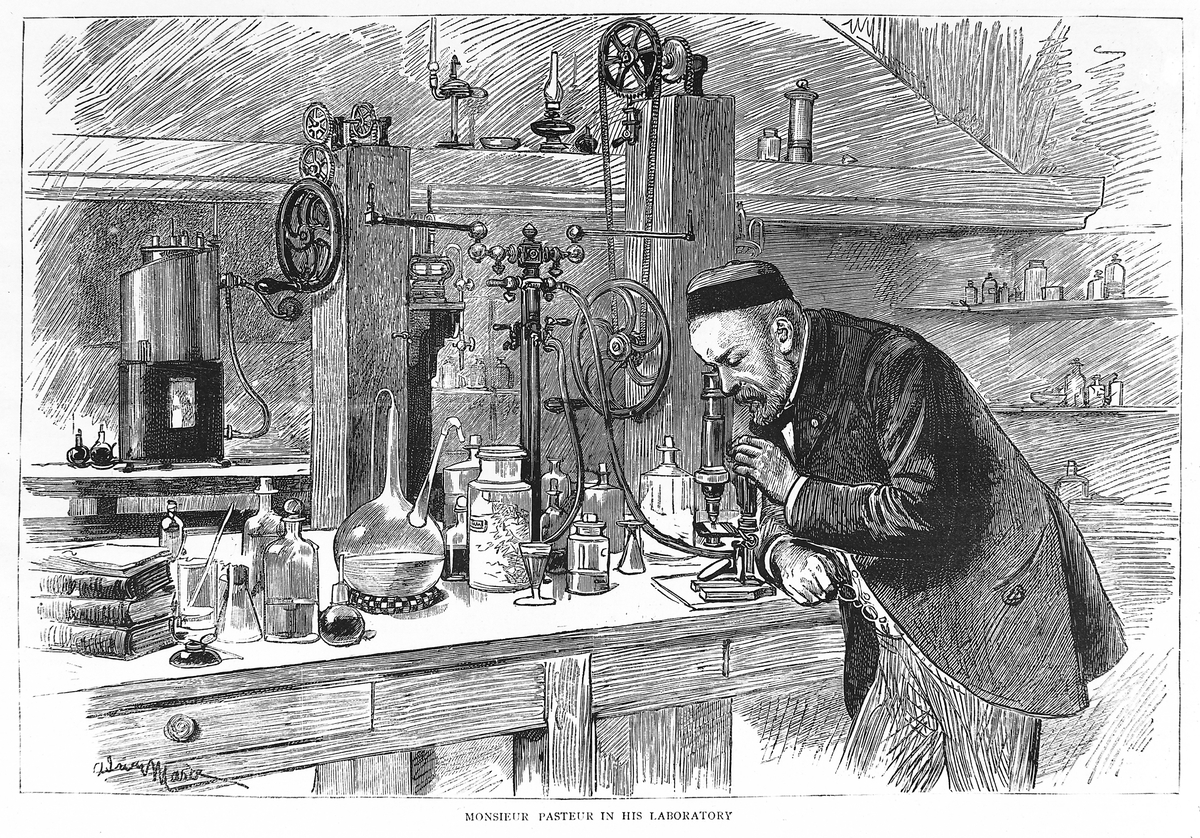
The research on alcoholic fermentation by yeast, led by Theodor Schwann, established a foundational understanding of the role of microorganisms in fermentation processes. Schwann's work proposed that living microorganisms were responsible for fermentation, challenging the prevailing miasma theory, which attributed infections to foul odors. This shift in perspective was crucial for the development of microbiology and the understanding of fermentation. Louis Pasteur, a prominent French scientist, later validated Schwann's findings in his own experiments. Pasteur's research confirmed that yeast were indeed microorganisms, thereby supporting Schwann's hypothesis and expanding the scientific community's understanding of fermentation.
Pasteur's contributions went beyond mere validation; he also introduced the concept of pasteurization, a process that involves heating liquids to eliminate harmful microorganisms. This not only revolutionized the production of alcoholic beverages but also had significant implications for food safety and preservation. The impact of these findings extended into various fields, including medicine and agriculture, as they laid the groundwork for germ theory and the understanding of infectious diseases. The confirmation of Schwann's fermentation research by Pasteur marked a pivotal moment in the history of science, leading to advancements in microbiology and the development of techniques that are still in use today.
#mooflife
#MomentOfLife
#LouisPasteur
#TheodorSchwann
#Fermentation
#Microorganisms
#Pasteurization

Explore the Life Moments of
 AI Twin