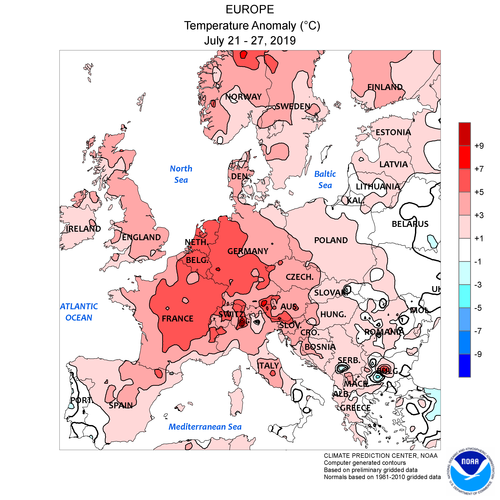
Impact of 2019 European Heat Waves
Weather
Climate
Europe
4 min read
Updated By: History Editorial Network (HEN)
Published:
Updated:
In 2019, Europe experienced a series of intense heat waves that had a profound impact on public health and the environment. The extreme temperatures during this period resulted in over 3,900 reported deaths, highlighting the severe consequences of heat-related illnesses. The heat waves were characterized by prolonged periods of high temperatures, which not only affected human health but also had significant implications for agriculture, water supply, and energy consumption. The agricultural sector faced challenges such as crop failures and reduced yields, which in turn affected food supply chains and prices across the continent. Additionally, the heat waves placed immense pressure on energy systems, as demand for cooling increased dramatically, leading to concerns about energy shortages and infrastructure strain.
The 2019 heat waves served as a wake-up call regarding the impacts of climate change and the need for effective adaptation strategies. The event underscored the vulnerability of urban areas, where heat islands exacerbated the effects of high temperatures. Public health responses were initiated to mitigate the risks, including the establishment of cooling centers and public awareness campaigns about heat safety. The heat waves also prompted discussions among policymakers about the necessity of implementing long-term strategies to address climate resilience, including improved urban planning and investment in sustainable infrastructure. Overall, the 2019 European heat waves highlighted the urgent need for comprehensive climate action to protect public health and ensure the sustainability of vital resources.
#mooflife
#MomentOfLife
#EuropeanHeatWaves
#ClimateChange
#PublicHealth
#AgricultureImpact
#EnergyConsumption

Explore the Life Moments of
 AI Twin