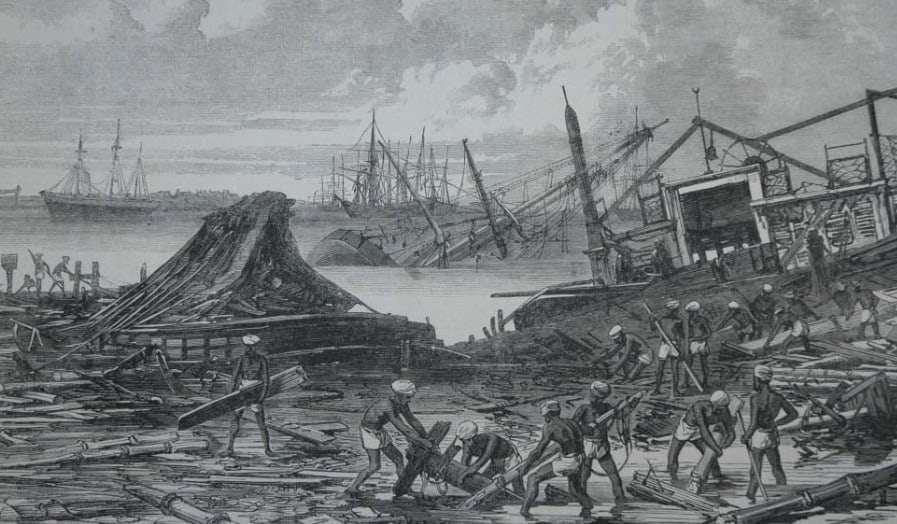
1839 Coringa cyclone in British India
Natural Disasters
Historical Events
Humanitarian Crises
2 min read
Updated By: History Editorial Network (HEN)
Published:
Updated:
The 1839 Coringa cyclone was a catastrophic weather event that impacted British India, particularly the region now known as Andhra Pradesh. This cyclone is noted for its immense destruction and loss of life, with estimates suggesting that approximately 300,000 individuals perished as a result of the storm. The cyclone struck with little warning, leading to widespread devastation in coastal areas. The impact was not only felt in terms of human casualties but also in the destruction of infrastructure, homes, and livelihoods. The severity of the cyclone highlighted the vulnerability of coastal communities to natural disasters, particularly in the context of limited meteorological knowledge and preparedness at the time. The aftermath of the cyclone necessitated significant humanitarian efforts and recovery initiatives, as communities struggled to rebuild in the face of such overwhelming loss.
#mooflife
#MomentOfLife
#CoringaCyclone
#BritishIndia
#NaturalDisasters
#AndhraPradesh
#HistoricalEvents

Explore the Life Moments of
 AI Twin