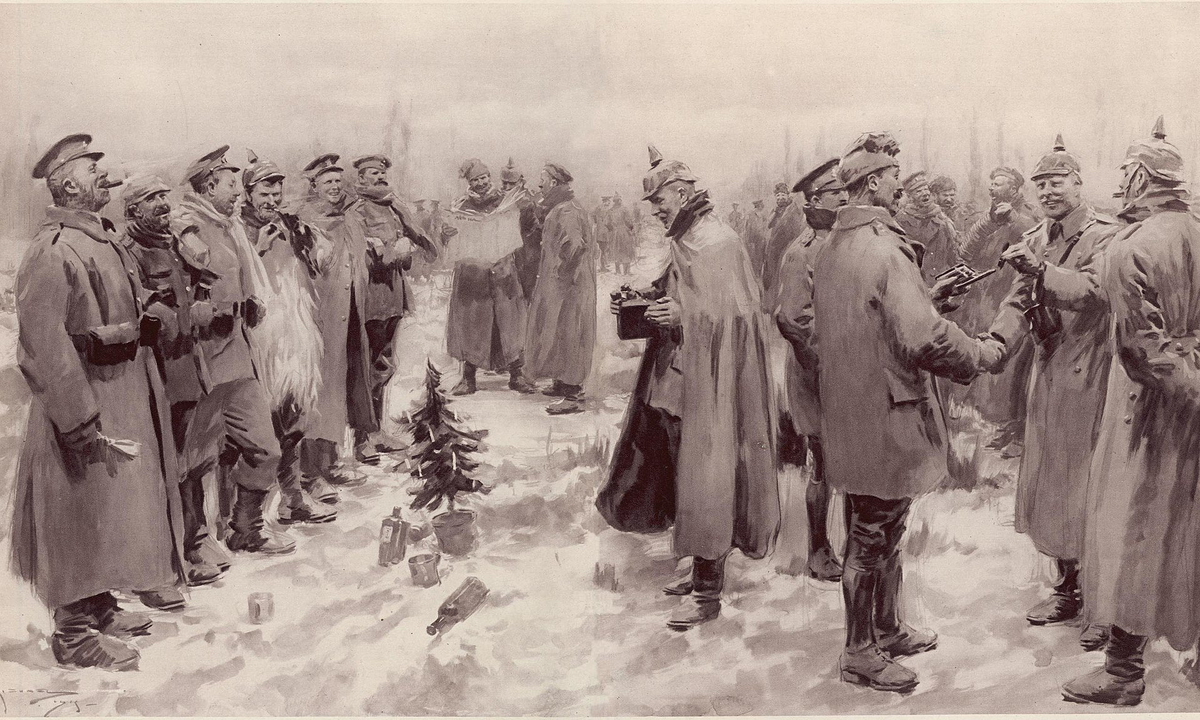
Legendary "Christmas Truce" takes place on the battlefields of WWI between British and German troops. Instead of fighting, soldiers exchange gifts and play football
Germany
8 min read
Updated By: History Editorial Network (HEN)
Published:
On December 25, 1914, during the early months of World War I, one of the most extraordinary and spontaneous events in the history of warfare occurred: the Christmas Truce. On this day, along various sections of the Western Front, British and German troops laid down their arms and emerged from their trenches to share moments of peace, camaraderie, and humanity amidst the brutality of war. This legendary event has become a poignant symbol of the possibility of peace and goodwill even in the darkest of times.
The Context
World War I had begun in July 1914 and quickly escalated into a deadly and prolonged conflict involving many of the world's great powers. By December 1914, the war had settled into a grueling and static trench warfare, with both sides entrenched in lines that stretched from the North Sea to the Swiss border. Life in the trenches was harsh, with soldiers facing constant danger from artillery bombardments, sniper fire, and the unsanitary conditions that bred diseases.
Prelude to the Truce
As Christmas approached, there were already signs that soldiers on both sides were weary of the relentless fighting. Letters and diaries from the front reveal that the Christmas season inspired thoughts of home and peace among the soldiers. Despite orders from high command to maintain vigilance and continue hostilities, a spirit of fraternization began to take hold.
The Truce
On Christmas Eve and Christmas Day, along various points of the Western Front, spontaneous truces broke out. The most notable accounts come from the British and German sectors. The truce began with carol singing, with soldiers singing Christmas songs across no man's land. Soon after, soldiers ventured out of their trenches to meet in the middle.
Key Events:
Exchanging Gifts: Soldiers exchanged small gifts such as food, tobacco, alcohol, and souvenirs. These gestures of goodwill were a stark contrast to the deadly exchanges of bullets and shells that usually characterized their interactions.
Joint Burials: In some areas, soldiers took the opportunity to retrieve and bury the bodies of their fallen comrades, providing a dignified farewell that the constant fighting had previously denied.
Football Matches: Perhaps the most enduring and symbolic event of the truce was the impromptu football (soccer) matches played between the British and German troops. While accounts of these matches vary, they have come to epitomize the humanity shared between the opposing sides.
The End of the Truce
The truce was not universal, nor did it last long. In many areas, fighting continued, and in others, the truce only lasted for a day or two before high command on both sides ordered a resumption of hostilities. The generals and political leaders were largely disapproving of the fraternization, fearing it would undermine the fighting spirit of their troops.
Legacy
The Christmas Truce of 1914 stands as a powerful reminder of the common humanity that binds all people, even those caught up in the machinery of war. It highlights the stark contrast between the desires of ordinary soldiers and the broader strategic objectives of their leaders.
Key Takeaways:
Human Spirit: The truce showcased the resilience of the human spirit and the desire for peace and connection even amidst the horrors of war.
War's Absurdity: The temporary peace highlighted the absurdity of the conflict, where men who could momentarily see each other as fellow human beings were otherwise expected to kill each other.
Symbol of Hope: The event has been immortalized in books, songs, films, and plays, serving as a symbol of hope and a call for peace in times of conflict.
#MomentsOfLife #MoofLife_Moment #MoofLife #ChristmasTruce #WWI #HumanityInWar #Peace #History #WesternFront #WarAndPeace
Primary Reference
The Real Story Of The Christmas Truce Of 1914 | Imperial War ...

Explore the Life Moments of
 AI Twin