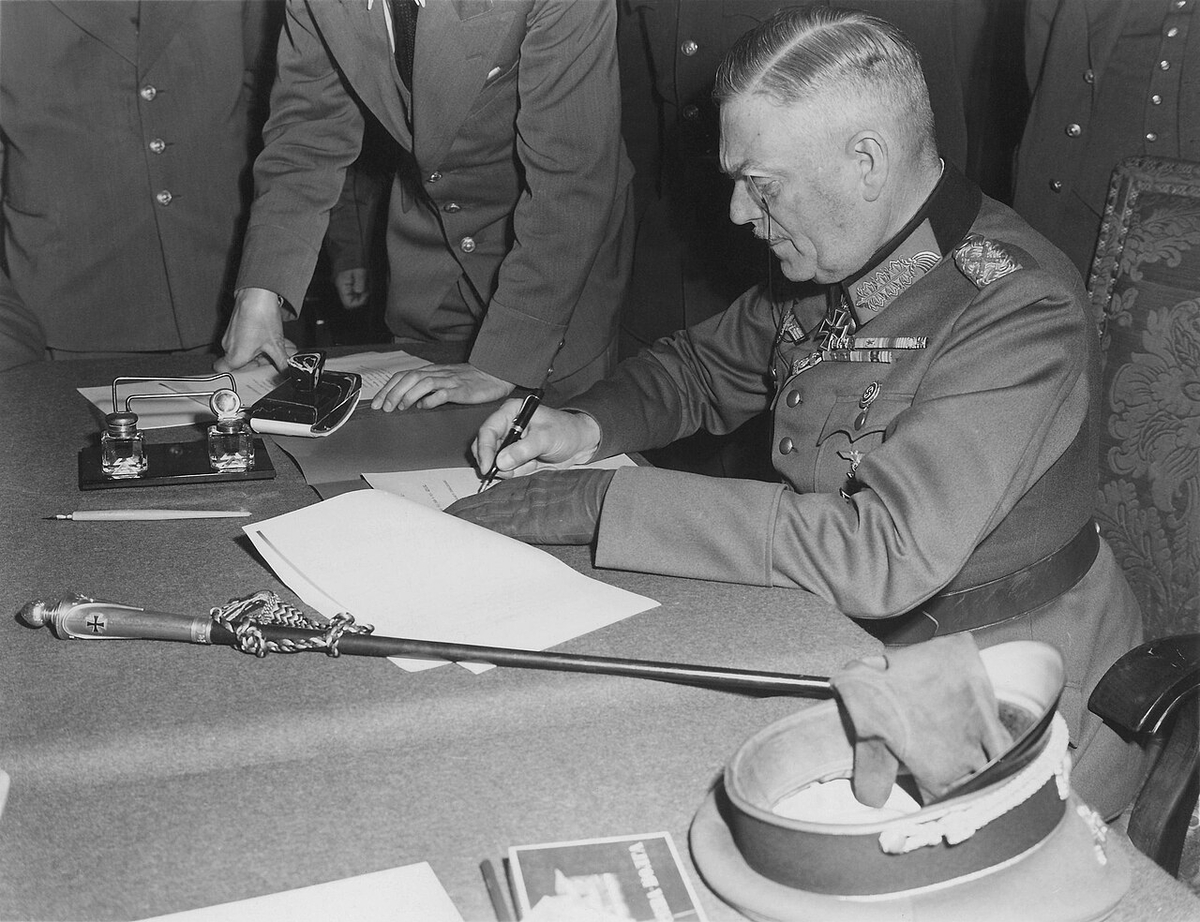
WWII Axis Powers surrender to the Allies under General Eisenhower at Allied headquarters.
Germany

Global Trade
Political
3 min read
Updated By: History Editorial Network (HEN)
Published:
Following the intense battles and relentless push by Allied forces through northwest Europe, Germany faced a pivotal moment at the headquarters of US General Dwight D. Eisenhower. The unconditional surrender marked the end of a devastating war that had engulfed the region for years. The event brought an official conclusion to the long and bloody conflict, signaling a moment of relief and hope for many nations affected by the war.
The surrender had a profound impact on the course of history, leading to the liberation of occupied territories and paving the way for the reconstruction of postwar Europe. It also brought a sense of closure and the beginning of a new era of peace and reconciliation among nations. The surrender represented a turning point in the struggle against tyranny and aggression, setting the stage for a renewed commitment to international cooperation and diplomacy.
This historic event underscored the importance of unity and perseverance in the face of adversity, highlighting the resilience and determination of the Allied forces in their fight for freedom and justice. The unconditional surrender at General Eisenhower's headquarters stands as a symbol of victory over oppression and a testament to the enduring spirit of human resilience and solidarity. #Germany #AlliedForces #UnconditionalSurrender #EndofWWII #PeaceAndReconciliation
Primary Reference
Surrender of Germany (1945) | National Archives

Explore the Life Moments of
 AI Twin