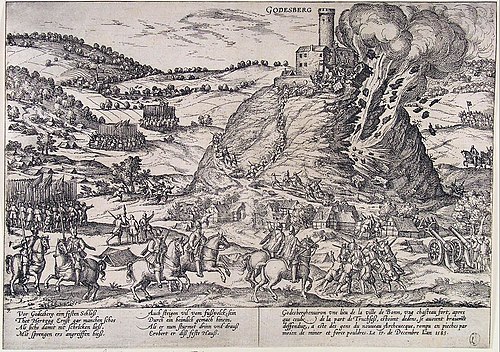
Conflict arises between Holy Roman Empire and Protestant princes in the Schmalkaldic War.
Germany
Political
Religious
3 min read
Updated By: History Editorial Network (HEN)
Published:
The Schmalkaldic War marked a pivotal moment in the tension between the Holy Roman Empire and Protestant territories in Germany. The conflict was fueled by religious disputes, with Protestant princes forming the Schmalkaldic League to protect their interests against Emperor Charles V's Catholic rule.
Tensions escalated as the Protestant princes refused to obey the Emperor's decree to restore Catholic worship in their territories. This defiance led to military confrontation between the two sides, resulting in a series of battles and sieges across Germany. The war saw shifting alliances and strategic maneuvers, with both sides vying for control and support.
The outcome of the Schmalkaldic War was decisive, with the Protestant forces ultimately defeated at the Battle of Mühlberg in 1547. This defeat solidified the Emperor's authority and dealt a blow to the Protestant cause. As a result, the Peace of Augsburg was later signed, granting princes the right to choose their territories' religion between Catholicism and Lutheranism.
The Schmalkaldic War left a lasting impact on Germany, shaping the religious and political landscape for years to come. The conflict underscored the deep divisions between Catholics and Protestants and the struggle for power within the Holy Roman Empire. #SchmalkaldicWar #ProtestantPrinces #HolyRomanEmpire #ReligiousConflict
Primary Reference
Schmalkaldic War - Wikipedia

Explore the Life Moments of
 AI Twin