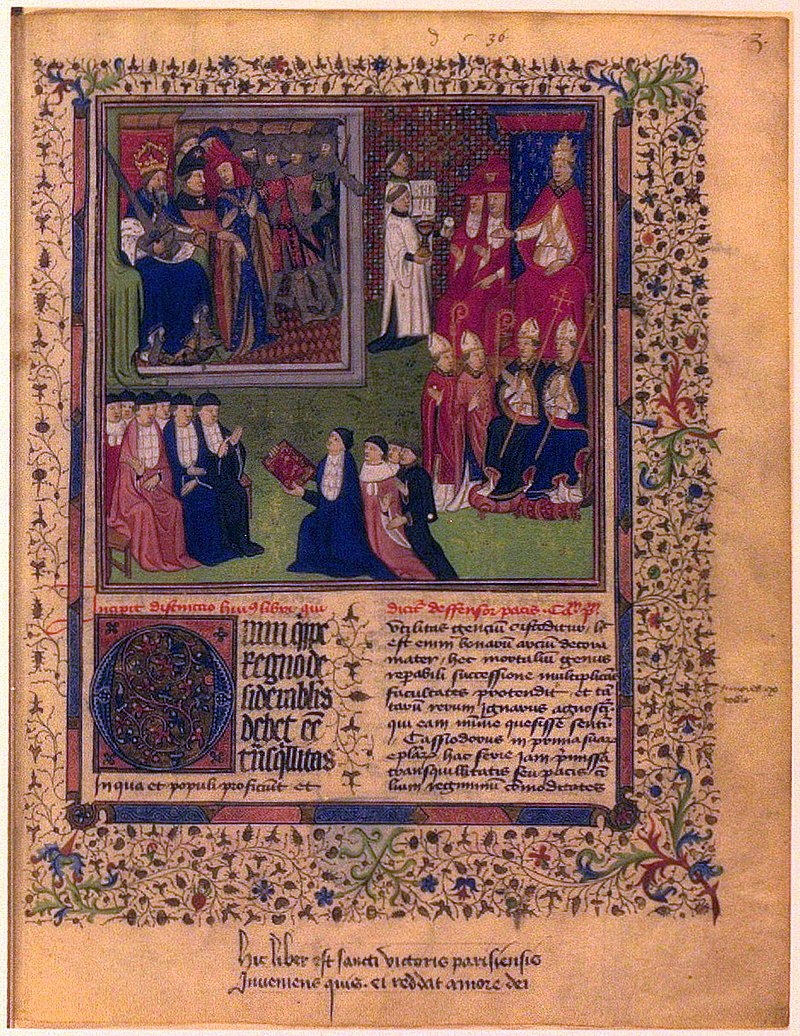
Controversial views on church and state lead to execution of Italian scholar in Munich.
Germany
Political
3 min read
Updated By: History Editorial Network (HEN)
Published:
Marsilius of Padua, a prominent Italian scholar and political theorist, faced his fate in Munich for his contentious perspectives on the relationship between the church and state. Executed due to his controversial beliefs, Marsilius's ideas challenged the traditional authority of the church and advocated for a more secular view of governance, emphasizing the supremacy of the state over ecclesiastical powers.
His execution in Munich sent shockwaves through the intellectual circles of the time. It highlighted the tension between secular and religious authorities and the risks individuals faced for expressing dissenting opinions. Despite his demise, Marsilius's ideas continued to influence political thought in Europe, paving the way for future discussions on the separation of church and state.
The event marked a turning point in the discourse on political theory and raised questions about the limits of intellectual freedom in medieval Europe. Marsilius of Padua's legacy endured beyond his controversial demise, shaping subsequent debates on the nature of power and authority.
#MarsiliusOfPadua #ChurchandState #PoliticalTheory #IntellectualFreedom #MedievalEurope.
Primary Reference
Carl Schmitt And Political Catholicism: Friend Or Foe?

Explore the Life Moments of
 AI Twin