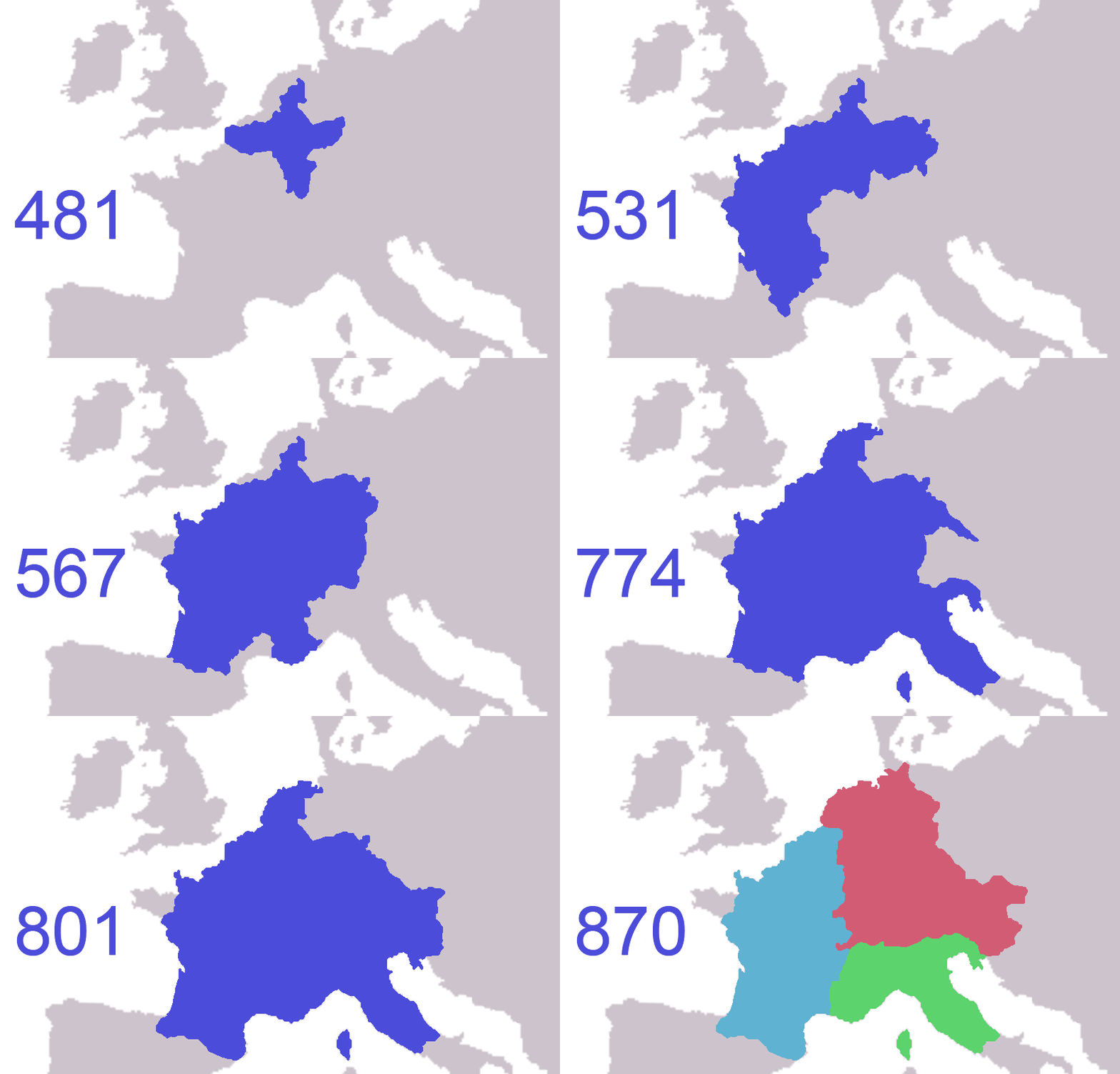
Establishment of the Carolingian Empire by Charlemagne, a significant medieval ruling power in Europe.
Germany
Political
3 min read
Updated By: History Editorial Network (HEN)
Published:
In 800, Charlemagne, already King of the Franks, was crowned Emperor of the Romans by Pope Leo III in Rome. This event signaled the establishment of the Carolingian Empire, named after Charlemagne's dynasty. The empire spanned a vast territory across Western and Central Europe, uniting various Germanic tribes under one ruler.
The coronation of Charlemagne as Emperor marked a revival of the idea of a unified Western Roman Empire and enhanced Charlemagne's status as a powerful ruler in the region. His reign brought about a period of cultural, economic, and military prosperity known as the Carolingian Renaissance. Charlemagne's leadership and patronage of learning and the arts laid the foundation for the preservation and revival of classical knowledge.
The Carolingian Empire significantly impacted the political landscape of Europe, setting the stage for the Holy Roman Empire and influencing the development of medieval Europe. Charlemagne's administration and the spread of Christianity under his rule also left a lasting legacy in the region.
#CarolingianEmpire #Charlemagne #GermanHistory #EuropeanUnity
Primary Reference
Charlemagne: Facts, Empire & Holy Roman Emperor - HISTORY

Explore the Life Moments of
 AI Twin