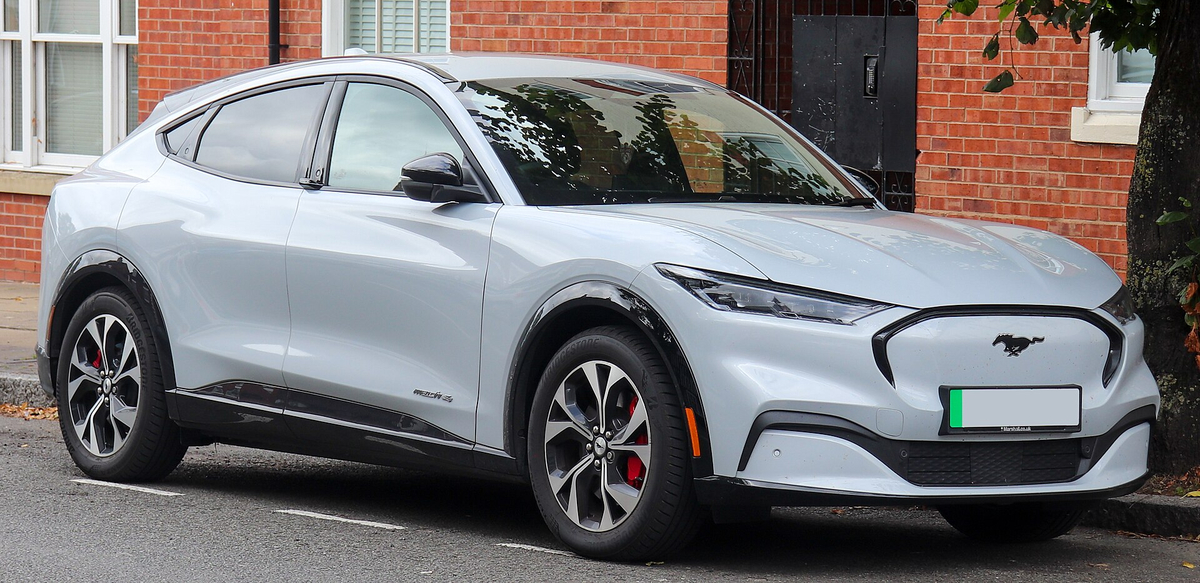
Ford Introduces Eye-Tracking System in Mustang Mach-E
United States and Canada
Automotive Technology
Electric Vehicles
Driver Assistance Systems
6 min read
Updated By: History Editorial Network (HEN)
Published:
Updated:
The 2023 Ford Mustang Mach-E includes an integrated infrared-based driver eye-tracking system designed to support the company’s Ford BlueCruise hands-free driving technology. The system is intended to monitor driver attention while allowing hands-free operation on designated highway sections known as Hands-Free Blue Zones across North America.
The eye-tracking technology uses an infrared camera positioned within the vehicle cabin to observe the driver’s gaze direction and head position in real time. Unlike systems that rely only on steering wheel contact sensors, Ford’s setup is designed to confirm that drivers remain visually attentive to the road even when their hands are not on the steering wheel. The infrared capability also allows the system to function in low-light or nighttime driving conditions.
Ford BlueCruise combines adaptive cruise control, lane centering, speed sign recognition, and driver monitoring technologies to enable limited hands-free highway driving under specific conditions. The system operates only on pre-mapped divided highways that Ford has approved for BlueCruise functionality. If the eye-tracking system determines that the driver is no longer paying attention, the vehicle issues escalating visual and audible warnings. Continued inattention can eventually lead to the deactivation of hands-free mode.
The 2023 Mustang Mach-E was among the key Ford vehicles equipped with updated BlueCruise software during a period of increasing competition in advanced driver-assistance technologies. Automakers including General Motors, Tesla, Mercedes-Benz, and BMW were also expanding driver-monitoring systems as regulators and safety agencies placed greater emphasis on maintaining human supervision in semi-automated driving environments.
Ford stated that the driver-monitoring technology was developed to improve safety while supporting more natural hands-free driving experiences. The company also emphasized that BlueCruise is classified as a driver-assistance system rather than a fully autonomous driving platform, meaning drivers must remain alert and prepared to take control of the vehicle at all times.
The Mustang Mach-E itself continued to serve as a central part of Ford’s electric vehicle strategy in 2023, with BlueCruise positioned as one of the flagship technology features differentiating the model in the growing EV market.
Why This Moment Matters :
The addition of infrared eye-tracking technology in the Mustang Mach-E reflected a broader industry shift toward combining automation with active driver supervision. As hands-free driving systems became more common, automakers increasingly relied on camera-based monitoring to address safety concerns linked to driver distraction and misuse of semi-autonomous features.
#mooflife
#MomentOfLife
#Ford
#MustangMach-e
#Eye-trackingSystem
#AutomotiveSafety
#Level2Automation
Primary Reference
Ford Mustang Mach-E Given New BlueCruise Technology

Explore the Life Moments of
 AI Twin