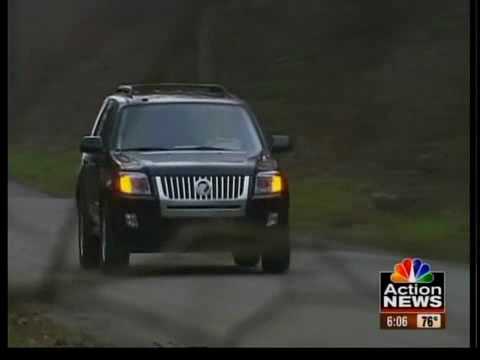
Ford Discontinues Mercury Brand
Dearborn, Michigan, United States
Automotive
Business
7 min read
Updated By: History Editorial Network (HEN)
Published:
Updated:
Ford Motor Company officially announced on 02/06/2010 that it would discontinue the Mercury brand by the end of the year, bringing to a close a nameplate that had been part of the company's portfolio since 1938. The decision was revealed as part of Ford's broader business strategy to streamline operations and concentrate resources on its core Ford and Lincoln brands during a period of significant transformation for the automaker.
Mercury was originally introduced by Ford in 1938 to bridge the gap between the company's mainstream Ford vehicles and its higher-priced Lincoln models. For decades, the brand occupied a distinct position in the North American automotive market, offering vehicles that combined features and styling elements positioned above Ford products while remaining more affordable than Lincoln. During its peak years, Mercury sold a wide range of passenger cars, coupes, sedans, wagons, and sport utility vehicles, becoming a familiar presence in dealerships across the United States, Canada, and other markets.
By the early 2000s, however, Mercury's role within Ford's product lineup had become increasingly difficult to define. Many Mercury vehicles shared platforms, designs, and engineering with their Ford counterparts, resulting in limited differentiation between the brands. Consumer demand gradually shifted, and Mercury experienced a prolonged decline in sales and market share. In 2009, Mercury sold fewer than 93,000 vehicles in the United States, a fraction of the volumes achieved by Ford's primary brand. At the time of the announcement, Mercury accounted for less than one percent of the global automotive market and represented only a small portion of Ford's overall sales.
Ford stated that eliminating Mercury would allow the company to focus investment, product development, marketing, and dealer resources on strengthening the Ford brand while continuing efforts to revitalize Lincoln. The company emphasized that concentrating on fewer brands would improve operational efficiency and support its ongoing "One Ford" strategy, which aimed to simplify the business and align global product development. Ford President and Chief Executive Officer Alan Mulally described the move as a necessary step in accelerating the transformation of the company and maximizing growth opportunities for its remaining automotive brands.
The discontinuation process took place throughout the remainder of 2010. Mercury dealers were given options to continue operating as Ford-Lincoln dealerships, and customer support, warranties, service, and parts availability remained in place for existing Mercury owners. The final Mercury vehicles rolled out of production later that year, ending a brand history that had spanned more than seven decades and included iconic models such as the Cougar, Grand Marquis, Mountaineer, Sable, and Mariner.
Why This Moment Matters:
The retirement of Mercury reflected broader changes occurring within the automotive industry during the late 2000s, as manufacturers sought to reduce complexity, eliminate overlapping brands, and improve efficiency following the global financial crisis. For Ford, the decision marked a continuation of its strategy to focus resources on a smaller number of clearly defined brands, a direction that shaped the company's product and marketing efforts in the years that followed.
#mooflife
#MomentOfLife
#Ford
#Mercury
#AutomobileIndustry
#BrandDiscontinuation
#AutomotiveHistory
Primary Reference
Ford to eliminate Mercury brand

Explore the Life Moments of
 AI Twin