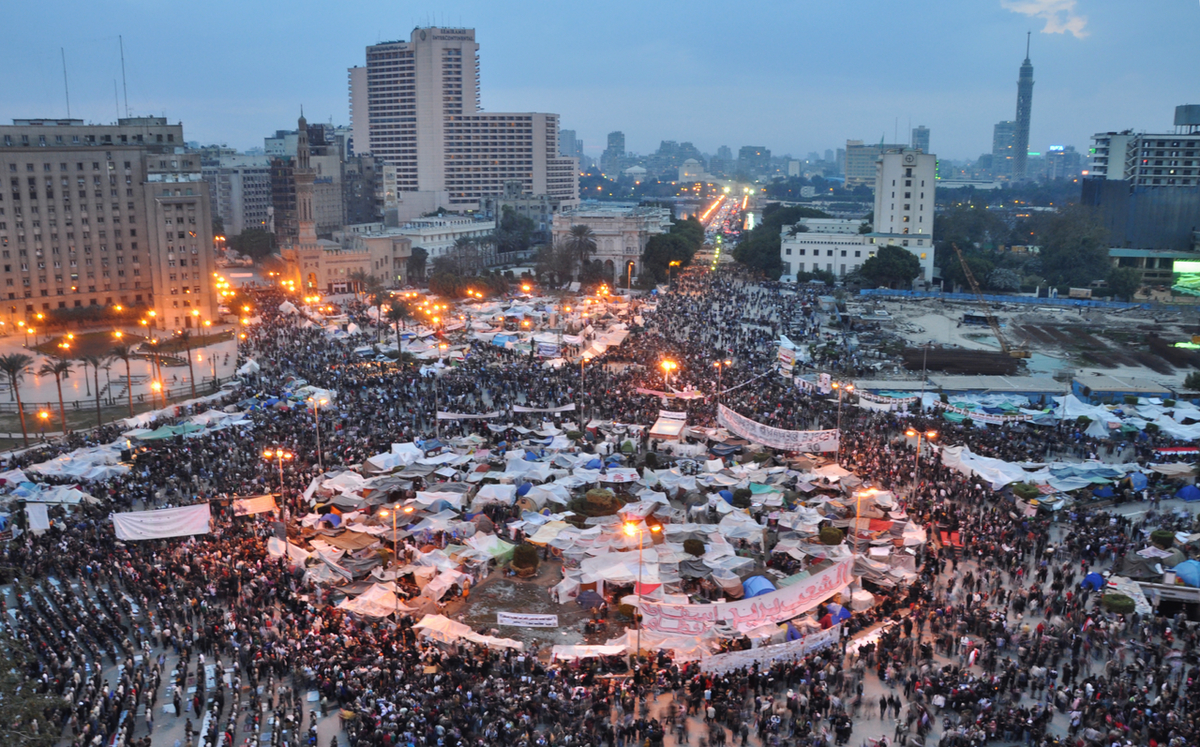
End of President Hosni Mubarak's Rule
Egypt

Political
Global Trade
3 min read
Updated By: History Editorial Network (HEN)
Published:
In Egypt, widespread protests erupted, demanding the end of President Hosni Mubarak's regime due to grievances over corruption, high unemployment, and political repression. The demonstrations, organized largely through social media, gathered momentum with millions taking to the streets in major cities.
Facing mounting pressure, Mubarak eventually resigned after ruling Egypt for nearly three decades. The military took control of the country, pledging a transition to civilian rule, marking a significant turning point in Egypt's modern history.
The ousting of Mubarak had ripple effects across the region, inspiring other movements during the 'Arab Spring'. However, the transition following his resignation faced challenges, with periods of political turmoil and unrest in the years that followed.
The Egyptian Revolution reshaped the country's political landscape and sparked discussions about democracy, freedom of speech, and social justice. It demonstrated the power of grassroots movements and the role of social media in mobilizing dissent.
#Egypt #Revolution #Mubarak #ArabSpring #Democracy

Explore the Life Moments of
 AI Twin