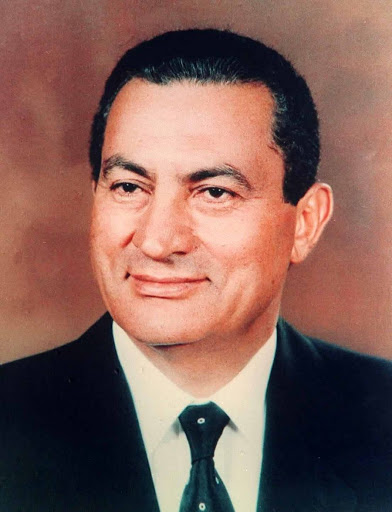
Hosni Mubarak became the President of Egypt
Egypt

Political
Presidency
Sustainability
6 min read
Updated By: History Editorial Network (HEN)
Published:
Hosni Mubarak became the President of Egypt on October 14, 1981, following the assassination of President Anwar Sadat. Mubarak's presidency marked the beginning of an era that would last almost 30 years, characterized by a mix of political stability, economic challenges, and persistent issues related to human rights and political freedoms.
Background
Hosni Mubarak was born on May 4, 1928, in Kafr El-Meselha, Egypt. He pursued a military career, graduating from the Egyptian Military Academy in 1949 and later receiving training as a pilot in the Soviet Union. Rising through the ranks, Mubarak became the commander of the Egyptian Air Force in 1972. His leadership during the Yom Kippur War of 1973 earned him national acclaim and the position of Vice President in 1975.
Rise to Power
Mubarak's ascent to the presidency was swift and unexpected. On October 6, 1981, during a military parade in Cairo, President Anwar Sadat was assassinated by members of Egyptian Islamic Jihad. As Vice President, Mubarak was injured in the attack but survived. Eight days later, on October 14, Mubarak was sworn in as President of Egypt.
Mubarak's Presidency
Mubarak's nearly three-decade rule was marked by significant political and economic developments:
Political Landscape
Mubarak maintained a firm grip on power through a combination of political maneuvering, economic policies, and security measures. His regime was known for its authoritarian practices, including the extensive use of emergency laws that curtailed political freedoms and suppressed dissent. Political opposition was limited, with the ruling National Democratic Party (NDP) dominating the political scene.
Economic Policies
Mubarak pursued economic reforms aimed at liberalizing the economy and encouraging foreign investment. The "Infitah" (open-door policy) initiated under Sadat was continued, leading to some economic growth and modernization. However, these policies also resulted in economic inequality, with wealth concentrated among a small elite. High unemployment rates and poverty remained persistent challenges.
Foreign Policy
Mubarak maintained Egypt's peace treaty with Israel, which had been a cornerstone of Sadat's foreign policy. This stance ensured continued U.S. economic and military aid, strengthening Egypt's strategic relationship with the United States. Mubarak also played a significant role in regional politics, positioning Egypt as a mediator in the Arab-Israeli conflict and other Middle Eastern issues.
Human Rights and Opposition
Throughout Mubarak's rule, human rights organizations frequently criticized the government for its repression of political freedoms and widespread use of torture and arbitrary detention. The state-controlled media and restricted civil society organizations further limited the scope of political expression and activism.
#MomentsOfLife #MoofLife_Moment #MoofLife #HosniMubarak #EgyptianHistory #ArabSpring #PoliticalChange
Primary Reference
History of Egypt under Hosni Mubarak
Explore the Life Moments of
 AI Twin