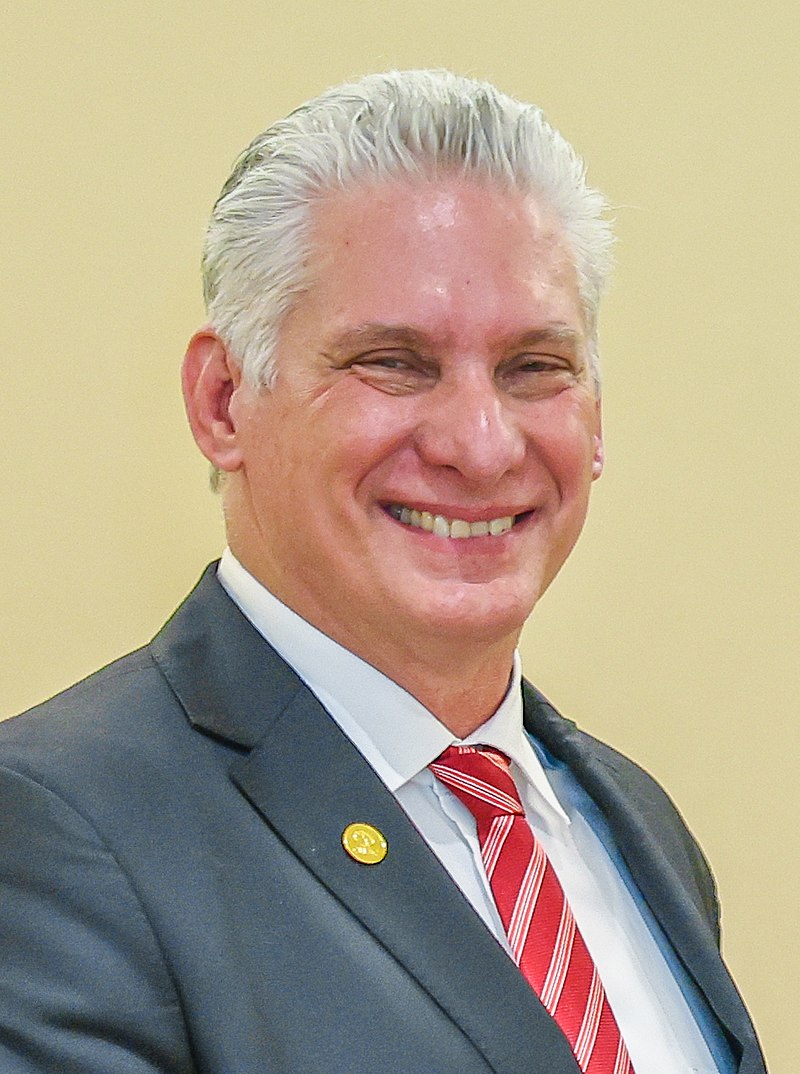
Miguel Díaz-Canel succeeds Raul Castro becoming the first non-Castro leader of the country since the Cuban Revolution.
Cuba
Political
Economy
10 min read
Updated By: History Editorial Network (HEN)
Published:
In April 2018, Miguel Díaz-Canel succeeded Raúl Castro as the President of Cuba, marking a historic transition in the country's leadership. This moment was significant as it brought an end to nearly six decades of the Castro family's direct rule since the Cuban Revolution of 1959, making Díaz-Canel the first non-Castro leader of Cuba in almost 60 years.
Background
The Cuban Revolution of 1959 led by Fidel Castro overthrew the regime of Fulgencio Batista, ushering in a socialist state underpinned by Communist Party control. Fidel Castro served as the country's prime minister and then president until 2008, when health issues prompted him to transfer power to his younger brother, Raúl Castro. Raúl continued Fidel's policies but also introduced modest economic reforms aimed at revitalizing the island's stagnant economy.
By the mid-2010s, Raúl Castro began signaling the need for a generational shift in leadership. He announced that he would step down as president in 2018, although he would remain the head of the Communist Party until 2021. This transition was part of a broader plan to modernize the political system while maintaining the Communist Party's grip on power.
The Rise of Miguel Díaz-Canel
Miguel Díaz-Canel was born in 1960, a year after the Cuban Revolution. He is a trained electronics engineer and a member of the Communist Party. Díaz-Canel began his political career in the Young Communist League, eventually rising through the ranks to hold various important positions within the party and government.
His reputation as a loyal party member and competent administrator paved the way for his ascension. By 2013, he was appointed First Vice President of the Council of State, effectively positioning him as Raúl Castro's successor. Díaz-Canel's rise was seen as part of a carefully managed transition designed to ensure continuity and stability within the Cuban political system.
Transition of Power
On April 19, 2018, Miguel Díaz-Canel was formally elected as the President of Cuba by the National Assembly. This election was largely ceremonial, as candidates for the presidency are selected by the Communist Party. Raúl Castro, in a symbolic gesture, passed the presidential sash to Díaz-Canel, underscoring the transfer of power.
In his inaugural speech, Díaz-Canel emphasized continuity with the revolutionary legacy of Fidel and Raúl Castro, while also acknowledging the need for modernization and reform. He pledged to uphold the principles of socialism and resist external pressures, particularly from the United States, which continues to impose an economic embargo on Cuba.
Challenges and Reforms
Díaz-Canel's presidency has been marked by a series of significant challenges and cautious reforms. The Cuban economy, already burdened by inefficiencies and the U.S. embargo, faced additional strains from the collapse of ally Venezuela's economy and the tightening of U.S. sanctions under the Trump administration. The COVID-19 pandemic further exacerbated these difficulties, leading to severe shortages of food, medicine, and other essential goods.
In response, Díaz-Canel's government implemented economic reforms aimed at decentralizing state control and encouraging private enterprise. These included the expansion of the private sector, the unification of Cuba's dual currency system, and measures to attract foreign investment. However, these reforms have been met with resistance from within the party and skepticism among the population, who are wary of the potential social impacts and rising inequality.
Legacy and Significance
Miguel Díaz-Canel's succession marked a new era in Cuban politics. As the first leader outside the Castro family since the revolution, his presidency symbolizes both continuity and change. While maintaining the core principles of the socialist state, Díaz-Canel has had to navigate the complexities of economic reform and social unrest.
His tenure has been a test of the Communist Party's ability to adapt and survive in a rapidly changing world. The 2021 protests, sparked by economic hardship and demands for greater freedom, have been a significant challenge for Díaz-Canel's administration, highlighting the growing discontent among Cubans and the urgent need for meaningful reforms.
Conclusion
The transition from Raúl Castro to Miguel Díaz-Canel in 2018 was a pivotal moment in Cuban history. It ended the direct rule of the Castro family while ensuring the continuation of the socialist state established by the Cuban Revolution. Díaz-Canel's leadership represents a delicate balance between preserving revolutionary ideals and addressing the contemporary needs of the Cuban people. His ability to manage this balance will shape Cuba's future in the years to come.
#MomentsOfLife #MoofLife_Moment #MoofLife #CubaLeadership #CubanRevolution #DíazCanel #CastroLegacy
Primary Reference
Miguel Díaz-Canel
Explore the Life Moments of
 AI Twin