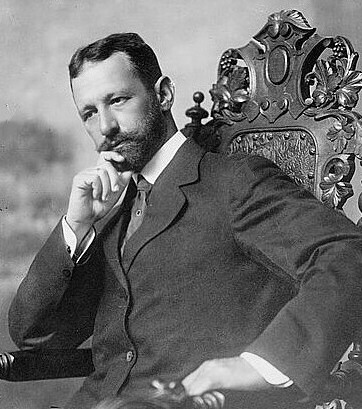
Mario García Menocal's presidency
Cuba

Political
Economy
Sustainability
10 min read
Updated By: History Editorial Network (HEN)
Published:
Mario García Menocal served as the President of Cuba from 1913 to 1921, a period marked by significant political and economic changes. His presidency, falling in the early years of the Cuban Republic, played a crucial role in shaping the country's future direction. Menocal's administration was characterized by both development and controversy, as he navigated through challenges both domestically and internationally.
Early Life and Career
Mario García Menocal was born on December 17, 1866, in Jagüey Grande, Matanzas Province, Cuba. He came from a well-to-do family, which allowed him to receive a quality education. Menocal studied engineering at Cornell University in the United States, graduating in 1888. His engineering skills would later prove beneficial in his military and political career.
Military Involvement
Menocal returned to Cuba during the Cuban War of Independence (1895-1898), where he became an influential figure in the Cuban Liberation Army. He served as a brigadier general under General Máximo Gómez and played a pivotal role in several key battles against Spanish forces. His military success bolstered his reputation and laid the groundwork for his entry into politics.
Presidential Election of 1912
Menocal ran for president as the candidate of the Conservative Party in 1912. He won the election, succeeding José Miguel Gómez, and took office on May 20, 1913. His victory marked the first time the Conservative Party had taken power since the establishment of the Cuban Republic in 1902.
First Term (1913-1917)
Economic Development
Menocal's first term focused heavily on economic development. He sought to modernize Cuba's infrastructure and boost the sugar industry, which was the backbone of the Cuban economy. Significant investments were made in railways, roads, and port facilities, helping to facilitate the export of sugar and other goods. The global demand for sugar, particularly during World War I, led to a boom in the Cuban economy.
Political Stability and Challenges
Menocal faced several political challenges during his first term. His administration was marked by accusations of electoral fraud and political repression. Despite these issues, he managed to maintain relative political stability and continued to attract foreign investment, particularly from the United States.
Re-election and Second Term (1917-1921)
Menocal ran for re-election in 1916 and won, although the election was marred by widespread allegations of fraud and corruption. His second term began on May 20, 1917, and was characterized by increased political unrest and economic difficulties.
World War I and Economic Impact
World War I had a significant impact on Cuba's economy. The demand for sugar surged, leading to prosperity in the early years of Menocal's second term. However, the post-war period saw a sharp decline in sugar prices, which severely affected the Cuban economy. The economic downturn led to social unrest and increased opposition to Menocal's government.
The "Chambelona" Rebellion
In 1917, Menocal faced a major challenge in the form of the "Chambelona" Rebellion, an armed uprising led by the Liberal Party, which opposed his re-election. The rebellion was eventually suppressed, but it highlighted the deep political divisions and dissatisfaction with Menocal's rule. His administration's response to the rebellion involved significant use of military force, further tarnishing his image.
End of Presidency and Legacy
Menocal's presidency ended on May 20, 1921, and he was succeeded by Alfredo Zayas. Despite the controversies and challenges, Menocal left a lasting impact on Cuba. His efforts to modernize the country’s infrastructure and economy had long-term benefits, although his tenure also exposed the fragility of Cuba's political system and the deep-seated issues of electoral integrity and political corruption.
After leaving office, Menocal continued to be an influential figure in Cuban politics. He remained active in the Conservative Party and ran for president again in 1924 and 1940, although he was unsuccessful in both attempts.
Conclusion
Mario García Menocal's presidency was a complex and transformative period in Cuban history. His administration saw significant economic growth and modernization, particularly in the sugar industry, but also faced serious political challenges and controversies. His legacy is a blend of developmental achievements and contentious political practices, reflecting the broader struggles of early 20th-century Cuba to define its identity and governance.
Hashtags
#MarioGarciaMenocal #CubanHistory #CubanRepublic #CubanPresidency #PoliticalHistory #EconomicDevelopment #ChambelonaRebellion #MomentsOfLife #MoofLife_Moment
Primary Reference
Mario García Menocal
Explore the Life Moments of
 AI Twin