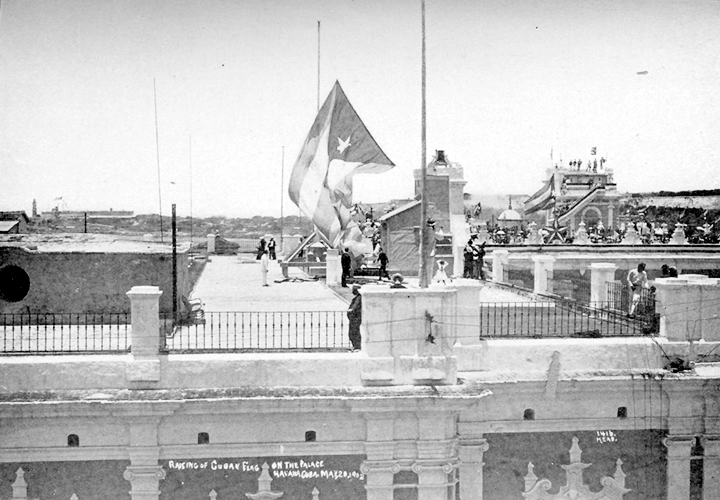
Achieving Independence: Cuba's Path.
Cuba

Political
3 min read
Updated By: History Editorial Network (HEN)
Published:
Following decades of Spanish colonial rule, Cuba was granted independence following the Spanish-American War, rebuffing the United States' initial attempts to annex the island. The Cuban Electoral Act ensured the formation of a new government, with Tomas Estrada Palma becoming the first president. The Platt Amendment, incorporated into the constitution, allowed the U.S. to intervene in Cuban affairs - a provision that was later repealed in 1934.
Cuban independence marked the culmination of a struggle for self-governance and national identity. The island nation faced challenges in establishing political stability and economic autonomy post-independence, grappling with internal conflicts and external pressures. Despite these obstacles, the event symbolized a victory for anti-colonial movements and aspirations for sovereignty in Latin America and beyond.
The transition to independence brought about new opportunities and constraints for Cuba, shaping its trajectory in the 20th century. The event underscored the complex dynamics of post-colonial relationships and the enduring impact of foreign intervention on domestic affairs. Cuban independence from the United States stands as a testament to the aspirations of a nation seeking self-determination and global recognition.
#CubanIndependence #SovereigntyAchieved #PostColonialLegacy
Primary Reference
Cuba - Countries - Office of the Historian
Explore the Life Moments of
 AI Twin