
Comoros

A Blend of Cultures, Natural Beauty, and Challenge...
About
#Comoros
#IslandNation
#AfricanBeauty
Life Classification
Country
Life ID
EL2329650894348
Verified Name
comoros
Life Type
Entity Life
Life Privacy
Public
Subscription
Elite
Created On
2024-07-17
Updated On
2025-12-18
Connect
Related Lives

History of Bitcoin
Peer to Peer Electronic Cash System

US Fighter Jets
Fighterjets operated by the United State

Drama Movies
The Heart of Cinema

Panama
The Crossroads of the Americas

The Presidents of the United States
Head of State

President of the Republic of Panama
Head of the State

Iraq
The Cradle of Civilization
Bosnia and Herzegovina
The Land of Golden Lilies

2026
Comoros reportedly inaugurated three solar power plants in September 2026, developed with support from the United Arab Emirates to expand renewable electricity generation across the island nation. The facilities, located on Grande Comore, Anjouan, and Mohéli, have a stated combined generation capacity of approximately 20 megawatts and incorporate battery energy storage systems. The project is intended to reduce dependence on imported diesel fuel, improve electricity supply reliability, and diversify the country's energy sources. The precise inauguration date and final operational capacity have not been independently verified.
Comoros has historically relied heavily on diesel-powered electricity generation, leaving its energy sector exposed to imported fuel costs and supply disruptions. Solar generation combined with battery storage can help reduce fuel consumption and support electricity availability during periods without sunlight. The reported installations form part of efforts to expand renewable energy infrastructure and strengthen electricity services across the archipelago. Their longer-term contribution will depend on actual electricity production, storage performance, grid integration, and maintenance.
View detailsComoros gained its first UNESCO World Heritage Site on 25/07/2026 when the World Heritage Committee inscribed the Medinas of the Historic Sultanates of the Comoros on the World Heritage List. The designation covers six historic urban settlements on Grande Comore and Anjouan, recognising their architectural heritage, traditional urban layouts, and cultural connections to centuries of Indian Ocean trade. The medinas reflect interactions among African, Arab, Persian, and other Indian Ocean communities, alongside the development of Islamic institutions and local sultanates.
The inscription recognises historic settlements that preserve elements of Comorian urban life, including mosques, residential buildings, defensive structures, and traditional street networks. These towns developed through maritime commerce and political systems that connected the islands with East Africa and other parts of the Indian Ocean. UNESCO World Heritage status brings international recognition and establishes conservation responsibilities under the World Heritage Convention. The designation also provides a framework for protecting historic buildings and urban landscapes while managing development pressures and maintaining the cultural traditions associated with these communities.
UNESCO's official records confirm the inscription under cultural criteria (iii) and (iv). The protected property covers 30.47 hectares, with an additional 131.68 hectares of buffer zones.
View details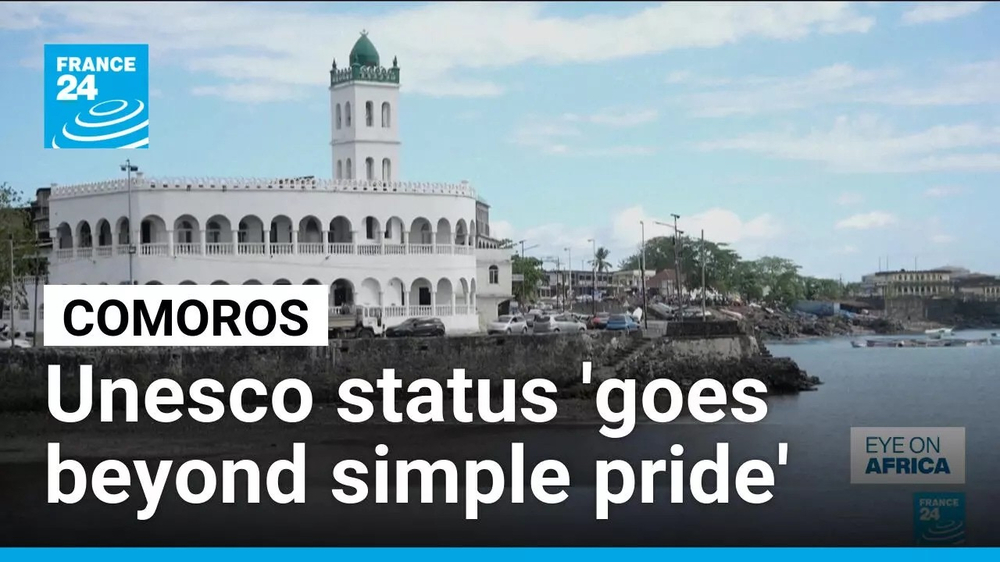
2025
The government of Comoros has successfully secured a €40-million energy deal with the International Islamic Trade Finance Corporation. This agreement is aimed at enhancing the country's energy infrastructure, which is crucial for supporting economic growth and development. The investment is expected to play a significant role in addressing the energy challenges faced by Comoros, a nation comprised of several islands in the Indian Ocean.
Comoros has historically struggled with energy supply issues, which have hindered its economic progress and development. The new funding will be directed towards improving the existing energy systems and potentially expanding access to electricity for its population. This initiative aligns with the broader goals of increasing energy efficiency and promoting sustainable energy solutions within the region.
The partnership with the International Islamic Trade Finance Corporation is particularly noteworthy as it reflects a commitment to fostering international cooperation in the energy sector. The financial support will not only help in upgrading the infrastructure but also in creating job opportunities and stimulating local economies.
As Comoros moves forward with this energy deal, it is anticipated that the improvements in energy access will lead to enhanced productivity across various sectors, including education, healthcare, and industry. The successful implementation of this project could serve as a model for other nations facing similar energy challenges, showcasing the potential benefits of international collaboration in energy development.
View details2016
Azali Assoumani was declared the winner of the presidential election after a partial re-run that had been ordered by the Constitutional Court due to irregularities in the initial vote. Assoumani, the incumbent president, secured a majority of the votes in the re-run, solidifying his position as the leader of Comoros.
The election and its aftermath were marked by tension and controversy, with opposition candidates accusing Assoumani of fraud and manipulation. Nonetheless, the re-run proceeded, and Assoumani emerged victorious once again.
The outcome of the election is expected to have a significant impact on the political landscape of Comoros, as Assoumani begins another term in office. His supporters laud his leadership and vision for the country, while critics express concerns about the state of democracy and governance under his administration.
As Comoros moves forward following the election, the nation faces challenges and opportunities in its pursuit of stability and development. The re-election of Assoumani sets the stage for continued political debate and engagement among the people of Comoros.
#Comoros #Election #Assoumani #Re-run #Politics
View details2015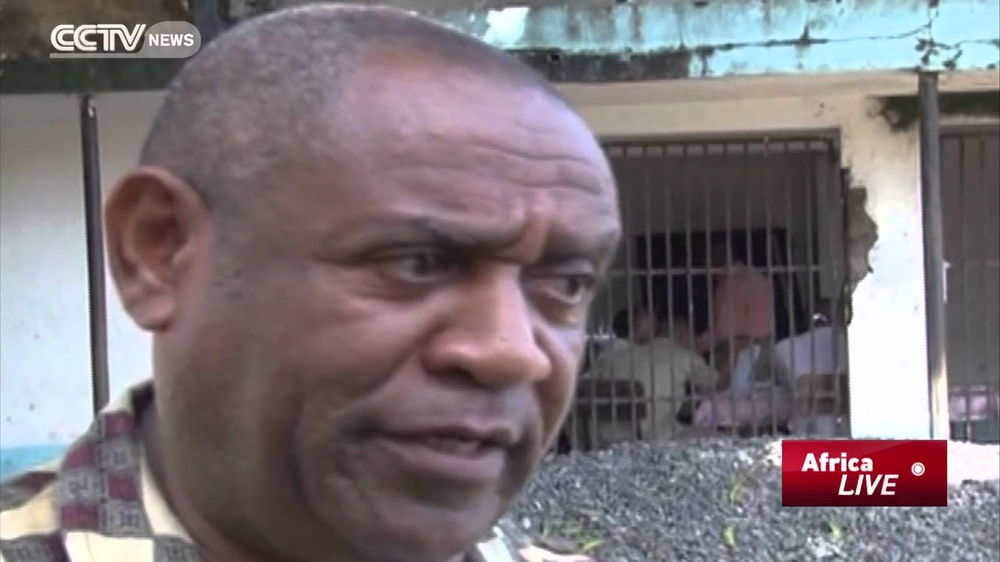
Comoros held its Parliamentary elections in Feb-2015, aiming to elect members of the National Assembly. The elections were crucial for the country's democratic progress and governance.
Following a history of political instability, these elections were a significant step towards achieving political stability and strengthening democratic institutions in Comoros. The National Assembly plays a vital role in shaping legislation and representing the interests of the people.
The elections had a significant impact on the political landscape of Comoros. The outcomes determined the composition of the National Assembly and reflected the will of the electorate. The newly elected members would be responsible for addressing key issues facing the country and working towards its development.
Overall, the Parliamentary elections were a pivotal moment for Comoros, demonstrating its commitment to democratic principles and governance. The outcomes of the elections would shape the country's political direction and have long-term implications for its future.
#Comoros #ParliamentaryElections #NationalAssembly #DemocraticProgress #PoliticalStability
View details2013
Several individuals were apprehended on allegations of orchestrating a conspiracy against the established authority in Comoros. The detainees, suspected of plotting to overthrow the government, were believed to have engaged in subversive activities aimed at destabilizing the political landscape. Their arrest signaled a decisive move by the government to curb potential threats to its stability and security.
The incident sparked concerns about political turmoil and dissent within the country, drawing attention to the tensions simmering beneath the surface. Authorities emphasized the importance of upholding the rule of law and protecting the democratic principles enshrined in the nation's governance structure. The arrests served as a reminder of the ongoing challenges facing Comoros in maintaining political stability and safeguarding against internal threats.
The event shed light on the complex dynamics at play in Comoros, highlighting the delicate balance between security and freedom of expression. It underscored the need for vigilant monitoring of potential security risks while upholding the fundamental rights of all citizens. Moving forward, efforts to address underlying grievances and foster inclusivity in the political process were critical to preventing further disruptions.
#Comoros #GovernmentPlot #PoliticalStability #SecurityThreat #RuleOfLaw
View details2011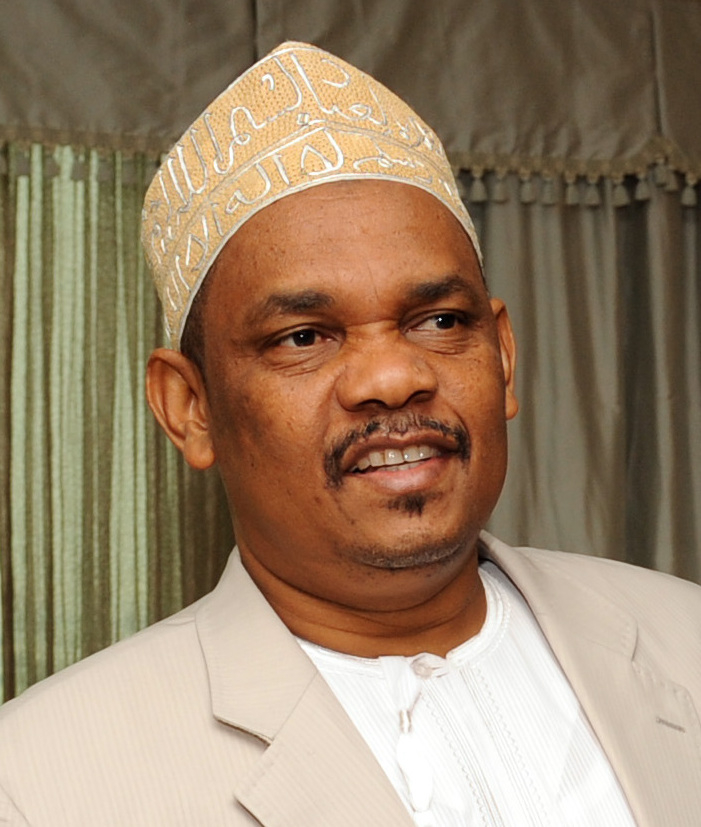
In the elections, Ikililou Dhoinine emerged victorious as the new President of Comoros. Dhoinine, a former Vice President, was elected in a peaceful transition of power. His win marked a new chapter for the nation, with hopes for stability and progress.
Dhoinine's victory was met with a mix of anticipation and skepticism. As a relatively new face in politics, his leadership style and policies were under scrutiny. Many looked to him to address issues such as poverty, healthcare, and education, which were pressing concerns for the island nation.
The election of Dhoinine as President brought a sense of optimism for the future of Comoros. His win was seen as a chance for the country to chart a new course and navigate challenges with renewed vigor. The international community also welcomed the peaceful transfer of power, hoping for continued stability in the region.
Dhoinine's presidency was seen as a pivotal moment in Comoros' history. As he took office, expectations were high for him to deliver on his promises and lead the nation towards prosperity. The impact of his win was felt not only within Comoros but also resonated across the African continent.
#Comoros #IkililouDhoinine #PresidentialElections #NewChapter #Progress
View details2009
A Yemenia Airways flight crashed off the coast of Comoros, resulting in the tragic deaths of all but one of the 153 passengers on board. The sole survivor, a 14-year-old girl, was found clinging to debris in the Indian Ocean. The crash was attributed to a combination of factors including bad weather, pilot error, and possible mechanical issues. The plane was en route from Yemen to Moroni, the capital of Comoros, when it crashed during its final approach.
The impact of the crash was profound, as families and loved ones of the victims mourned their loss. The Comoros government declared a period of national mourning to honor the lives lost in the tragedy. The incident prompted investigations into airline safety standards and raised concerns about the maintenance of aging aircraft in the region.
In the aftermath of the crash, efforts were made to improve aviation safety measures and protocols to prevent similar incidents in the future. The tragedy served as a somber reminder of the risks associated with air travel and the importance of stringent safety regulations in the aviation industry.
#YemeniaAirways #Comoros #AviationSafety #Tragedy #SoleSurvivor
View detailsLibyan soldiers began their duty as ''trainers'' in the Comoros presidential guard. The move came as part of a military cooperation agreement between the two countries. The Libyan soldiers were tasked with providing training and support to enhance the capabilities of the Comorian presidential guard.
The presence of Libyan soldiers in the Comoros raised concerns among some political factions, citing fears of foreign interference. However, supporters of the agreement argued that it was a necessary step to strengthen the security forces in the Comoros.
The training provided by the Libyan soldiers was aimed at improving the skills and professionalism of the Comorian presidential guard. This initiative was seen as a positive development in enhancing the security infrastructure of the Comoros and promoting stability in the region.
As the Libyan soldiers took up their role as trainers in the Comoros presidential guard, there were hopes that this collaboration would lead to a more robust and efficient security apparatus in the country.
#Libya #Comoros #MilitaryCooperation #SecurityTraining
View detailsLocated in the Indian Ocean, Mayotte, one of the Comoros islands, voted to become an overseas department of France. This decision was the result of a referendum where the majority of the population expressed their desire to fully integrate with France, benefiting from its economic stability and social services.
The move was a historic shift for Mayotte, which had been a French overseas territory since the 19th century. With this decision, Mayotte gained the same status as any other department in France, allowing its residents to benefit from French citizenship, legal system, and economy.
The integration also had political implications for the region, as it strained the relationship between Mayotte and the Comoros, which had long disputed the sovereignty of the island. Despite protests from the Comoros government, Mayotte's decision to fully integrate with France was a significant development in the region.
Overall, the vote to integrate with France had a lasting impact on Mayotte's status and future trajectory, solidifying its ties with France and reshaping the geopolitical dynamics in the Indian Ocean.
#Mayotte #FranceIntegration #ComorosRelations #Referendum
View details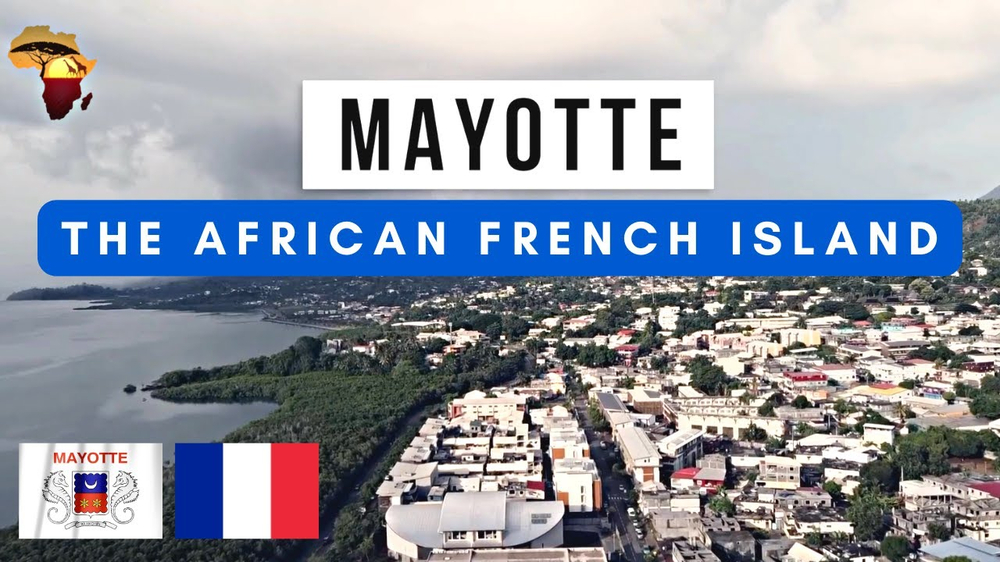
2008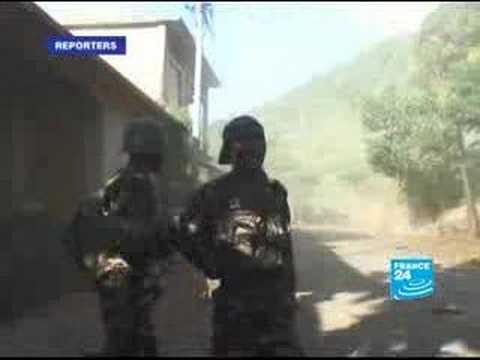
Comoran and African Union (AU) troops executed a successful mission landing on Anjouan, aiming to recapture the island from renegade leader Mohamed Bacar's rebellious regime. Bacar's refusal to step down after disputed elections led to the deployment of troops to restore constitutional order. The operation marked a significant development, illustrating the regional commitment to upholding stability and democratic processes within the Comoros archipelago.
The incursion resulted in the apprehension of Bacar by French authorities, who then extradited him to the Comoran capital, Moroni, to face justice for his actions. This decisive intervention effectively dismantled Bacar's rule, reasserting the government's authority over Anjouan and paving the way for the restoration of peace and democratic governance in the region.
The collaborative efforts of Comoran and AU forces in regaining control of Anjouan demonstrated a unified front against internal threats to stability, upholding the principle of collective security in the region. The successful operation not only neutralized a destabilizing element but also reaffirmed the commitment to democratic norms and constitutional order within the Comoros.
#Comoros #AfricanUnion #RegionalStability #DemocraticGovernance
View details2007
In November 2007, the African Union initiated a naval blockade of Anjouan island in the Comoros. Anjouan, one of the country's islands, had been experiencing political turmoil following a self-declared secession in 2001. The AU aimed to restore constitutional order and unity within the Comoros by imposing this blockade.
The naval blockade had a significant impact on Anjouan, as it disrupted the flow of goods and services to the island. It put pressure on the secessionist leaders and ultimately led to their ousting, paving the way for the reintegration of Anjouan into the Comoros.
This event marked a turning point in the political landscape of the Comoros, as it demonstrated the AU's commitment to upholding the country's unity and sovereignty. The success of the naval blockade highlighted the effectiveness of international interventions in resolving regional conflicts.
#AfricanUnion #NavalBlockade #ComorosUnity
View detailsAnjouan, an island in the Comoros archipelago, defied the federal government and the African Union by holding local elections. The controversial move led to Mohamed Bacar being inaugurated as Anjouan's president. Tensions had been brewing between the regional authorities and the federal government for some time, with Anjouan seeking greater autonomy.
The elections sparked uproar, with the federal government and the African Union declaring them illegitimate. The situation escalated when Bacar was sworn in, further entrenching the divide between Anjouan and the central administration. The federal government faced pressure to intervene and restore order.
Bacar's presidency in Anjouan created a political crisis in the already fragile nation of Comoros. The events highlighted the complexities of governance in a country with a history of separatist movements and power struggles between its islands.
The defiance of the federal government by Anjouan and the subsequent inauguration of Mohamed Bacar underscored the challenges of maintaining unity in a multi-island state like Comoros. The power struggle between Anjouan and the central government showcased the ongoing tensions within the nation. #Comoros #Anjouan #PoliticalCrisis
View details2006
Comoros officially joined the International Criminal Court (ICC) after ratifying the Rome Statute. By becoming an ICC member, Comoros demonstrated its commitment to upholding international justice and accountability for serious crimes within its jurisdiction. This move strengthened the Court's reach in Africa, where the majority of its cases originate.
Membership in the ICC allowed Comoros to participate in the Court's decisions and influence the development of international criminal law. It also provided the country with access to various resources and support from the ICC in addressing issues related to war crimes, genocide, and crimes against humanity.
Furthermore, joining the ICC signaled Comoros' determination to uphold human rights standards and the rule of law, reassuring its citizens and the international community of its dedication to justice and accountability. This decision also highlighted Comoros' willingness to collaborate with the global community in addressing and preventing international crimes.
#Comoros #InternationalCriminalCourt #JusticeAndAccountability #HumanRights #GlobalCommunity
View detailsMount Karthala, one of the world's largest active volcanos, located in Grande Comore, erupted, spewing ash and smoke into the sky. The volcanic activity led to fear and panic among the residents of the island, as ash rained down on villages, damaging crops and affecting air quality.
The eruption forced authorities to evacuate thousands of people as a precautionary measure. The ash cloud also disrupted air travel in the region, leading to the closure of the local airport. The volcanic eruption posed a significant threat to the livelihoods and safety of the residents of Grande Comore, with the possibility of further eruptions looming.
The impact of the eruption extended beyond the immediate vicinity of the volcano, affecting the entire island and neighboring regions. The event served as a stark reminder of the unpredictable power of nature and the vulnerability of communities living in the shadow of active volcanoes.
#MountKarthala #VolcanicEruption #GrandeComore #NaturalDisaster #Comoros #AshFall #Evacuation #Disruption #Safety #CommunityResilience
View details
Muslim cleric Ahmed Abdallah Mohamed Sambi, hailing from Anjouan, emerged victorious in the federal presidential elections in Comoros. Known for his religious background and charismatic leadership style, Sambi's election marked a significant shift in the political landscape of the nation. His win was seen as a reflection of citizens' desire for change and a break from traditional political elites.
Sambi's presidency was marked by efforts to promote unity among the Comorian islands and address economic challenges facing the nation. His emphasis on social welfare programs and infrastructure development garnered support from various segments of society. Sambi's tenure was also characterized by a commitment to dialogue with opposition groups and regional stakeholders to foster stability and progress.
Under Sambi's leadership, Comoros experienced a period of relative political stability and economic growth. His administration's focus on good governance and accountability helped to attract foreign investment and strengthen diplomatic relations with other countries. Sambi's presidency left a lasting impact on the nation's political landscape and set a precedent for future leaders to prioritize inclusivity and development for the benefit of all citizens.
#Comoros #AhmedAbdallahMohamedSambi #PresidentialElections #PoliticalChange
View details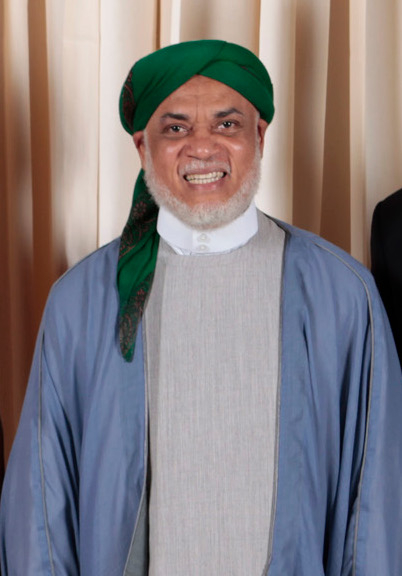
2004
After many years of political turmoil and unrest, Comoros saw a turning point with legislative elections that allowed the citizens to vote freely and fairly. This marked a significant step towards democratic governance in the country.
The background of these elections was characterized by a history of political instability, coups, and contested voting processes. However, with the implementation of reforms and the assistance of international organizations, the electoral system was revamped to ensure transparency and inclusivity.
The impact of these elections was profound as it restored faith in the democratic process among the Comorian people. For the first time in a long while, voters felt empowered to choose their representatives without fear of manipulation or coercion. The newly elected legislature was tasked with the responsibility of enacting reforms and policies that would address the long-standing issues facing the nation.
Overall, the event marked a significant milestone in Comoros' journey towards political stability and democratic governance. It laid the foundation for a more inclusive and accountable government that prioritized the needs and aspirations of its citizens. #Comoros #DemocraticGovernance #ElectoralReforms.
View details2003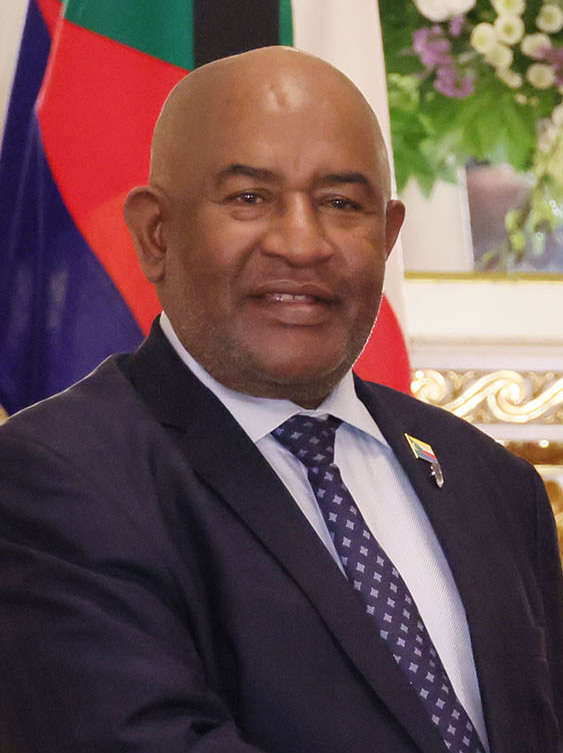
Security forces have successfully thwarted a coup attempt against President Assoumani in Comoros. The plot, orchestrated by a group of disgruntled military officers, aimed to overthrow the government and seize power. However, the security forces were able to intercept communications and gather intelligence, leading to the apprehension of the conspirators before they could carry out their plan.
The foiled coup attempt has underlined the ongoing political instability in Comoros, with President Assoumani facing opposition from various factions within the military. The incident has raised concerns about the country's fragile democratic institutions and the persistent threat of coups in the region. President Assoumani has vowed to strengthen security measures and crack down on dissent to prevent further destabilization of the government.
Despite the swift response by security forces, the attempted coup has left the nation on edge, with fears of further unrest lingering in the air. The government has urged the public to remain calm and assured them that the situation is under control. The incident serves as a stark reminder of the challenges facing political stability in Comoros and the need for continued vigilance against threats to the democratic process.
#Comoros #CoupPlot #PresidentAssoumani #SecurityForces #PoliticalInstability
View details2002
Following a successful electoral campaign in which Azali Assoumani emerged victorious, he was officially inaugurated as the President of Comoros. The inauguration ceremony was a momentous occasion that marked the beginning of Assoumani's term in office.
The event was attended by government officials, foreign dignitaries, and citizens who gathered to witness the peaceful transition of power. Assoumani's speech focused on uniting the nation, improving economic stability, and fostering development. His inauguration symbolized a new chapter in the political landscape of Comoros.
The impact of Assoumani's inauguration was felt across the country, with hopes for a better future under his leadership. As the newly elected president, he faced the daunting task of addressing various challenges such as poverty, political unrest, and infrastructure development.
The inauguration of President Azali Assoumani was a defining moment in the history of Comoros, setting the stage for his administration's policies and priorities. It marked a significant transition in the country's leadership and governance.
#AzaliAssoumani #ComorosPresident #NewBeginning #InaugurationDay
View details2001
In November 2001, a failed coup attempt in Comoros shocked the nation. The backdrop of political instability and power struggles within the government set the stage for this brazen attempt to overthrow the ruling regime. The group of rebels aimed to seize control of the capital, but their plan was thwarted by the swift response of the security forces.
The impact of this failed coup attempt was felt across the nation as uncertainty and fear gripped the population. Despite the unsuccessful outcome, the event highlighted the fragility of the political situation in Comoros and the potential for further instability.
In the aftermath, security was heightened, and the government cracked down on dissent to prevent any future attempts to destabilize the country. The failed coup served as a stark reminder of the challenges facing Comoros as it struggled to maintain political stability and peace.
#Comoros #CoupAttempt #PoliticalInstability #SecurityForces
View detailsThe Fomboni Agreement was signed as a resolution to the Anjouan crisis in Comoros. The agreement aimed to restore peace and stability to the region after a period of political unrest. This crisis was fueled by the secession of Anjouan from the Comoros in an attempt to gain independence.
Multiple rounds of negotiations led to the signing of the agreement, which outlined a framework for the reintegration of Anjouan into the Comoros and established a roadmap for democratic governance. International bodies and neighboring countries played a crucial role in mediating the talks and ensuring the implementation of the agreement.
The Fomboni Agreement had a significant impact on the region, as it helped prevent further escalation of the crisis and paved the way for reconciliation among the different factions. It also laid the foundation for addressing the root causes of the conflict and promoting long-term peace and development in Comoros.
#FomboniAgreement #AnjouanCrisis #PeaceAccords #ComorosPeace #RegionalStability
View details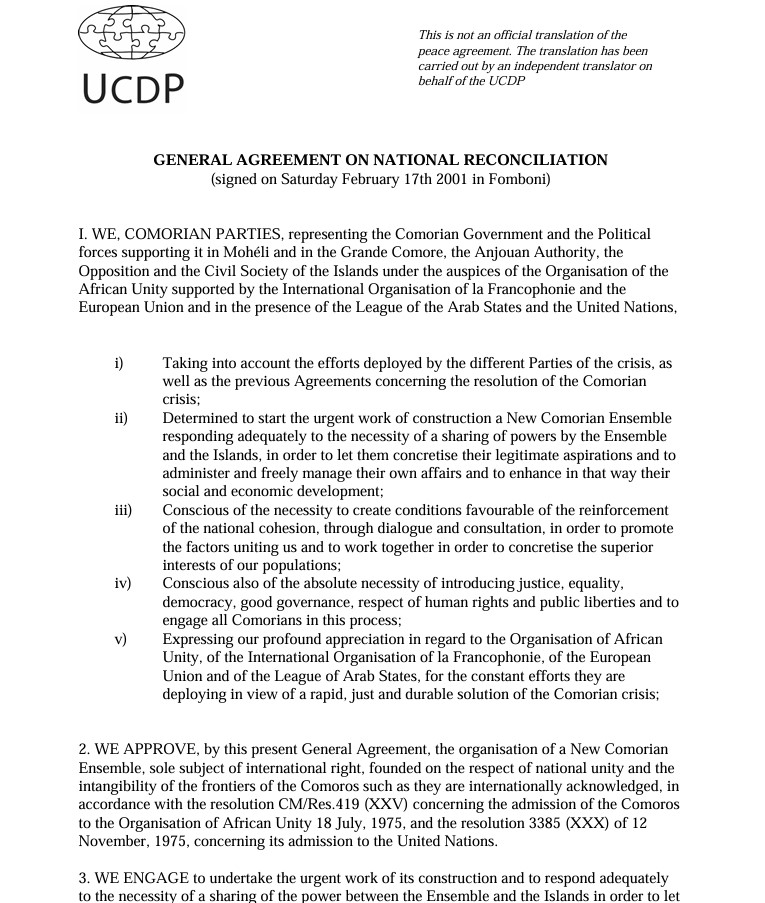
1999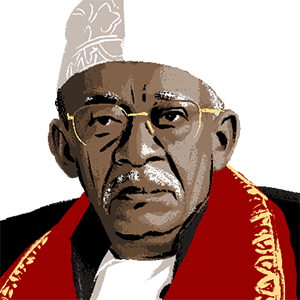
In Massounde's presidency, the Comoros experienced political and economic instability. Massounde's leadership was marred by corruption allegations and worsening living conditions for the people. The dissatisfaction with the government culminated in a military coup led by the Chief of the General Staff, Col Azali Assoumani. The coup swiftly removed Massounde from power, marking the end of his presidency.
The coup led by Col Azali Assoumani had a significant impact on the political landscape of the Comoros. It brought an end to Massounde's rule and ushered in a new era under military leadership. The coup was met with mixed reactions domestically and internationally, with some supporting the move as a means to restore stability, while others condemned it as undemocratic.
The removal of Massounde from power paved the way for a transitional government led by Col Azali Assoumani, who promised to stabilize the country and prepare for democratic elections. The coup marked a turning point in the political history of the Comoros, shaping its trajectory in the years to come.
#Comoros #Coup #PoliticalUnrest #Massounde #ColAzaliAssoumani
View details1997
Troops from the island of Grande Comore landed in Anjouan to prevent its secession initiated by Anjouan's leader, Colonel Said Abeid. Despite their objective, the Grande Comoran troops were overwhelmed and defeated by Anjouanese forces, leading to the failure of their intervention. The conflict stemmed from long-standing political tensions and disagreements over the division of power within the Comoros archipelago. Following the rout of Grande Comoran troops, Anjouan proceeded with its secession plans, declaring independence in defiance of the Comorian government.
The event marked a significant moment in the history of the Comoros, highlighting the fragility of the union between its islands and the challenges of maintaining political cohesion. The defeat of Grande Comoran troops in Anjouan further exacerbated inter-island tensions and contributed to ongoing instability in the region. The secession attempt by Anjouan ultimately led to increased political instability and sporadic violence in the Comoros archipelago, underscoring the complexities of governance and unity within the nation.
#Comoros #Secession #PoliticalTensions #IslandConflict
View detailsThe islands of Anjouan and Moheli declared independence from the Comoros, fueled by long-standing grievances over power-sharing arrangements within the archipelago nation. The move was a direct challenge to the central government in Moroni, the capital of Comoros.
The declaration of independence by Anjouan and Moheli sparked a political crisis and heightened tensions within the region. The Comorian government rejected the independence declaration, leading to a period of instability and uncertainty.
The international community, including the African Union and the United Nations, called for dialogue and a peaceful resolution to the crisis. Mediation efforts were made to bring all parties to the negotiating table and find a solution that would maintain the territorial integrity of the Comoros.
Ultimately, after protracted negotiations, a deal was reached that saw Anjouan and Moheli retain a degree of autonomy within the Comoros. This agreement helped to ease tensions and stabilize the situation, averting the threat of further fragmentation within the archipelago.
#Comoros #IndependenceDeclaration #PoliticalCrisis #Negotiations
View details1995
Frenchman Bob Denard and a group of mercenaries seized control of the islands of Comoros, sparking political turmoil and unrest. Known for his involvement in several coups in the region, Denard's actions in Comoros were fueled by a desire for power and influence.
The takeover led to widespread condemnation from the international community, with many countries calling for a peaceful resolution and the restoration of democratic governance. Despite facing resistance from local forces and peacekeeping efforts from neighboring countries, Denard and his mercenaries maintained their hold on the islands for a significant period.
The impact of the seizure was felt deeply by the people of Comoros, who experienced a period of instability and uncertainty as the mercenaries ruled with an iron fist. The disruption to daily life, economy, and governance left a lasting mark on the island nation.
Ultimately, through diplomatic efforts and pressure from the international community, Denard and his mercenaries were forced to relinquish control of Comoros. The event served as a stark reminder of the fragility of democracy and the destructive potential of external intervention in the affairs of sovereign states.
#BobDenard #Mercenaries #PoliticalInstability #Comoros #InternationalRelations
View details1989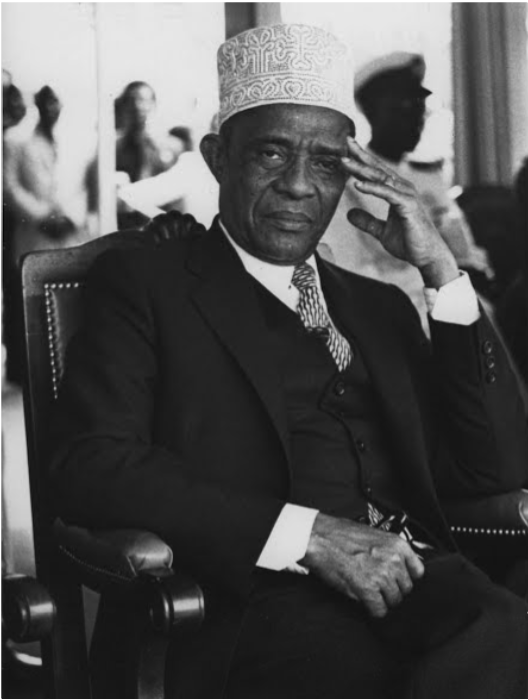
President Ahmed Abdallah's government in Comoros was overthrown in a coup orchestrated by Bob Denard. Denard, a notorious French mercenary with a history of involvement in coups in the region, seized power in a swift and calculated move.
Tensions had been escalating in Comoros for some time, with Abdallah facing criticism for his autocratic rule and alleged corruption. The coup led by Denard was met with mixed reactions, with some supporting the removal of Abdallah and others condemning the violent method used.
Following the downfall of Abdallah's government, Denard installed a new president, Said Mohamed Djohar. However, his rule was marked by instability and political turmoil. Denard's influence in Comoros continued to be a source of contention, with accusations of human rights abuses and manipulation of the political landscape.
The coup led by Bob Denard had far-reaching implications for Comoros, leaving a legacy of political instability and mistrust. The events of that day continue to shape the country's political landscape and collective memory.
#Comoros #Coup #BobDenard #PoliticalInstability
View details1981
The establishment of the Central Bank of the Comoros, Banque Centrale des Comores, marked a pivotal moment in the nation's financial history. It was created to regulate and supervise the country's banking system, control the monetary policy, and maintain the stability of the national currency. Prior to its establishment, the financial sector in Comoros faced challenges due to the lack of a centralized authority.
The Central Bank of the Comoros played a crucial role in fostering economic development, attracting foreign investments, and ensuring financial stability within the nation. Its establishment also helped to enhance the transparency and efficiency of the financial system, promoting trust among investors and citizens.
This milestone paved the way for improved fiscal management, increased financial inclusion, and strengthened the overall economy of Comoros. The Central Bank of the Comoros continues to play a vital role in overseeing the monetary policy, maintaining price stability, and supporting the sustainable growth of the country's economy.
#Comoros #CentralBank #FinancialStability #EconomicDevelopment
View details1978
During the event, Comoros adopted its constitution, an important development in the country's political history. The constitution set the framework for the government's structure, defining the roles and responsibilities of the branches of power. It also outlined the fundamental rights and freedoms of the citizens.
This momentous occasion marked a step towards democracy and governance in Comoros. The adoption of the constitution aimed to establish stability, transparency, and accountability in the political system. It provided a legal foundation for the country's institutions and processes, contributing to the overall development and progress of the nation.
The event had a significant impact on shaping the future of Comoros, guiding its governance and legal framework. It laid the groundwork for upholding the rule of law, promoting democracy, and protecting the rights of the people. The adoption of the constitution reflected the aspirations of the population for a better future and a more just society.
#Comoros #Constitution #Democracy #Governance
View detailsPresident Ali Soilih of Comoros was assassinated in a coup orchestrated by Bob Denard. Soilih, who came to power in a coup himself, faced internal opposition due to his socialist policies and human rights abuses. Denard, a French mercenary with a history of involvement in African coups, led the takeover, resulting in Soilih's death.
The assassination had a significant impact on Comoros, leading to political instability and a series of military rulers. Denard's role highlighted the influence of external actors in the country's political affairs. The event also raised questions about foreign intervention in African nations' internal conflicts.
As a turning point in Comoros' history, the assassination of President Soilih in a coup by Bob Denard underscored the complex dynamics of power struggles and foreign involvement in the region. #Comoros #Assassination #Coup #BobDenard #PoliticalInstability
View details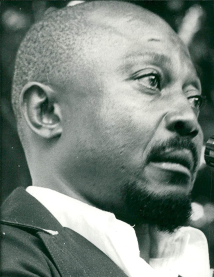
1975
Comoros gained independence from France after a long struggle for self-governance. The archipelago, located in the Indian Ocean, had been under French rule since the 19th century. The road to independence was marked by resistance movements and political negotiations, culminating in a referendum where the people of Comoros voted overwhelmingly in favor of independence.
The newfound independence brought a sense of pride and autonomy to the people of Comoros. It marked the beginning of a new chapter, as they took control of their own governance and future. The country faced challenges in establishing stable governance and a strong economy, but the people were determined to shape their own destiny.
The independence of Comoros had a significant impact on the political landscape of the region, inspiring other African nations to pursue self-determination. It also strengthened the cultural identity of the Comorian people, celebrating their heritage and traditions on the global stage.
Today, Comoros continues to strive for development and progress as a sovereign nation. The journey towards independence remains a defining moment in the history of the archipelago, marking a legacy of resilience and determination.
#Comoros #Independence #SelfDetermination #History #Sovereignty
View details