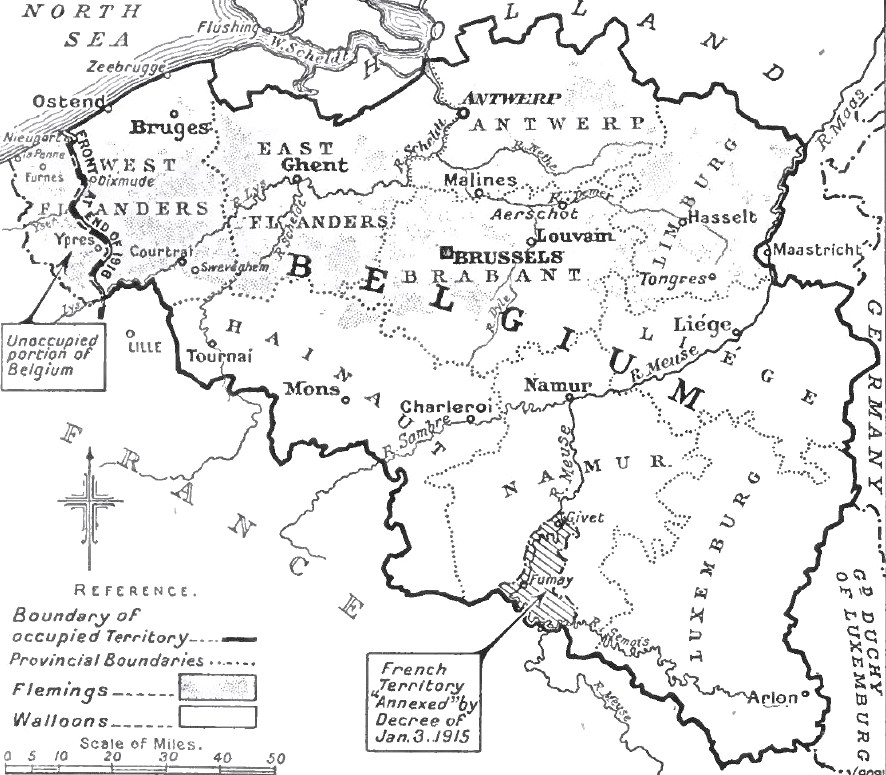
WWI: Germany declares war on Belgium, triggering Britain's declaration of war on Germany.
Belgium

Political
Global Conflict
4 min read
Updated By: History Editorial Network (HEN)
Published:
In the early stages of World War I, Germany declared war on Belgium as part of their military strategy to swiftly advance towards France. Belgium's refusal to allow German troops to pass through their territory led to German forces invading the country. This violation of Belgian neutrality sparked outrage internationally, as it was seen as a breach of international law.
In response to Germany's aggression towards Belgium, Britain issued an ultimatum demanding the withdrawal of German forces. When the ultimatum was ignored, Britain declared war on Germany. This marked a significant turning point in the conflict as it expanded the scope of the war beyond continental Europe and drew in major global powers.
The invasion of Belgium and Britain's subsequent entry into the war had far-reaching consequences. It solidified alliances between European powers and escalated the conflict into a truly global war. The declaration of war on Germany by Britain also had a profound impact on the course of the war, as the British Empire's resources and military strength played a crucial role in the eventual Allied victory.
The events surrounding Germany's declaration of war on Belgium and Britain's subsequent declaration of war on Germany were pivotal moments in World War I. These actions set the stage for a long and brutal conflict that would reshape the political landscape of Europe and the world for years to come.
#WWI #Belgium #Germany #Britain #DeclarationofWar #GlobalConflict #AlliedVictory

Explore the Life Moments of
 AI Twin