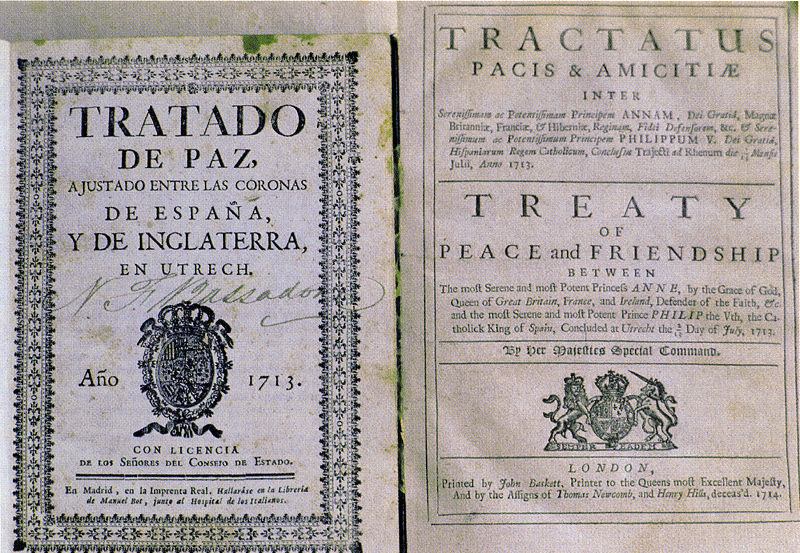
End of War of the Spanish Succession Treaty Signed
Belgium
Political
4 min read
Updated By: History Editorial Network (HEN)
Published:
The Treaty of Utrecht was signed, concluding the protracted War of the Spanish Succession. The war, involving several European powers, was sparked by the death of the Spanish king without a direct heir, leading to a struggle for control over the Spanish Empire. The Treaty of Utrecht sought to bring stability to the region by establishing a balance of power among the major European nations.
The treaty had several significant implications. It recognized Philip V as the King of Spain, but ensured that the Spanish and French crowns would remain separate, preventing a single individual from ruling both countries. As part of the peace settlement, Spain ceded territories including Gibraltar to Britain and Sicily to Savoy. The Spanish Netherlands, now Belgium, was transferred to the Austrian Habsburgs.
The Treaty of Utrecht reshaped the geopolitical landscape of Europe by curbing the power of Spain and France, and elevating Britain as a dominant naval and colonial force. It marked the beginning of the rise of the British Empire and the decline of Spanish and French influence. The treaty also laid the groundwork for future diplomatic negotiations and treaties that would shape European politics for the centuries to come.
The signing of the Treaty of Utrecht was a pivotal moment in European history, setting the stage for a new era of power dynamics and alliances. It emphasized the importance of diplomacy and negotiation in resolving conflicts between nations. The legacy of the treaty continues to be felt in the modern world, influencing international relations and the concept of territorial sovereignty.
#TreatyofUtrecht #WaroftheSpanishSuccession #EuropeanDiplomacy #GeopoliticalShifts

Explore the Life Moments of
 AI Twin