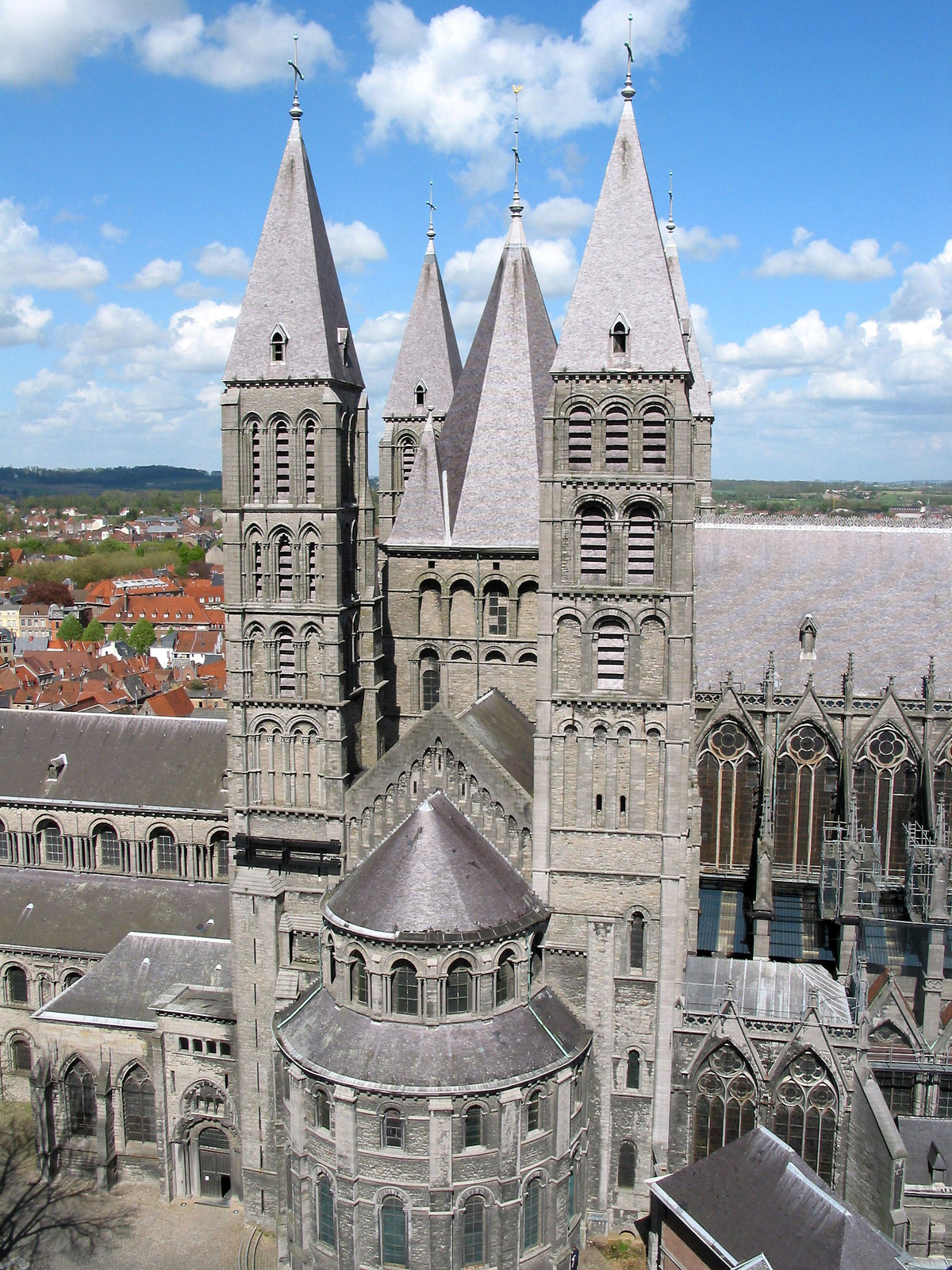
Construction of Tournai Cathedral
Belgium
Architecture
4 min read
Updated By: History Editorial Network (HEN)
Published:
In 1242, the construction of the Cathedral of Our Lady in Tournai officially began. The cathedral was initiated in the Romanesque style but later transitioned into the Gothic architectural style, showcasing a blend of both styles throughout its structure. Tournai, located in present-day Belgium, was a significant religious and cultural center during the Middle Ages, and the construction of the cathedral reinforced its importance.
The Cathedral of Our Lady in Tournai was designed to be a grand religious edifice, reflecting the power and influence of the Catholic Church in the region. The cathedral's construction drew skilled artisans and craftsmen from across Europe, contributing to the exchange of architectural techniques and styles in the region. The intricate carvings, imposing spires, and vast stained glass windows of the cathedral served as a testament to the wealth and devotion of the city's inhabitants.
As the construction of the Cathedral of Our Lady progressed, it became a focal point for religious ceremonies, community gatherings, and artistic expression. The cathedral's completion would take several decades, with various architects and builders leaving their mark on the structure. Upon its completion, the Cathedral of Our Lady in Tournai stood as a remarkable example of Gothic architecture in the region, attracting pilgrims, tourists, and scholars alike.
Today, the Cathedral of Our Lady in Tournai continues to be a prominent landmark in the city, drawing visitors from around the world to marvel at its architectural splendor and rich history. The cathedral stands as a symbol of the enduring legacy of religious devotion, artistic craftsmanship, and cultural exchange that characterized the Middle Ages in Belgium. #CathedralOfOurLady #Tournai #GothicArchitecture #BelgiumHistoricalSite

Explore the Life Moments of
 AI Twin